

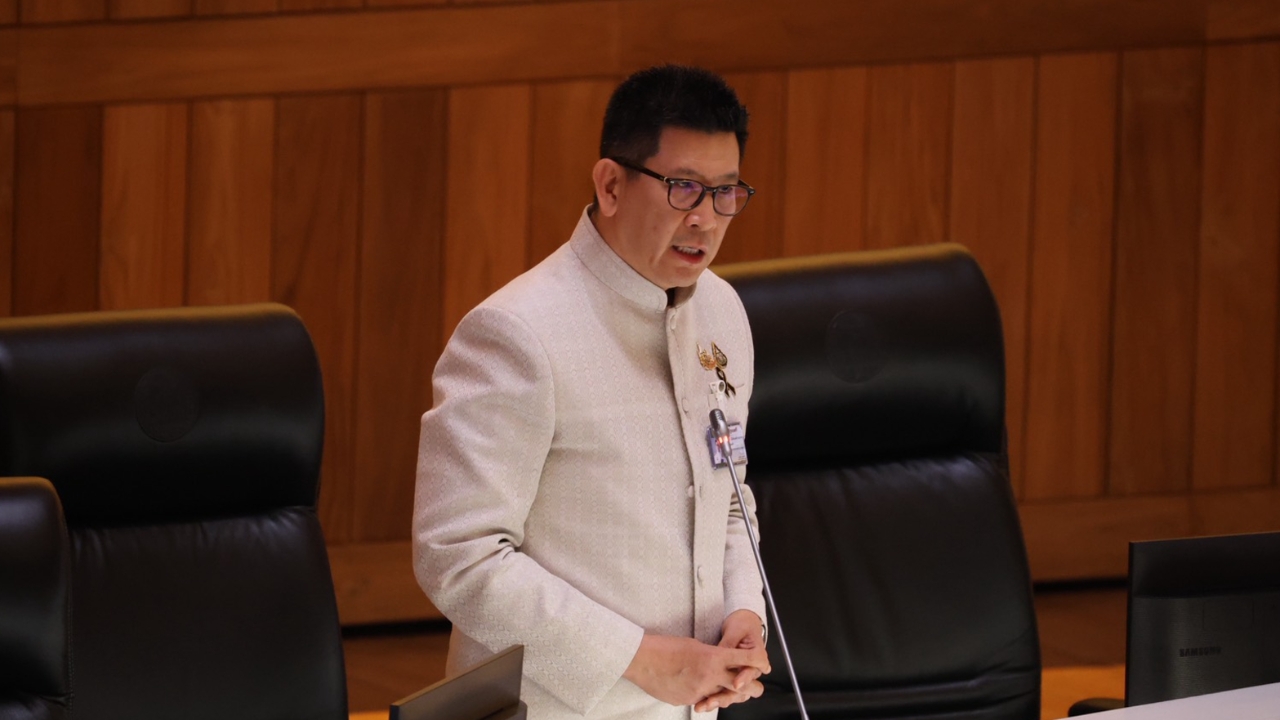
"Aekniti" pushes to reduce short-term impact on citizens, preparing for Cabinet meeting on 11 Apr to introduce measures aiding transport, vulnerable groups, and fisheries. Denies excise tax cut due to concerns it would affect healthcare funding. Aims to turn crisis into opportunity.
On 9 April 2026 at 19:20, Mr. Aekniti Nitithanprapas, Deputy Prime Minister and Minister of Finance, explained that the current energy issue is a global crisis. The Middle East war's end is uncertain and may impact other products. We must prepare for inflation and global economic downturn. The government must swiftly reduce short-term impacts on the public. The first action is using the Oil Price Stabilization Fund. Reducing excise tax on oil to lower prices is similar to using the fund, but excise tax revenue supports healthcare costs. Cutting this tax could harm healthcare funding. On 11 April, the Cabinet will meet to support groups such as transport, low-income vulnerable people, fisheries, and farmers, aiming to assist targeted groups within limited resources. At the same time, funds must be reserved for other areas if the war prolongs. Using all funds to help any one group risks a crisis on top of a crisis, leading to an economic meltdown like in 1997, which must be avoided. This energy crisis changes many global dimensions, such as 1) food and medicine security crises, where Thailand can turn crisis into opportunity as a production base for food and medicines; 2) energy crisis with no cheap oil prices expected for 1-2 years due to damaged oil production infrastructure, requiring investment in alternative energy infrastructure. We must turn this crisis into opportunity. In the short term, help those in distress to overcome the crisis and grow afterward, enabling them to earn better incomes. I believe we will get through this crisis together.