

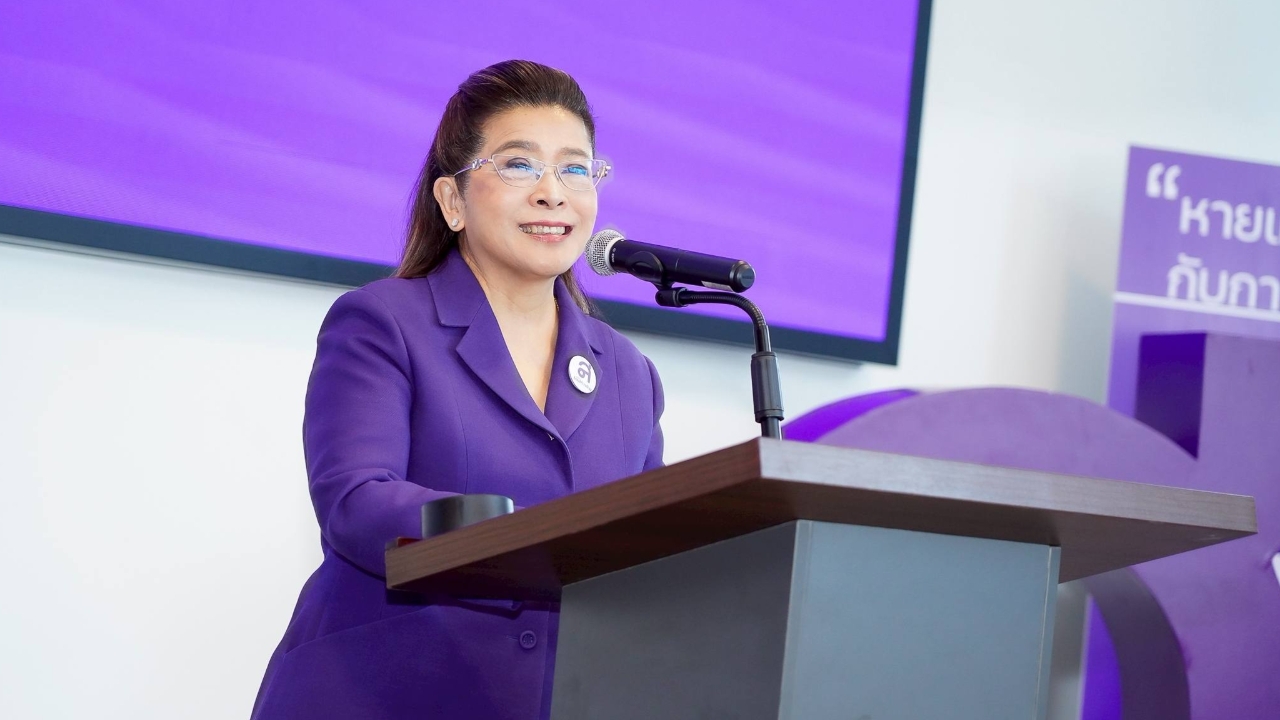
Sudarat warns that a real economic "tsunami" is coming, pointing out that this time is worse than COVID and the Tom Yum Kung crisis. She cautions that if the government fails to respond properly, the economy could collapse completely.
On 10 Apr 2026 GMT+7, Khunying Sudarat Keyuraphan posted on Facebook stating that a real economic tsunami is approaching and asked how Thailand will prepare for this major global disaster.
Khunying Sudarat said that from her experience through many national crises, she believes this one will be far more severe than COVID or the Tom Yum Kung crisis we have faced. It could be a "tsunami" that sweeps Thailand's economy and businesses flat if we do not respond well. This war is prolonged, contradictory, and devastating.
"Prolonged" means that although there is a temporary ceasefire allowing both sides to negotiate in Islamabad, Pakistan, talks are fragile and difficult, especially over Israel's bombing of Lebanon. The world faces ongoing risks of retaliatory terrorism.
"Contradictory" refers to this war breaking all global rules and norms, making it unclear what principles to follow and difficult to predict future developments.
"Devastating" means the energy infrastructure has been severely damaged by both sides, with some sites needing 3-5 years to repair. This will cause long-lasting global economic damage. Although Thailand is far from the battlefield, it will suffer severely from this economic tsunami.
Khunying Sudarat noted the first tsunami wave is the energy price crisis—oil and gas—where Thailand is heavily affected due to high imports from the Persian Gulf compared to neighbors. We are entering an era of widespread high prices, and what we see now is not the full impact. After Songkran or within next month, the real crisis will hit, severely affecting Thai people and the economy. Every 1 baht increase in oil price reduces GDP by 0.04% and raises inflation by 0.32%.
The second tsunami wave is the energy and petrochemical shortage crisis. Thailand is at high risk of energy shortages even if the ceasefire holds because of extensive energy infrastructure damage. This will stall the economy and risks shortages of fertilizer, threatening Thailand's food security and farmers' incomes, as well as petrochemical products like plastic pellets, impacting industries such as packaging and most critically, medicine production.
This second "tsunami" is massive. The government must not be complacent and should prepare for the worst-case scenario. If the situation deteriorates as described, how will the government help Thai people survive? It must set short-, medium-, and long-term plans and inform the public clearly so everyone can face the crisis together with a true understanding.
Khunying Sudarat agrees with the government's announced short-term plan to adjust energy pricing structures and urges serious implementation. We may be leaving the era of cheap energy behind. Prices should be fair to the public. Targeted aid is good but must be comprehensive, fast, and sufficient to truly support those in hardship.
A crucial issue the government has not emphasized enough is crisis administration, especially budget management. The government must tightly control spending, cutting all non-essential and non-urgent budgets across ministries, such as large building and road projects, which currently total nearly 200 billion baht this year. These funds should instead support small people, farmers, and SMEs to survive the crisis. This would also allow temporarily exempting excise tax on oil to reduce prices, a measure adopted by many countries like Japan, South Korea, Australia, India, and Vietnam.
In the medium and long term, the country must undertake major energy restructuring to reduce fossil fuel dependence. Support should be given to citizens, farmers, and SMEs to access affordable solar power and enable them to sell electricity back to the state. Transportation should shift more to rail and waterways, and support given to convert freight and passenger vehicles to electric vehicles (EVs), possibly with subsidies, to encourage EV adoption and increase EV production in Thailand.
Khunying Sudarat said the era of global peace is over. The world will be full of volatility and uncertainty. Security—in safety, energy, food, environment, technology, and more—will be paramount. If we understand, have vision, adapt quickly, and manage well during this crisis, we can survive and turn it into opportunity.
This economic tsunami is enormous. Everyone should respond with awareness, carefully plan their lives and businesses, and she sends encouragement for all to survive this great economic tsunami together.