

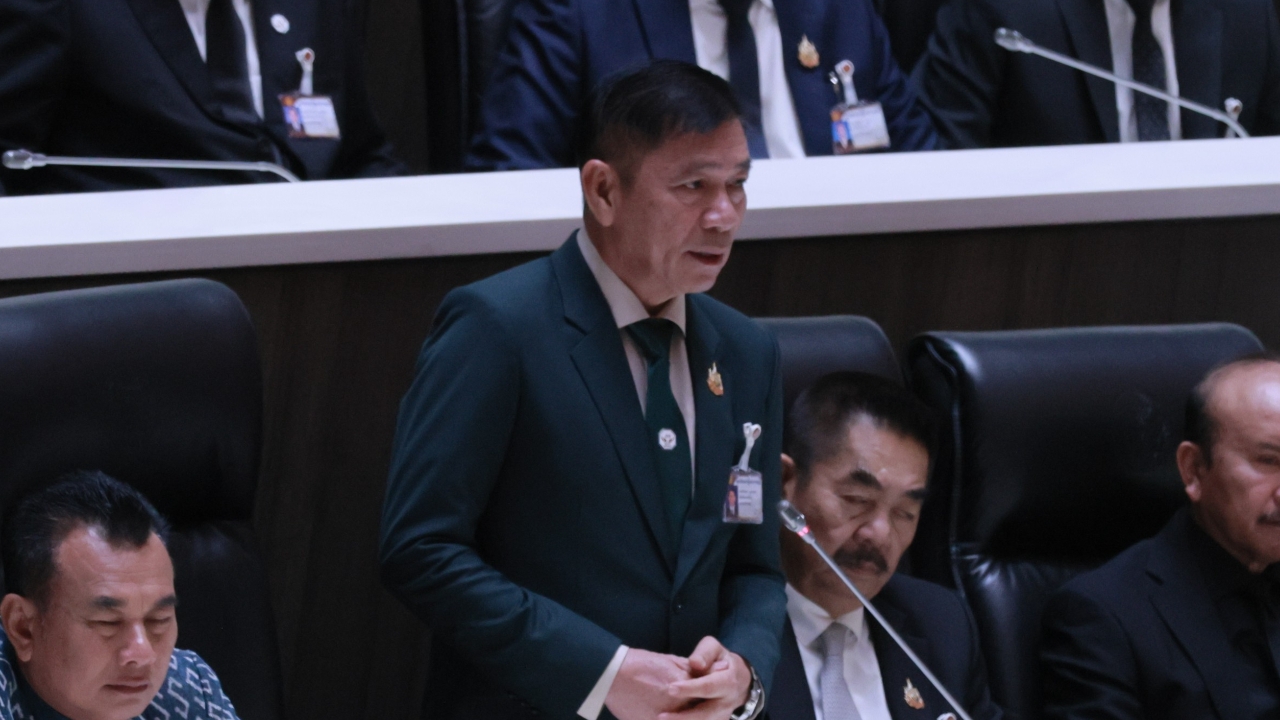
Chamlong Phunwantha criticized the government’s agricultural policies as mere dream-selling. He pointed out that farmers growing cassava earn only a 100 baht profit per rai amid soaring oil prices and an influx of smuggled goods, leaving farmers “poverty-stricken and at their wit’s end.” He urged the government to stop sugarcoating the situation and to urgently focus on water retention, roads, and elderly allowances before the crisis deepens.
On 10 Apr 2026 at 10:20 a.m., during a parliamentary session reviewing the government's policy statement, Chamlong Phunwantha, MP for Kalasin from the Kalatham Party, spoke about farmers’ hardships. He questioned the reality behind government claims to modernize agriculture using new technology, warning against overreliance on AI. He stressed that the most important thing is to listen to the real voices of villagers facing problems daily.
Chamlong said most Thais still work in agriculture—growing sugarcane, cassava, rice, or rubber—but farmers face soaring production costs while crop prices fall, leaving almost no profit. For example, cassava, a key crop in Kalasin, now costs about 7,700 baht per rai for fertilizer, plowing, pesticides, and labor, but yields only about 7,800 baht in return, leaving a mere 100 baht profit—barely enough for basic living expenses.
He also highlighted issues facing sugarcane farmers: although yields are 10–15 tons per rai, current prices of 600–700 baht per ton barely cover the high production cost of about 6,600 baht per rai. This is especially severe in areas with water shortages or poor soil quality, causing farmers to suffer heavy losses.
“The Prime Minister said the government would support agriculture from upstream to downstream and claimed that within two months, people would become wealthy, and within four years, prosperity would be overwhelming. But in reality, villagers say, ‘We’re so poor we can’t take it anymore, we’re dying,’ because incomes don’t cover expenses, money is hard to come by, and living costs rise in every aspect.”
Chamlong expressed doubt about the government’s push for biofertilizers, saying many farmers feel biofertilizers don’t produce returns worth the cost, so they end up reverting to chemical fertilizers. He urged the government to review promotion measures to fit local realities. He also called for urgent action against illegal agricultural imports, especially cassava, which is much cheaper from neighboring countries, leading traders to prefer imports over domestic products.
“Dry cassava from neighboring countries costs 3.50 baht per kilo, plus less than one baht in border fees, still cheaper than Thailand’s 5.60 baht per kilo. Who would traders choose to buy from? If this continues, how can Thai farmers survive? The government must seriously enforce laws and not let the powerful or big players evade responsibility while small farmers face prosecution,” Chamlong said.
Beyond agriculture, Chamlong proposed that the government increase elderly welfare allowances on a tiered basis to reflect current living costs: 1,000 baht per month for ages 60–70, 1,500 baht for ages 70–80, and 2,000 baht for those over 80 or bedridden.
“The key to improving farmers’ quality of life is systematic water management and infrastructure development, especially roads to facilitate agricultural transport, reduce costs, and increase income opportunities. Water, roads, and justice are essential. If the government truly wants to help farmers, it must take tangible action, not just make pretty promises on paper,” Chamlong concluded.