

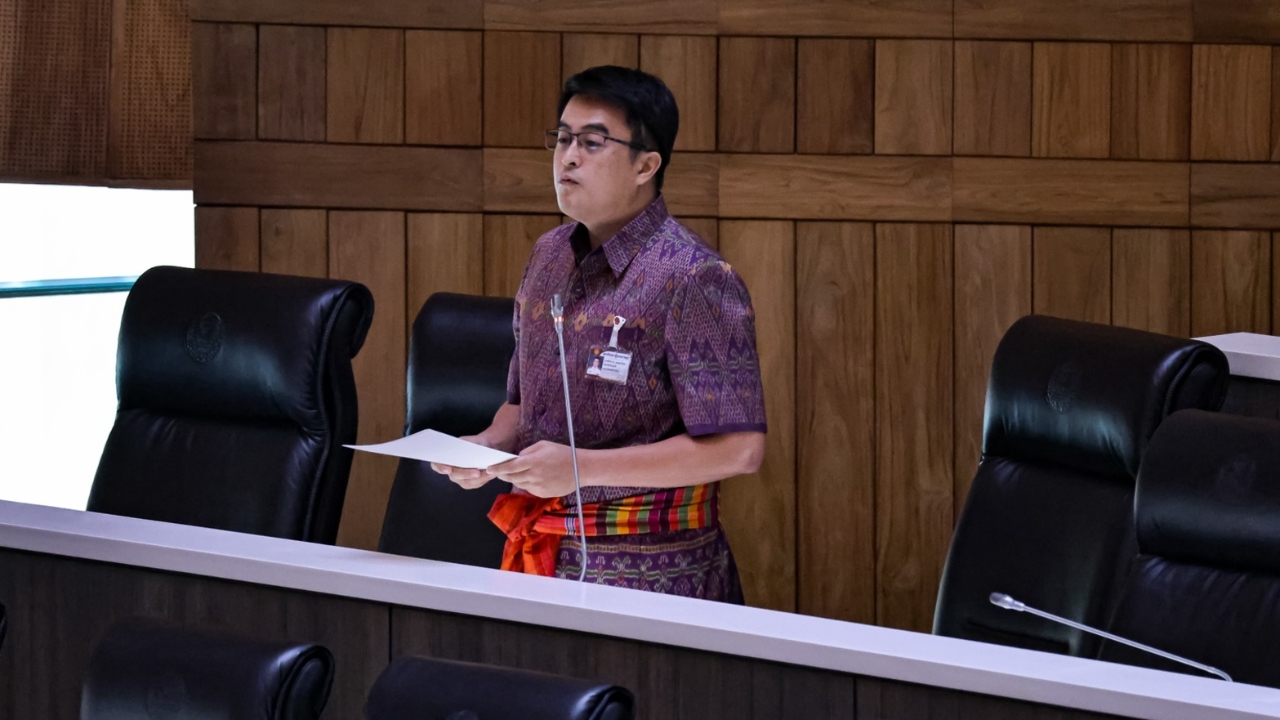
Chatchawan Phaetthayathai used opposition time to expose the failure of Thailand's agricultural sector, citing plummeting paddy rice prices and farmers burdened by debt. He highlighted two measures to help grassroots farmers overcome the crisis, stressing the need for action rather than just talk.
On 10 Apr 2026 GMT+7 at the Parliament Building, during the first joint parliamentary session (annual ordinary session 1) to consider urgent matters, the Cabinet presented its policy statement under Article 162 of Thailand's Constitution. On the 2nd, Chatchawan Phaetthayathai, an MP from Roi Et representing the Thai Sang Thai Party, spoke during opposition time. He criticized the government's agricultural policies, noting that although the government promised to raise farmers' income and make Thailand a global food security hub, in reality, Thailand's agricultural sector faces a severe structural crisis.
Particularly, the off-season paddy rice price has fallen to only 5 baht per kilogram, while production costs have surged to 5,000 baht per rai. This has forced farmers into heavy debt, making them unable to support themselves. It reflects a life crisis for grassroots farmers who must abandon farming to work in cities to repay debts. This starkly contrasts the government's optimistic policies. Additionally, issues with water management and irrigation systems worsen the crisis because most Thai farmers still rely on rainfall and lack stable water sources. They cannot plan production efficiently and face droughts and floods. Furthermore, local businesses and small shops are being overtaken by large convenience store chains operating 24 hours. Rural people face unemployment, insufficient income to support their families, and no future in the current economic structure that squeezes small players.
"To help farmers overcome this crisis, I propose the government immediately implement proven assistance measures, especially reducing production costs and increasing harvesting subsidies to 1,000 baht per rai, up to 20 rai per household. Also, expedite overdue payments from last year to more than 150,000 farmers. Measures to stabilize rice prices through delayed sales loans and rice collection programs should be maintained. Strengthening agricultural cooperatives nationwide, providing low-interest loans to farmers, and managing agricultural markets to align with global demand stably are also crucial. If farmers, the country's foundation, cannot survive, the entire economy will be affected. I urge the government and the Ministries of Commerce and Agriculture to work together concretely as pledged to parliament—not just promising beautiful policies they cannot deliver, which is what people fear most right now," Chatchawan said.