

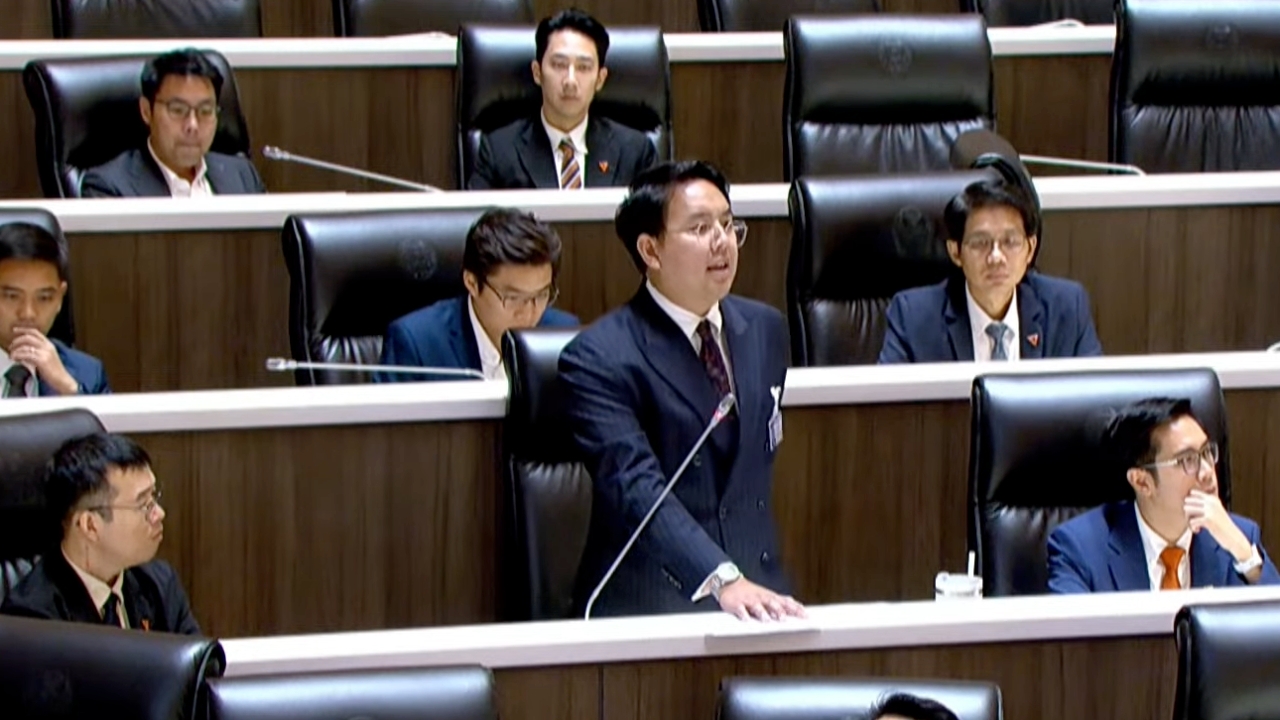
Supachot criticized the government for being afraid to confront the 'masked boss' of power plants and expressed disbelief that energy structural reform policies will truly happen. He asked whether the government has consulted energy investors yet.
At 14:24 on 10 April 2026, Supachot Chaisat, a party-list MP from the Prachachon Party, argued that regarding the electricity price policy, during the campaign the government clearly promised electricity at 3 baht for the first 200 units of usage, benefiting 22 million households and saving 3,000 baht. However, after winning the election, the minister stated that the 3-baht rate for the first 200 units would only apply to households using no more than 200 units. Furthermore, today’s policy statement did not mention this policy at all. He questioned whether the government still intends to reduce electricity costs for the people. The statement also avoided confronting the 'masked boss' of power plants, who receive over 50 billion baht annually from the public for free. This excludes the community solar projects, which seem to be handed over by the government to investors for more than 1,500 megawatts. The selection process looks even worse, appearing to open doors for specification rigging, collusion, and easy favors to investors. While promoting cheap electricity, the government hesitates to confront those causing high electricity costs. How can the public trust such a government?
He questioned whether this is secretly opening the door for investors to monopolize.
Supachot further argued that although the policy statement mentioned reforming the energy structure towards a free electricity market, our country lacks doers, not talkers. He has never seen any government dare to challenge the existing structure. If the government speaks of a free electricity market, it must include mechanisms to prevent monopolies so that energy investors cannot dominate entirely. He is uncertain whether the omission of this issue in the policy statement is due to ignorance or deliberate intent. Energy reform is necessary, but he sincerely asks if the government has consulted energy investors to see if they agree or if they have colluded to allow them to monopolize. That is why the government is pushing this issue. Today’s energy statements seem half-baked, just patched together with nice-sounding phrases, similar to the oil issue. The government should show leadership, and in the first month, apologize once more, telling the public that the 3-baht electricity policy from the campaign is no longer feasible. They should stand and bow twice: first, to apologize for previously accusing the public of hoarding fuel, and second, to apologize for failing to fulfill their own policy.