

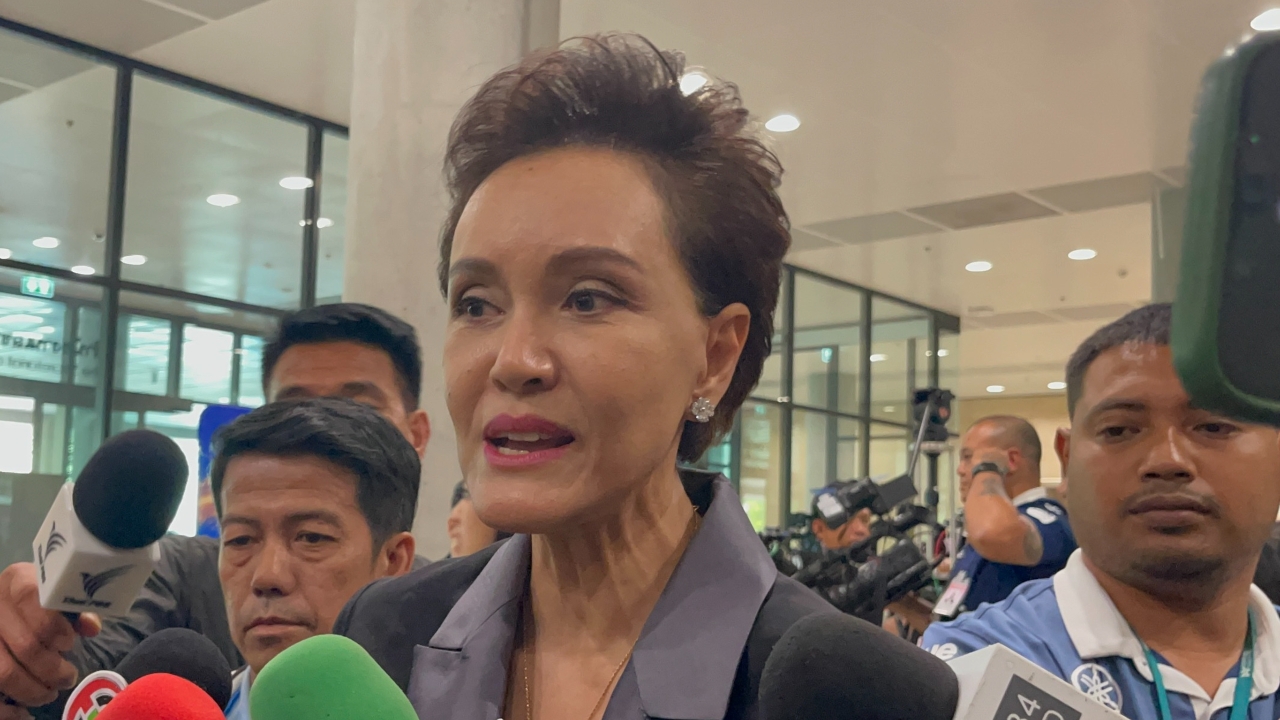
Supajee clarified the drama surrounding the debate on 365-day tourism in Thailand, emphasizing that it is a different matter from solving the PM 2.5 dust problem. She shook her head but did not lose motivation after people misunderstood. She said people nowadays might listen less. Regarding coconut prices, she listens to all parties, noting that even a price of 10 baht is still unsatisfactory. She pointed out that prices may fall sometimes depending on quality and quantity of the produce.
On 10 April 2026, Mrs. Supajee Suthammanphun, Deputy Prime Minister and Minister of Commerce, spoke about the drama arising from the debate on PM 2.5 dust, which some said might prevent tourism in certain provinces every day of the year. She said the PM 2.5 dust issue is important and must be resolved, with a committee in charge. However, during last night's debate, the topic shifted to tourism, specifically a 365-day tourism calendar, highlighting that Thailand has beauty in every season and can be visited throughout the year. Some misunderstood during the pollution period, for example, saying one cannot visit Chiang Mai now. She understands this because the pollution must be addressed, and relevant committees are giving it high priority since it is a crisis. It is not only about tourism because residents' quality of life and clean air matter. At the same time, tourism has other aspects that can be developed year-round. She said her point was about tourism, but people raised the pollution issue, which are two separate matters that must be coordinated from different perspectives.
"I never said pollution is irrelevant or to just endure it. That is not true. Pollution is not only in Chiang Mai; it also exists in Bangkok and other provinces. We must address the source of the problem, and there are agencies and ministries responsible. We were talking about two different topics. Tourism is one aspect, and we must work on it because tourism generates income. I ask everyone to help clarify that I never said pollution is unimportant. Pollution is very important and must be solved, but when I spoke about tourism," she said.
When asked if she lost motivation after people misunderstood her message, Supajee said no. She explained that if people listen briefly, they get only part of the message, but if they listen from beginning to end, they would understand. She noted that people today may not listen much or listen enough. She said it is her duty to explain and to work.
Supajee also responded to criticism from Mr. Weerayut Karnchuchat, MP of the Prachachon Party, who criticized the explanation about coconut prices. He said that although the price was said to have risen to 7 baht, in reality, it is still only 3 baht. He urged Supajee to listen more to farmers than to government officials.
Supajee explained that she listens comprehensively. Whether the price is 3 baht or 7 baht, it is still unsatisfactory because the price could be much higher. She referred to a response made on 9 April 2026, regarding solving the coconut price problem, which is not fixed at a single point. The solution must address everything from the source to packaging quality. This year, coconut production is high, so prices may drop somewhat.
Regarding the second issue of quality decline, if coconut quality deteriorates and falls below standards, the price will also be lower. Whether the coconut price is 3 baht, 7 baht, or 10 baht, some sellers can get 10 baht, but realistically, farmers want a higher price. The system needs fixing, but this cannot be done overnight because it is a long-accumulated problem. Therefore, the focus should be on processing and listening to all stakeholders, including controlling production.
"If asked whether coconuts at 3 baht exist, they might be ones still on the tree or those with poor quality. Prices of 7 to 10 baht may also exist but are still unsatisfactory. I would like to ask everyone to help communicate through the media to build understanding," Supajee said.