

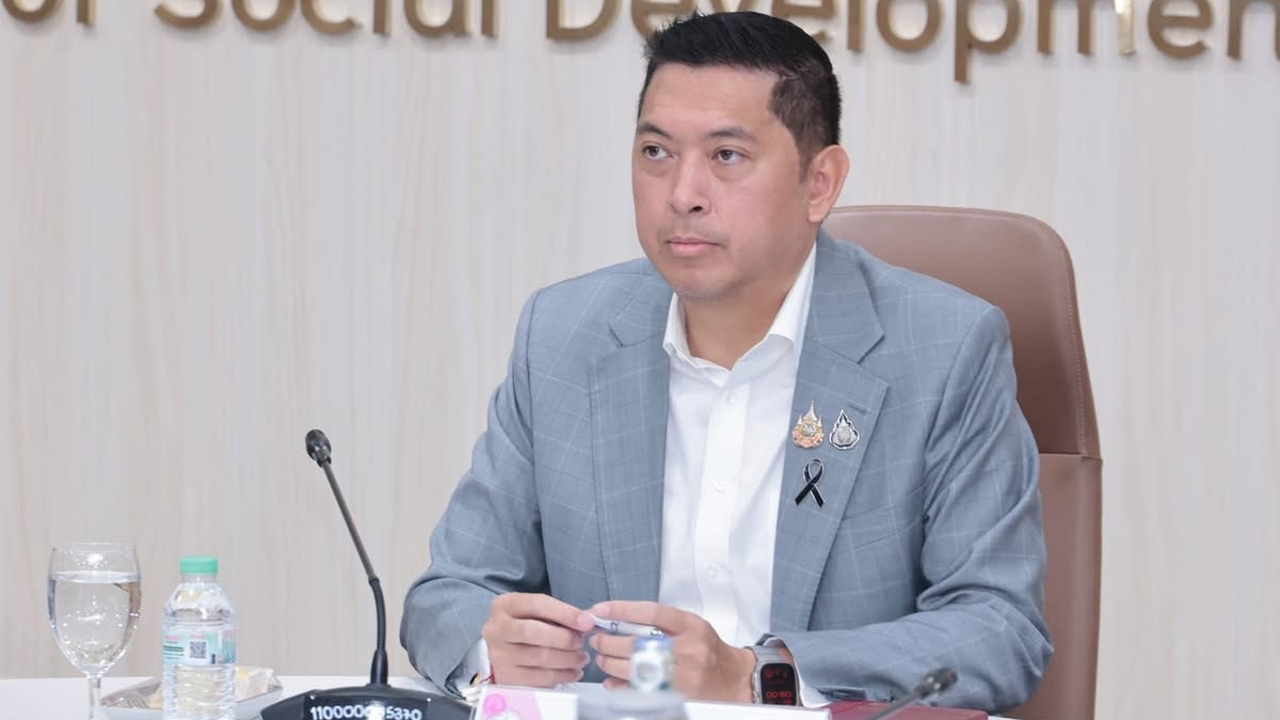
"Nikon" begins his first day at the Ministry of Social Development and Human Security by driving energy reduction efforts and partnering with the Ministry of Higher Education, Science, Research and Innovation to create PM2.5 dust-free spaces and urgent measures to assist vulnerable groups with living costs.
On 10 April 2026, Mr. Nikon Somklang, Minister of Social Development and Human Security, announced that today marks his official first day at the ministry. After meeting with Mr. Kantapong Rangsisawang, Permanent Secretary of the ministry, and senior officials to deliver policies aimed at improving the quality of life for all target groups—especially vulnerable groups including children, youth, women, the elderly, persons with disabilities, and the disadvantaged—he assigned three urgent policy directives to the ministry's leadership.
Work from Home
1. On energy savings, Mr. Kantapong Rangsisawang, Permanent Secretary, and ministry leaders were instructed to accelerate energy conservation in line with government policy led by Prime Minister and Interior Minister Anutin Charnvirakul. This includes allowing ministry officials nationwide to work from home (Work from Home) or anywhere (Work from Anywhere), or alternate work shifts for those serving the public, using technology to coordinate and reduce energy use by about 30%, while maintaining essential public services. The ministry had already initiated energy-saving measures since 6 March 2026.
Accelerating PM2.5 Dust-Free Rooms
2. Regarding assistance for citizens affected by the PM2.5 dust crisis, Mr. Kantapong Rangsisawang and ministry leaders were urged to expedite the expansion of "PM2.5 dust-free rooms" for vulnerable groups served by care facilities under the ministry, especially in northern provinces such as Chiang Mai, Chiang Rai, and Lampang. The plan will then extend to other affected areas. The ministry will collaborate with the Ministry of Higher Education, Science, Research and Innovation to apply innovations to create dust-free spaces that ensure safe health environments for young children, the elderly, persons with disabilities, and the homeless. Mobile rapid response units (RRU) will also be deployed to assist vulnerable groups in remote areas, providing appropriate health care equipment.

Assisting Vulnerable Groups
Mr. Nikon also stated that 3. To alleviate living costs amid the energy crisis, agencies should quickly implement measures to ease expenses, such as accelerating subsidy payments, providing essential goods to vulnerable groups in economic hardship, considering rent reductions for low-income residents in National Housing Authority projects, and lowering loan interest rates for low-income individuals under the Community Organizations Development Institute (Public Organization) or CODI.
Additionally, efforts are being prepared to strengthen social welfare rights for three vulnerable groups—children, persons with disabilities, and the elderly—to enhance their self-sufficiency. The ministry has ongoing programs but aims to make them more concrete by focusing resources precisely for sustainable development. Regarding housing improvements for vulnerable groups, discussions with ministry leadership emphasized expanding capacity in housing projects of both the National Housing Authority and CODI, especially incorporating Universal Design principles to accommodate all individuals and address climate change.
Finally, Mr. Nikon urged all sectors to accelerate support for vulnerable groups who have been left out of registration processes to increase their inclusion. This will enable the ministry to have comprehensive data and provide timely assistance to all groups in need.