

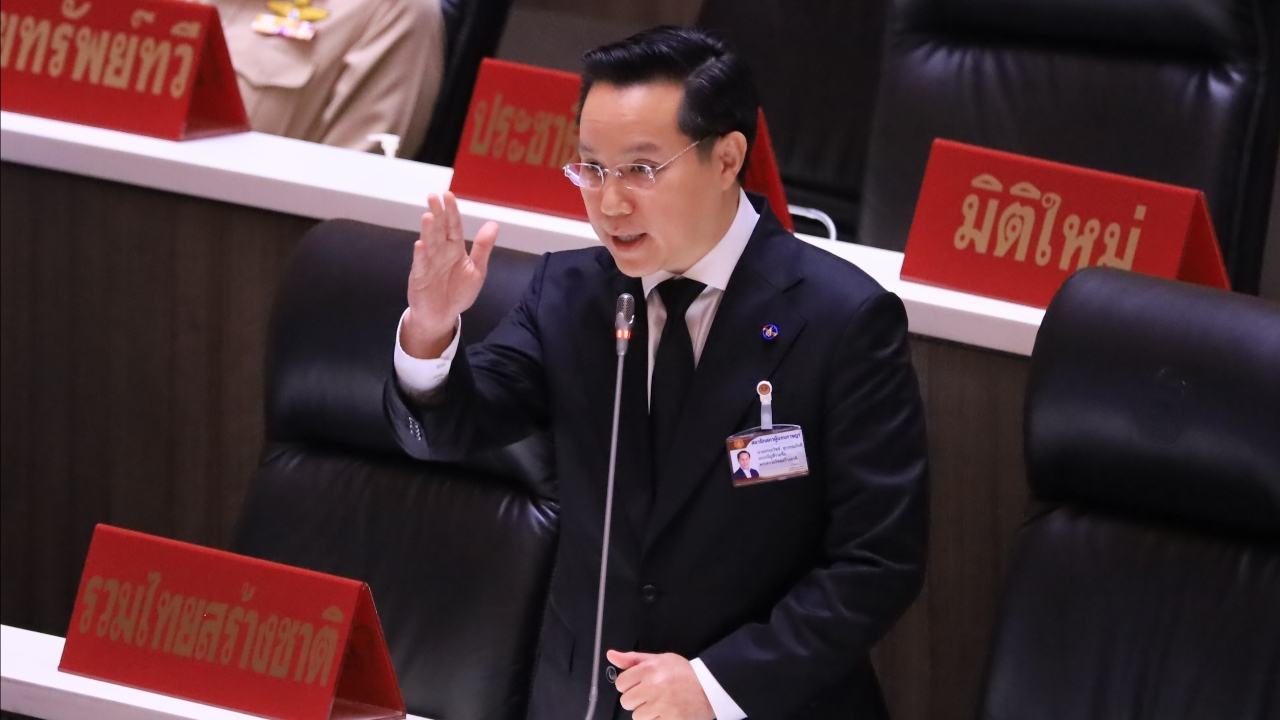
Attawit dissects the energy sector structure, exposing operators who hide oil stocks outside the official system and speculate on price differences.
On 10 April 2026, Attawit Suwanpakdee, Deputy Leader of the United Thai Nation Party (Ruam Thai Sang Chart - RTSC), rose to debate and criticize the government's energy policy. He highlighted irregularities in the oil price crisis facing the public, which stem from three main factors: hoarding, shortages, and severe unfair pricing.
Attawit presented evidence of irregularities regarding the recent 2 baht per liter cut in refining margins on 9 April. Despite this, pump prices did not decrease because the marketing margin was raised sharply from 1.50 baht to 10.50 baht. He likened this to "kicking a pig into a dog's mouth," meaning profits were simply shifted from one pocket to another to protect refinery interests. Meanwhile, Thai oil prices still reference Singapore market prices even though they are based on old, low-cost stock. He therefore proposed that the government impose a "windfall tax" to reclaim excessive profits back to the state.
Regarding hoarding issues, Attawit urged the government to take decisive action by immediately fixing retail and wholesale oil prices to eliminate incentives for speculation. He revealed insider information that some cunning operators evade inspections by storing oil on ships or offshore areas near Surat Thani and Songkhla, causing official stock figures to be inaccurate.
"I have previously contacted the Minister of Commerce to use the Price of Goods and Services Act to control oil prices, but was told they lack authority, even though it is possible or could be proposed to the Cabinet," Attawit said. "Therefore, I place my hopes on Prime Minister Anutin and the current Energy Minister to invoke the Emergency Decree on Oil Shortage to set retail prices and stand with the people."
Attawit also warned of potential oil shortages in May due to the closure of the Strait of Hormuz. He proposed that the Ministry of Foreign Affairs expedite direct oil purchase negotiations with Iran, similar to India’s approach for energy security. He emphasized that any government loans to compensate refineries in the future must cover only "actual costs" without including profits, to prevent long-term exploitation of taxpayers.