

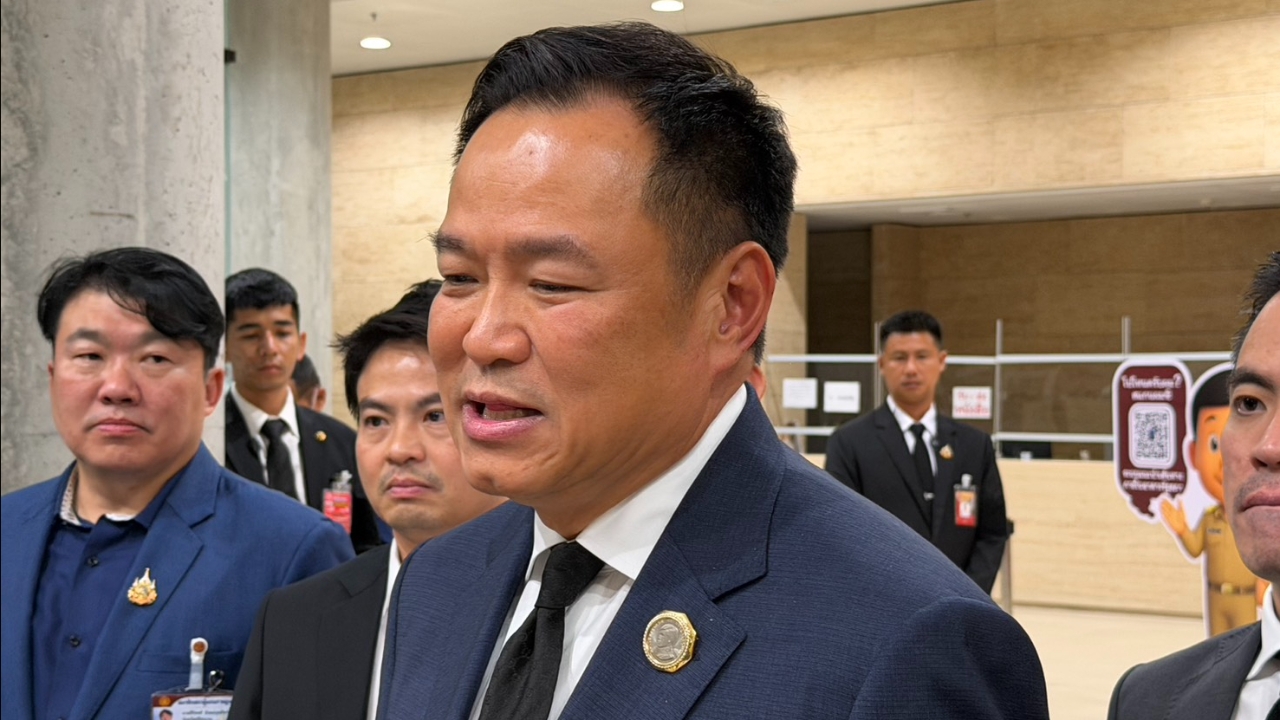
The Prime Minister volunteers to personally lead efforts against corruption, narcotics, and online gambling, while dividing responsibilities among seven Deputy Prime Ministers who oversee strategic clusters, establishing eight task groups to overcome national crises.
On 11 Apr 2026 GMT+7, Prime Minister Anutin Charnvirakul signed a major restructuring order for national administration, dividing it into eight mission groups (Clusters) to enhance agility and effective integration. The key highlight is the Prime Minister taking direct control of the first mission group, focusing on combating corruption, narcotics, human trafficking, transnational crime, nominees, and all forms of online offenses, which are urgent issues directly impacting public security.
Meanwhile, other responsibilities were assigned to seven Deputy Prime Ministers based on their expertise: Phiphat Ratchakitprakarn oversees the nationwide basic public utilities cluster; Songsak Thongsri manages natural resources and environment (Net Zero 2050) and accelerates decentralization to local authorities; Akeniti Nitithanprapas is tasked with attracting investment in future industries (AI, semiconductors, EV); Supachai Suthumpun leads trade, commerce, agricultural products, and tourism to global markets; Sihasak Puangketkaew handles security, sovereignty, and proactive international relations; Yotsanan Wongsawat focuses on research, innovation, and human resource skills development for the digital era; Pakorn Nilprapunt is responsible for legal reform toward international standards, advancing digital government, and promoting Thailand's entry into the OECD.
This order emphasizes seamless collaboration by allowing mission group leaders to integrate across agencies immediately. In case of conflicts, the Prime Minister has the final decision authority. This structure centralizes decision-making to achieve a “Quick Big Win” as outlined in the policy presented to the parliament.