

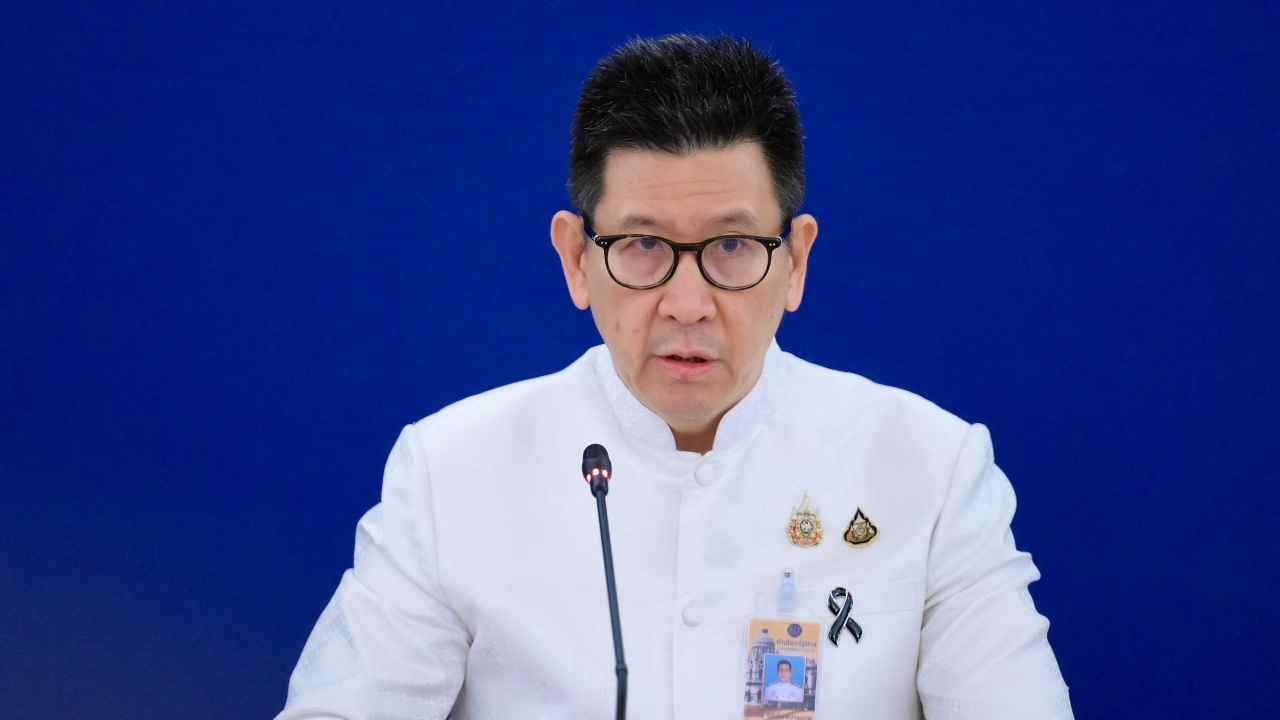
Deputy Prime Minister and Finance Minister Akniti Nitithanprapas explained the cabinet's comprehensive fiscal measures to mitigate the war crisis, including raising the state welfare card fund to 400 baht, providing low-interest loans to citizens, farmers, and SMEs, and allocating budgets to subsidize transport fuel costs for 42 days.
On 11 April 2026, Deputy Prime Minister and Finance Minister Akniti Nitithanprapas announced that on the same day the cabinet approved measures to assist those affected by the conflict in the Middle East region. The aim is to alleviate impacts and prevent economic risks from the situation, which could lead to stagflation—a slowdown in economic growth combined with high inflation—affecting all sectors. The government therefore introduced (1) measures to ease living costs for vulnerable groups, transport, and farmers amid ongoing uncertainty, and (2) support for citizens and businesses to adapt and transition to cleaner energy sources. Additionally, assistance is provided to entrepreneurs and the agricultural sector, which are critical to the country's supply chain, ensuring they have sufficient liquidity for business and farming operations. The government expects these measures to reduce burdens and costs for entrepreneurs and farmers, thus limiting cost pass-through to consumers. The cabinet approved the following measures to assist those affected by the Middle East conflict:
Vulnerable groups: The government will ease the cost of living for 13.22 million people holding state welfare cards by increasing the monthly budget for purchasing consumer goods from 300 baht to 400 baht, effective from 13 April 2026 to 12 May 2026.
General public: Preparedness measures for the general public to adapt and transition to clean energy to reduce the impact of energy crisis volatility include:
The Bank for Agriculture and Agricultural Cooperatives will implement a 30 billion baht half-interest loan program to reduce production costs. This low-interest credit supports farmers purchasing production inputs, along with training and skills development. It includes analyzing fertilizer use appropriate to soil, crops, and area to enhance farming capability and quality of life. The interest rate is 6% per year, with the government paying half (3%) if borrowers meet criteria. Loans are capped at 100,000 baht per borrower, repayable within 12 months, over a 3-year project duration.
Government contractors: To mitigate effects of the Middle East conflict on government contractors, which may affect their business operations and employees, the Comptroller General's Department has relaxed procurement rules. For example, if the winning bidder cannot sign contracts, this is considered reasonable and not contract abandonment, with deposits returned. For signed contracts affected by the situation, temporary work stoppages may be negotiated as appropriate. If a contract is signed but work has not started, the government agency can terminate the contract and return deposits. Additionally, the reference prices for construction projects using diesel fuel have been adjusted to 51.00–69.99 baht per liter to reflect current conditions. The Budget Bureau is expediting fund transfers and reallocations to compensate for approved adjustable-price contracts (K value) and reviewing contract terms to align with current economic conditions, accommodating fuel and material price volatility.
Measures for SMEs: The Ministry of Finance, together with Government Savings Bank, is implementing a 100 billion baht low-interest loan project (Soft Loan) "GSB Thai Business Revival" for entrepreneurs seeking to invest in transformation related to environmental friendliness, digital technology, and more. Additionally, the Small and Medium Enterprise Development Bank of Thailand offers the SME Green Productivity loan for investment and working capital to upgrade and transition to green industries, covering processes or technologies reducing energy use, renewable energy systems, and electric vehicle (EV) industries. Interest rates are 3% per year for the first three years, with loans capped at 30 million baht per enterprise. The Export-Import Bank of Thailand has the EXIM Support Plus measure providing working capital for Thai exporters affected directly or indirectly by rising transport costs due to the conflict, charging 4.00% interest for small enterprises. There is also an export insurance program with special premiums to cover increased risks from the Middle East crisis.
The cabinet approved a budget of 2.061 billion baht to subsidize fuel costs for the transport sector for 42 days (from 20 April to 31 May 2026), distributed as follows:
1) Non-regular trucks (large trucks with 10 or more wheels and small trucks with fewer than 10 wheels): 1.354 billion baht
2) Public motorcycles: 97 million baht
3) Category 2 and 3 public buses (vans and minibuses): 81 million baht
4) Category 4 public buses: 9 million baht
5) Fuel-powered taxis: 8 million baht
6) Non-regular passenger buses: 311 million baht
7) Support for The Transport Company Limited to reduce travel costs for the public during the Songkran festival from 6 to 19 April 2026: 200 million baht

Deputy Prime Minister and Commerce Minister Supachai Sutthumpan disclosed that the Ministry of Commerce proposed an additional 260.6 million baht from the central budget for projects to mitigate public impacts from the Middle East conflict. These include the "Green Flag Economy Plus" project to help farmers procure chemical fertilizers and production inputs; a project to reduce living costs by distributing affordable goods through the "Blue Flag" initiative and mobile shops in communities; and the "Thai Helps Thai" SME income-boosting project aimed at rapidly stimulating the grassroots economy by enhancing liquidity and reducing cost burdens for SMEs and community enterprises, to be implemented in 2026.
Deputy Prime Minister Akniti also revealed that the cabinet assigned the Budget Bureau to consider reducing government agency budgets, such as suspending overseas study tours and training, replacing them with domestic activities, and reducing energy use within government offices. Teleworking (Work From Home) will be encouraged for roles that do not affect public services to lower energy consumption and improve public resource management efficiency.

