

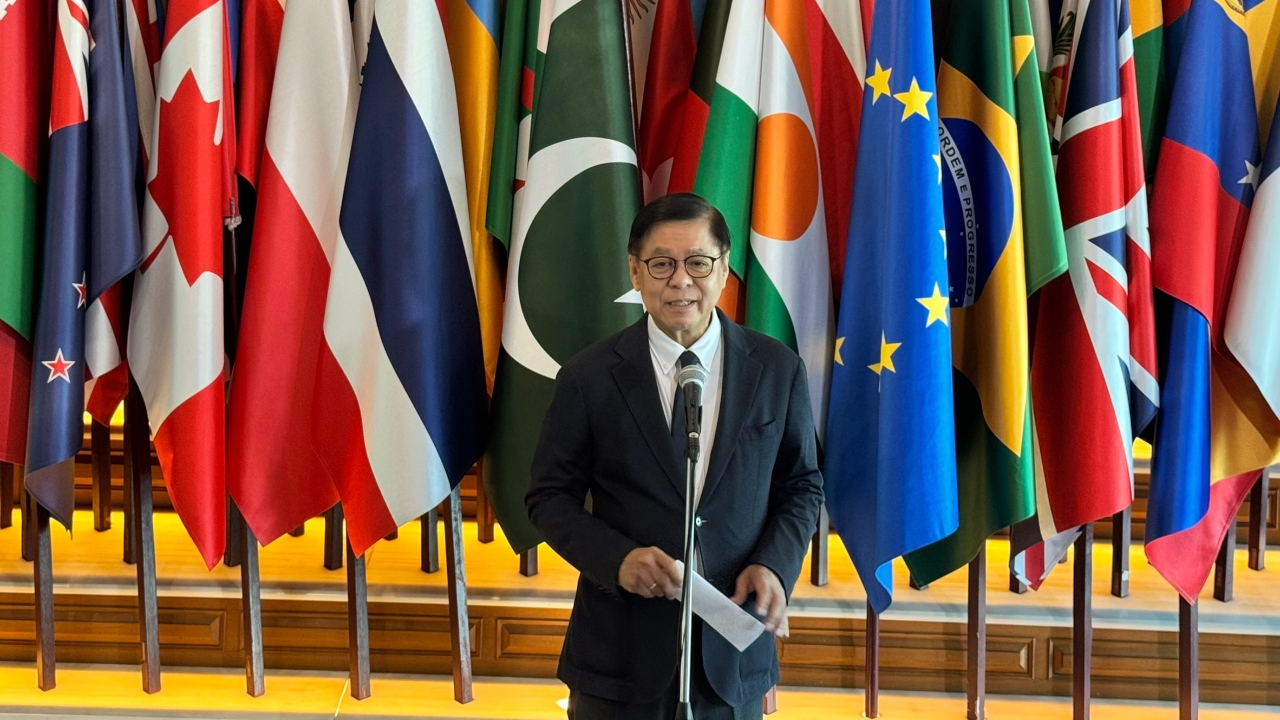
Sihasak revealed that ASEAN is urging the United States, Israel, and Iran to quickly reach an agreement leading to peace after Trump threatened to blockade the Strait of Hormuz, fearing a long-term energy crisis and emphasizing the need to respect freedom of navigation. Tags: [ASEAN, Middle East, US, Israel, Iran, Energy Crisis, Strait of Hormuz, Diplomacy]
On 13 April 2026, Mr. Sihasak Puangketkaew, Deputy Prime Minister and Minister of Foreign Affairs, announced after the special ASEAN Foreign Ministers’ meeting on the Middle East situation that the discussion focused on how the Middle East situation would impact ASEAN. He expressed concern that the talks held in Islamabad between the US and Iran have not yet reached an agreement and acknowledged the complex issues in the Middle East require multiple negotiation rounds. He expressed hope that all parties will continue diplomatic efforts to resolve the situation.Tags: [ASEAN, Foreign Ministers, Middle East, US-Iran Talks, Diplomacy]

At the same time, there is concern following reports that the United States might blockade the Strait of Hormuz, which would escalate tensions and potentially lead to increased conflict—an outcome ASEAN and the international community wish to avoid. Therefore, ASEAN urges the US, Iran, and Israel to engage in dialogue to reduce tension and violence and to build mechanisms for a long-term agreement leading to peace.Tags: [ASEAN, US, Iran, Israel, Strait of Hormuz, Conflict Prevention, Diplomacy]
ASEAN recognizes that the region is affected in terms of energy security, prompting all ASEAN countries to implement energy-saving measures. The impact is not only on oil and gas prices but also on living costs and food prices. Although ASEAN as a whole has yet to fully cooperate due to each country focusing on its own challenges, this has spurred ASEAN to consider long-term cooperation to enhance energy security. Mr. Sihasak added that ASEAN foreign ministers have urged the ASEAN energy ministers to meet urgently to explore concrete collaborative energy measures. For example, energy-producing countries would prioritize assisting other ASEAN countries lacking oil and gas, especially those already facing shortages or crises. They also aim to cooperate on renewable and clean energy, share knowledge, and mobilize funding from various sectors, including within ASEAN, the private sector, and international financial institutions, to support ASEAN countries in developing renewable and clean energy.Tags: [ASEAN, Energy Security, Renewable Energy, Cooperation, Energy Crisis, Food Prices]
Regarding food security, ASEAN is relatively advantaged as a region that produces and exports food globally. Moving forward, there may be cooperation to stockpile certain food quantities as a reserve in case ASEAN food-producing countries face shortages, insufficient production, or difficulties in securing adequate imports. Countries with sufficient production would then be able to provide assistance.Tags: [ASEAN, Food Security, Food Reserves, Agriculture, Regional Cooperation]
Lastly, ASEAN's capacity to respond rapidly to international or internal crises that affect the region collectively is crucial in terms of organizational structure and decision-making. Vietnam has prepared a document for ASEAN discussions emphasizing that in times of crisis, ASEAN must have the capacity and structural readiness of institutions and decision-making processes to enable quick and effective action.Tags: [ASEAN, Crisis Response, Institutional Capacity, Vietnam, Regional Cooperation]
Furthermore, the meeting reaffirmed the principle that all parties, especially Iran and the United States, must respect international regulations, particularly the freedom of navigation and safety in the strategically important Strait of Hormuz.Tags: [ASEAN, Freedom of Navigation, International Law, Strait of Hormuz, Iran, US]