

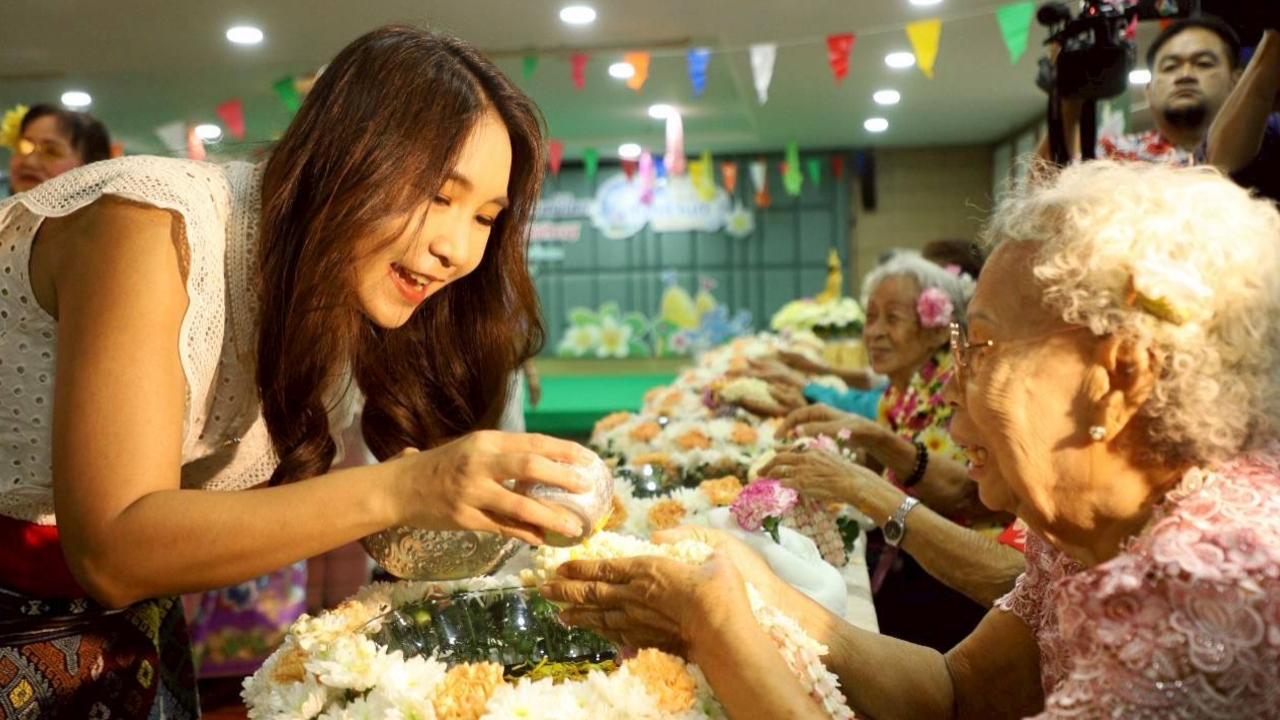
Sirikanya led a team of Bangkok MPs in a water-pouring ceremony honoring the elderly at Bangpakok Hospital, highlighting concerns over the aging population in Bangkok and urging rapid promotion of the Bangkok Metropolitan Administration Act to grant more authority and budget for broader elderly care.
On 14 April 2026 at Bangpakok 9 International Hospital in Bangkok, Ms. Sirikanya Tansakul, Deputy Leader of the People’s Party, along with Nattacha Boonchai-insawat, party-list MP of the People’s Party, and nearby district MPs from the People’s Party, took part in the "Happy Songkran Day, Joyful Elderly" event, conducting traditional water-pouring ceremonies for senior citizens and other Songkran festivities.


Ms. Sirikanya stated that Bangkok is experiencing a rise in its elderly population similar to other major cities worldwide. The city hosts many nursing homes and elderly care facilities, which have struggled with overcrowding, budget shortfalls, and staff shortages to adequately serve the senior population.
Currently, elderly care is among several issues Bangkok cannot fully address due to its administrative structure, where many powers rest with central agencies while Bangkok has limited authority. This is why the People’s Party has consistently proposed amending the Bangkok Metropolitan Administration Act to restructure Bangkok’s powers, especially to improve the speed, coverage, and completeness of public services managed by Bangkok itself.

Ms. Sirikanya added that Bangkok faces many longstanding problems that remain unresolved. The amended Bangkok Metropolitan Administration Act would grant the city greater authority through decentralization, transferring missions, budgets, personnel, and assets. Expanding Bangkok’s powers in public services would operate under a negative list system, increase revenues via new fees, issue bonds, engage in partnerships, and establish legal entities.

Additionally, the People’s Party’s version of the Act would create a two-tier Bangkok administration: one level with the Governor and Bangkok MPs, and another with district heads or mayors and district councilors. This structure aims to improve governance efficiency and increase public participation through town hall meetings, enabling citizens to propose projects, budgets, or ordinances.


Nattacha noted that welfare and care for the elderly in Thailand have been chronic problems for a long time, worsened by the current crisis affecting the broader population, especially vulnerable groups such as children, the elderly, people with disabilities, and low-income individuals.
These vulnerable groups already faced difficulties accessing basic rights quickly, comprehensively, and fairly, losing opportunities for essential welfare. The ongoing crisis and delayed, uneven government assistance have made these impacts even more apparent.