

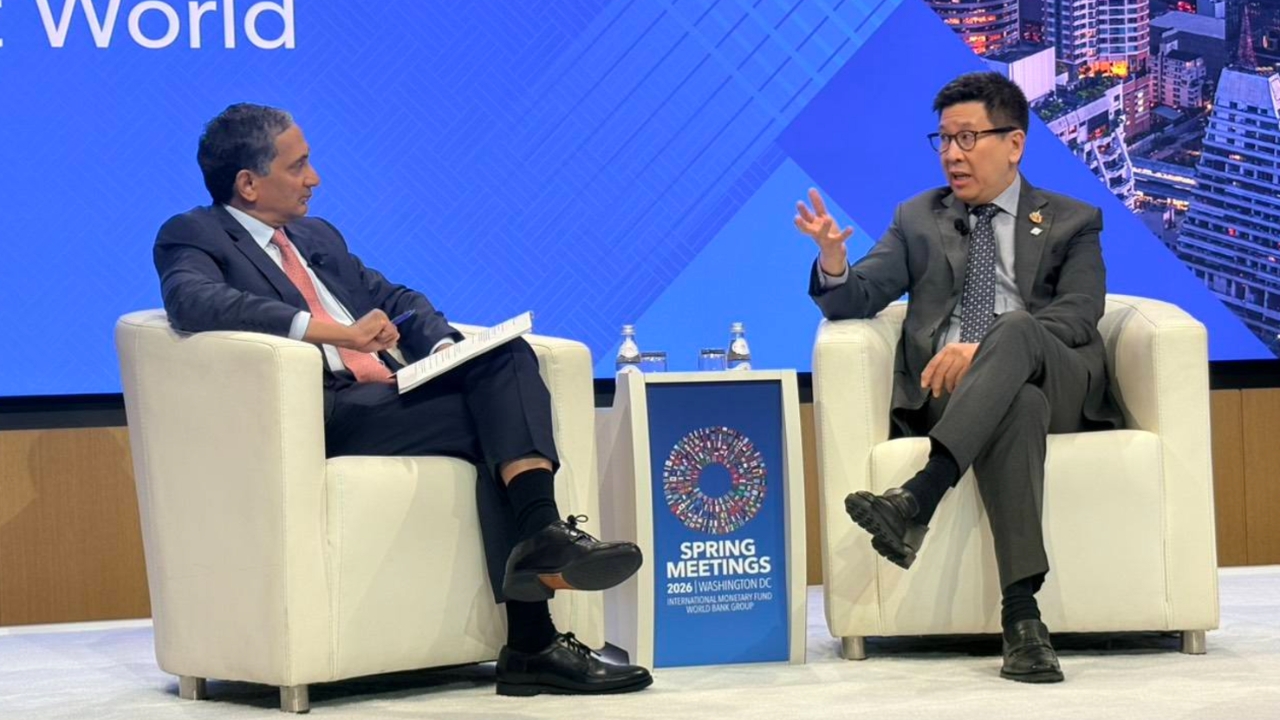
“Akniti” presented a vision to tackle global economic volatility, energy prices, and geopolitical risks through the “4T” policy framework, noting that the Thai government emphasizes targeted fiscal policies focused on assisting specific groups.
On 15 April 2026, Mr. Akniti Nitithanprapas, Deputy Prime Minister and Minister of Finance, delivered a vision statement on the global economic outlook and the role of the Asian region including Thailand, as well as policies to address uncertainties from geopolitical situations—especially conflicts in the Middle East—and medium-term economic restructuring approaches at the IMF Governor Talks under the 2026 Spring Meetings of the World Bank and International Monetary Fund Governors in Washington, D.C., United States.
Mr. Akniti emphasized that the Thai economy faces structural constraints, particularly low investment levels compared to potential. Therefore, the government has set “investment upgrading” as the core of its economic strategy. This involves accelerating investment in infrastructure, digital technology, artificial intelligence (AI), human capital development, and regulatory improvements to boost productivity and create balanced, sustainable long-term growth.
He also discussed approaches to manage energy price volatility and geopolitical risks through the “4T” policy framework: Target (focused assistance), Transition (shift to clean energy), Transformation (economic restructuring), and Together (collaboration across sectors). This is alongside accelerating energy infrastructure development such as Smart Grid to enhance power system efficiency and flexibility, promoting Direct Power Purchase Agreements (Direct PPA), and supporting the expansion of renewable energy use in the economy.

, Regarding fiscal policy, the government focuses on targeted fiscal measures, assisting specific groups rather than broad-based aid, while also accelerating investment in the green and digital economy. This aims to strengthen Thailand’s long-term economic competitiveness and resilience. At the end, he stressed ASEAN’s role in a fragmented world, noting Southeast Asia can serve as a “cohesive force” in the global economic system.
Additionally, as host of the IMF–World Bank Annual Meetings in October 2026 in Bangkok, Thailand will drive the conference under the theme “Thailand’s New Horizons: Empowering People, Building Resilience,” to offer new perspectives on international economic cooperation amid global challenges. The focus will be on creating new sustainable growth opportunities, transitioning to a green and digital economy, enhancing the resilience of the global economic system, and elevating ASEAN’s role as a key driver of the global economy going forward.