

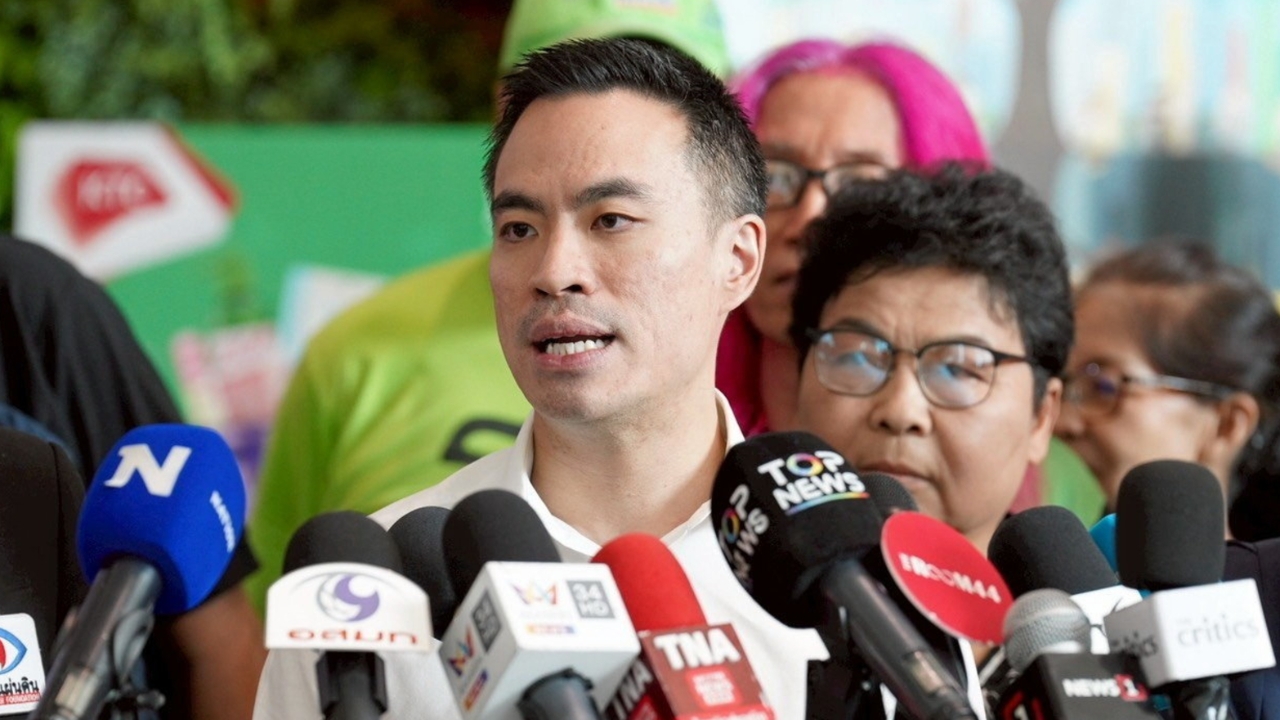
The Minister of Energy announced that at least five oil depots have been hoarding fuel to sell at higher prices. A special committee was formed to collect data going back to February 2026. Preparations are underway to forward the case to the DSI and police for prosecution. Investigations will cover all agencies, with negligence resulting in legal action.
At 10:50 a.m. on 16 April 2026 GMT+7. Police Lieutenant General Ruthaphon Naowarat, Minister of Justice, , accompanied by Mr. Eknat Promphan, Minister of Energy, Mr. Prasert Sinsukprasert, Permanent Secretary of the Ministry of Energy; Police General Thatchai Pitanilabutr, Deputy Commissioner-General of the Royal Thai Police and Director of the Anti-Human Trafficking Center; Police Lieutenant Colonel Yuttana Phraedam, Director-General of the Department of Special Investigation (DSI); Admiral Thadawut Thadpitakkul, Chief of Staff of the Navy and Secretary-General of the Office of National Maritime Interests Protection; and Police Lieutenant General Nopasil Poolsawat, Commander at the Office of the Royal Thai Police Commissioner, jointly held a press conference on proactive operations to expand and investigate target areas to prevent and resolve the fuel shortage crisis.
Mr. Eknat stated that, as Minister of Energy, he is responsible for overseeing oil matters, especially those exacerbating shortages during crises. Investigations found abnormalities where gas stations or endpoints lacked fuel for sale, despite there being sufficient supply, and raw material imports remained normal. In March 2026, during the refinery crisis, production exceeded usual levels. Comparing with March 2025, normally diesel refining is 70 million liters per day, but in March 2026 it was 78 million liters daily, an 8 million liter increase each day, totaling an additional 200 million liters for the month. Checking diesel stock at six refineries showed over 1.2 billion liters stored. Additionally, an extra 500 million liters were drawn from stock, dropping the lowest stock level to about 700 million liters. Combined, about 700 million liters were distributed, valued over 10 billion baht.

Despite increased production, reports from gas stations indicated reduced fuel sales quotas and lower supply. Consumers queued but were unable to refuel. Jobbers reported being denied fuel to resell to independent stations, rural pumps, farmers, or industry—contradictory to the increased output. This suggests leakage, hoarding, speculation, and delaying purchases at low prices to stockpile fuel for resale at higher prices.
The Ministry of Energy considers that this crisis and associated processes have deprived the public of fuel. As chairman of the Oil Fund Committee, from March to now, nearly 60 billion baht from the Oil Fund has been used to subsidize fuel prices for consumers. However, these subsidies have inadvertently supported hoarding and excessive profits for traders.

The Ministry has collaborated with the Ministry of Justice, DSI, Royal Thai Police, the Office for National Maritime Interests Protection, and related agencies to inspect 92 oil depots nationwide. They have requested data on daily fuel volumes received and dispatched to analyze which depots are hoarding and speculating by buying large quantities at low prices and waiting to sell unusually large amounts at higher prices. At least five depots have been found engaging in such irregularities. A special committee has been appointed to gather data retrospectively back to February. The inspections cover 92 oil depots nationwide. Information will be sent to the DSI and Royal Thai Police for prosecution. If any party causes damage to the Oil Fund—intended to subsidize fuel prices for consumers but instead generating excessive trader profits—the fund will seek compensation.
Regarding transportation—from refineries to traders' depots and gas stations via road, sea, and pipeline—the Ministry has requested data, including fuel transport invoices, which must comply with the Fuel Trade Act, as well as fuel quality checks and storage per the Fuel Control Act. All historical data, especially maritime transport, are being reviewed due to suspicions of leakage, slow delivery, or illegal fuel sales abroad despite export bans. Irregularities have been noted in transport invoices lacking legally required information, offenses punishable by imprisonment. The Ministry will compile and forward this information to the Royal Thai Police and DSI for legal action. Initially, officials responsible have been ordered to collect complete data and verify all agencies' performance. Any neglect of duty will result in prosecution.