

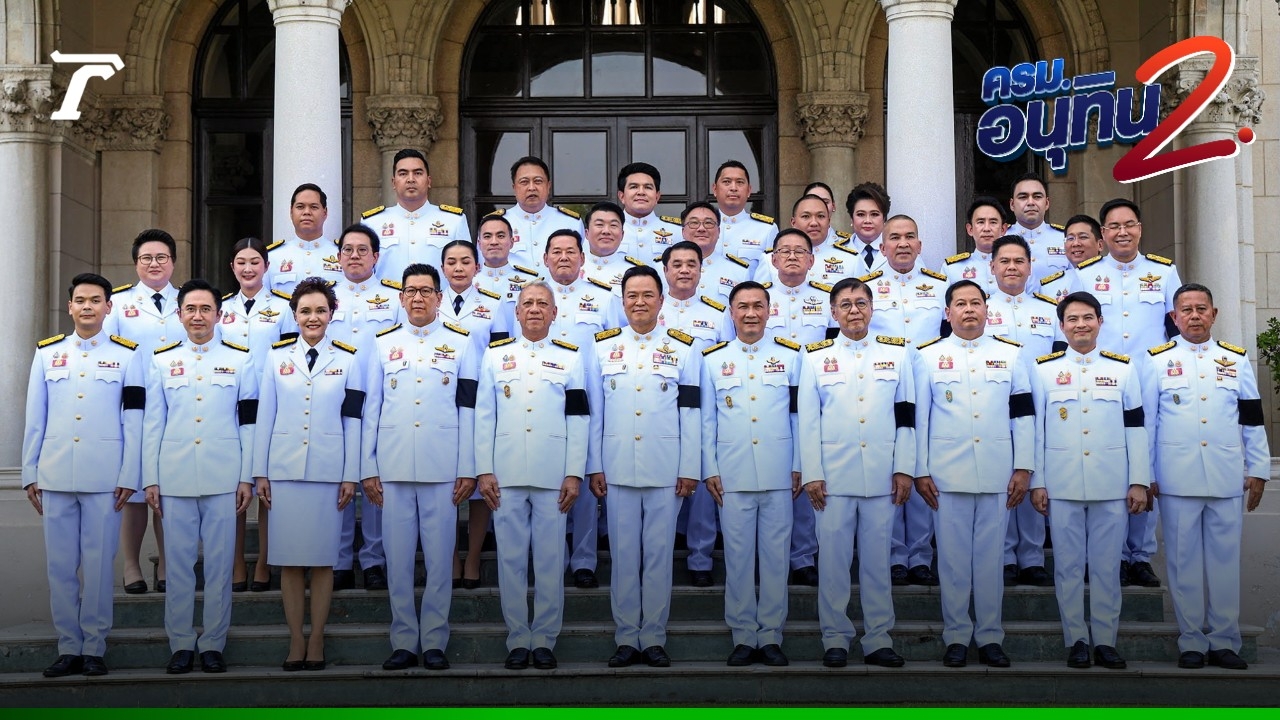
A poll by the King Prajadhipok's Institute indicates that the public still has no clear hope in any group of ministers in the new cabinet. Supachai Suthamphan and Yotsanan Wongsawat have overtaken Anutin in popularity. The public is observing who will convert expectations into confidence through tangible achievements.
On 17 Apr 2026 GMT+7, the King Prajadhipok's Institute released a survey titled “Popularity and Expectations of the New Cabinet from the Public's Perspective.” Conducted from 9 to 12 Apr 2026 GMT+7, the survey sampled 2,000 individuals aged 18 and over, from all regions nationwide. The key findings are as follows.
1. Which group of new ministers is considered the greatest “hope”? (Survey by LINE TODAY)
2. Which minister group is most hopeful in each region?
In the Northeast (48.4%) and South (41.5%), most say no group is clearly a hope. Following are Bangkok (33.5%), the North (31.7%), and the Central region (23.9%). In the East (32.9%), the outside minister group enjoys the highest hope.
The public has not identified a clear “hopeful group” of ministers; over half say no group inspires hope. This reflects that the new cabinet is still in a phase where people prefer to wait and see their performance rather than offer premature confidence. However, some people in certain regions place hope in the outside ministers, indicating that in the public’s view, “professionalism in management” remains a key trait that generates expectations more than novelty or traditional political experience alone.
3. Which minister in the new cabinet is the most favored?
This reflects that public favor toward individuals does not depend solely on their position but also on their image, expectations, and past roles. Popularity for ministers is not yet solidified; many remain in a wait-and-see mode. Leading names have not yet won over society decisively. Everyone must prove themselves through their work and communication with the public.
4. Which minister’s work is most expected?
The highest answer remains “don’t know/no opinion” (19.5%). Among ministers closely watched, Ms. Supachai leads with 13.5%. Following are Mr. Anutin (11.5%), Professor Yotsanan (6.4%), Mr. Eknat Phromphan, Minister of Energy (6.3%), and Mr. Ekniti Nitithanprapas, Deputy Prime Minister and Minister of Finance (5.5%).
In Bangkok (37.6%), Northeast (30.8%), and South (17.8%), “don’t know/no opinion” remains highest. In the Central, East, and North regions, Ms. Supachai ranks first at 21.3%, 20.1%, and 16.6% respectively. In Bangkok and Northeast, the public most expects work from Mr. Anutin at 16.5% and 11.6% respectively.

In conclusion, the new cabinet is still in a phase of proving its performance. The rising recognition of Ms. Supachai and Mr. Anutin in multiple regions shows the public is looking for both a professional image and politically influential leaders. Overall, the popularity landscape remains open, and every position must earn confidence through actual results rather than status or prior reputation.
Moreover, many people remain in a wait-and-see mode regarding the new cabinet’s work and have not yet granted full confidence. However, Among ministers known and watched by the public, Ms. Supachai stands out most, scoring high in both popularity and expected performance. Although Prime Minister Anutin is not the top in popularity, he is among those whose work the public most anticipates.
This reflects that the public does not evaluate the new cabinet merely by image or official status but watches for how quickly they can deliver tangible results. In other words, this cabinet is still in an open phase, proving its real work capacity, and the public is closely following who can turn expectations into confidence through measurable achievements.