

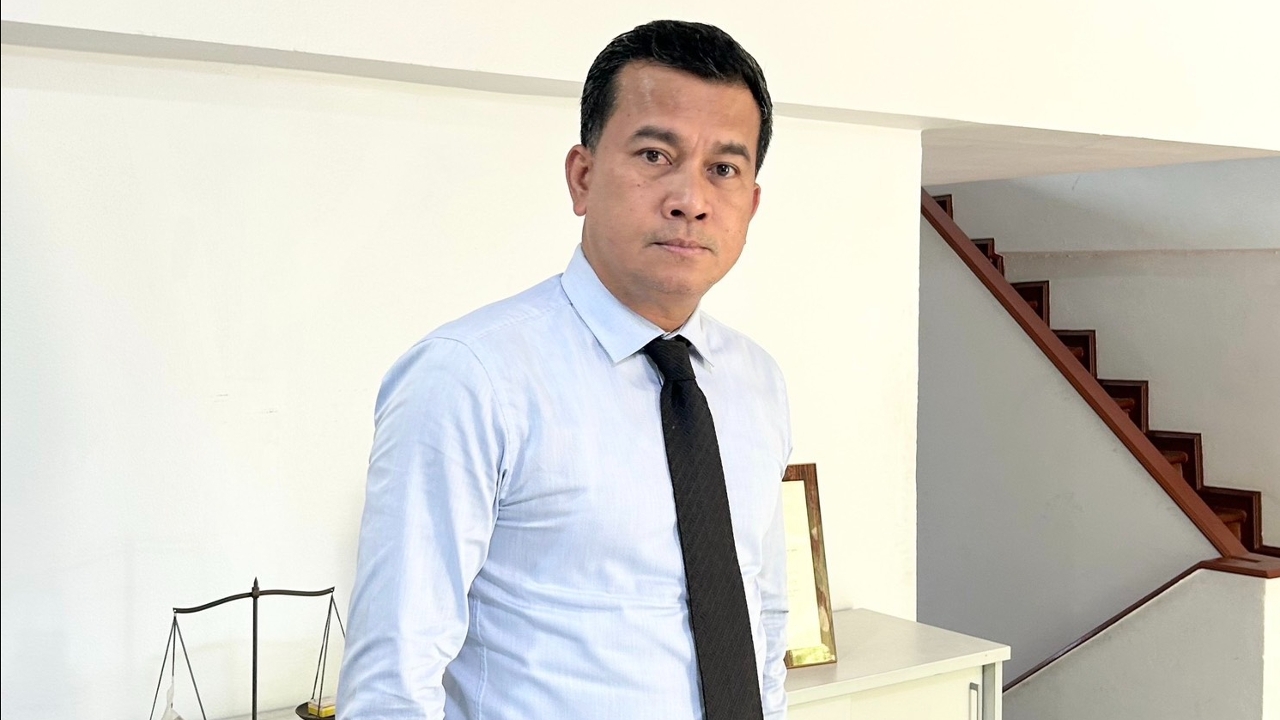
"Chao" defends "Abhisit" and criticizes "Ratchada" for diverting and distorting facts, expressing disappointment. He poses pointed questions about "prime ministerial leadership, high oil prices, the energy crisis, and inflation," condemning "illogical reasoning" after leaving the Democrat Party.
On 17 Apr 2026 GMT+7, Mr. Chao Meekuat, former deputy spokesperson of the Democrat Party, posted on Facebook under the headline "Analyzing Government Spokesperson’s Response to 'Abhisit': Misleading, Distorting, Disappointing" The content states: I read the news about Ms. Ratchada Thanadirek, government spokesperson, responding to leader Abhisit. It is regrettable because once, Ms. Ratchada was supported as fresh blood for the Democrat Party. But as time passes, everyone has their own path, which is natural. However, what is unusual is that Ms. Ratchada dares to contradict leader Abhisit in a way that clearly shows "a completely different caliber". Yet she confidently presents such incorrect information. I believe the one misunderstanding and misreading the facts is Ms. Ratchada, not leader Abhisit. If Ms. Ratchada understood what leader Abhisit was communicating, she would clarify how the government plans to solve the crisis.
He poses pointed questions,
raising several issues from the government spokesperson, such as: Why not address the root cause—high oil prices that increase costs for all goods? Why not impose windfall taxes even though it is possible? Why rely solely on the oil fund as the tool for solving the problem without touching excise taxes and refinery profits? Why does the prime minister sideline other ministers and abandon the public? Why does the prime minister fail to show decisive leadership on key policies? Why, although campaigning that the Ministry of Agriculture and Commerce should be under the same party, are they divided, and even Deputy Prime Minister Supachai does not control Agriculture? How does this impact problem-solving efficiency? Why has the government not clearly communicated how it is addressing overlapping crises, especially with impending cost-push inflation? And why does the government still believe that the “Khon La Khrueng” (Half-Half) program, which is a broad economic stimulus, is the solution in this situation? He criticizes the "illogical reasoning" after leaving the Democrat Party. Mr. Chao further stated that if one cannot clarify the issues directly, one should not show ignorance and lose credibility. Ms. Ratchada acts as if she thinks she is clever, but I think
"she fails," failing because of "distorted logic."
If it is not intentional distortion, it is an attempt to divert the issue, especially regarding budget transfer, citing procedural delays needing Cabinet approval of the 2027 fiscal year budget first. On this matter, you don’t need to teach leader Abhisit; he understands better. Ms. Ratchada knows much less, which explains this huge blunder. Budget transfers during crises, in principle, involve reallocating funds from the current fiscal year to address emergencies and adjust objectives to fit the situation. However, Ms. Ratchada claims waiting for Cabinet to approve the 2027 budget first and that funds can only be used from 1 Oct 2026, the start of the next fiscal year. "Besides the inaccuracy in government procedures, another disappointing old-style political tactic is distorting that leader Abhisit dislikes the 'Khon La Khrueng' program, while he warned in good faith that this program might not address current problems. The public is waiting for solutions that are" "on point".
from the government, not just political rebuttals for media satisfaction. I wonder if, after leaving the party, Ms. Ratchada forgot to take with her "principles and accuracy." I understand she became government spokesperson thanks to the power of the blue color, but do not forget the roots and standards of work that gave you your political identity to this day,” Mr. Chao concluded.