

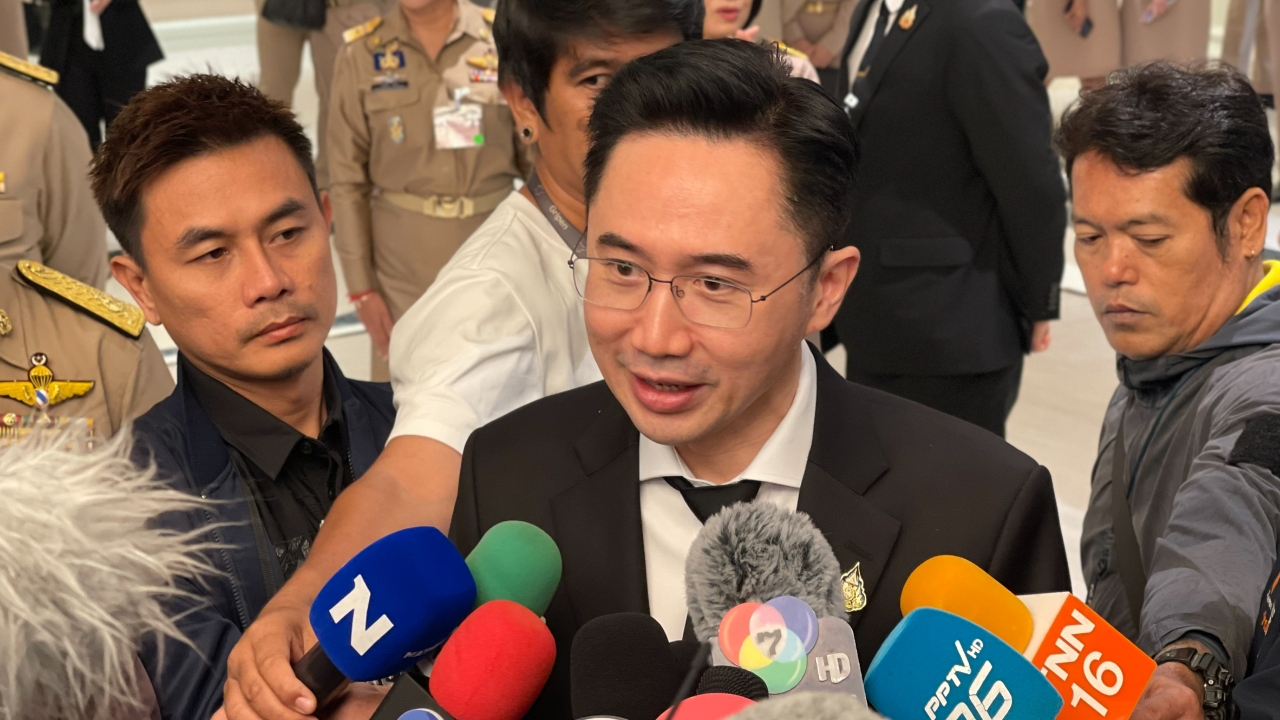
Yotsanan affirms that MHESI is ready to support all dimensions of PM2.5 mitigation—from root causes to consequences—after the People’s Party proposed creating dust-free rooms costing 2,000 baht. He sees the possibility of reallocating unused budget funds for this initiative and says that everyone lending a hand is a positive and commendable effort.
On 20 Apr 2026 GMT+7, Yotsanan Wongsawat, Deputy Prime Minister andMinister of Higher Education,Science, Research and Innovation (MHESI) spoke about a reference from the People’s Party(PCP)claiming that creating a small particulate matter (PM2.5) dust-free room costs only 2,000 baht. He stated that the urgency of the problem cannot wait. MHESI is willing to support all aspects. Recent field visits aimed to promote Thai technology deployment locally without obstructing other agencies’ work. The visits raised awareness about PM2.5 in the northern region, which occurs also in central and northeastern parts. MHESI sees it necessary to assist in all dimensions. Efforts where everyone contributes are good and commendable.
Regarding whether additional budget is required to make dust-free rooms, Yotsanan said that many resources already exist and thatbudget managementincludes reallocating funds that some consider non-essential at this time to urgent relief budgets. Each ministry and project manages its own funds. If the goal is to address citizens’ needs and hardships, cooperation among ministries will be very beneficial.
When asked how long it might take to solve the problem after field visits, Yotsanan replied that MHESI has communicated that there are various phases. The use of positive pressure rooms and air purifiers addressessymptoms or effects,but these must be done. For root causes, MHESI has consulted scientists and researchers. Burning contributes, as do agricultural issues, which can be addressed through integrated approaches. This includes electric vehicle use and weather patterns from various areas, which have been analyzed. Long-term efforts require collecting dust data at each location to promptly analyze dust sources.
Coordination and discussions continue with Prime Minister and Minister of Interior Anutin Charnvirakul. Today, some Cabinet members are visiting Chiang Mai to observe the problem firsthand, underscoring the need for collective action.