

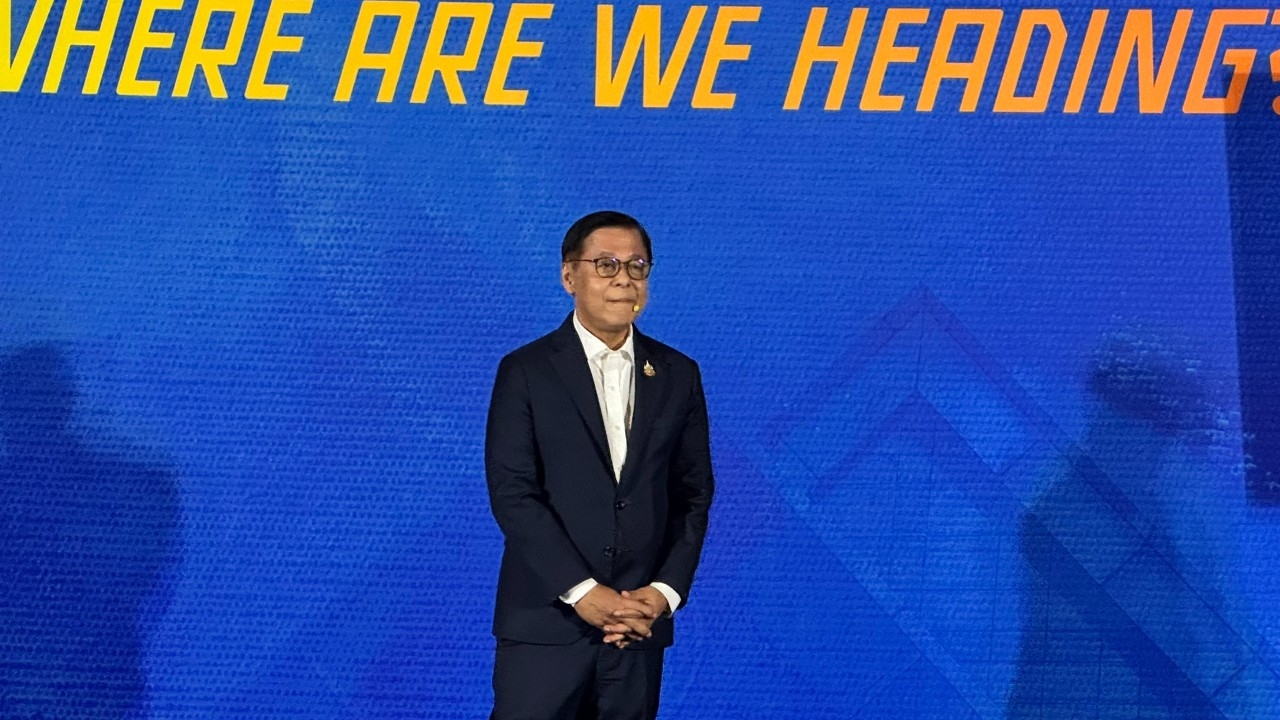
Sihasak announced a vision for Diplomacy 2.0 emphasizing proactive measures and strategic responses to a disorderly world. He noted that Thailand maintains a balanced stance amid the Middle East crisis and revealed that six Thai cargo ships remain stuck in the Strait of Hormuz due to the situation. They are carrying petrochemical fertilizers and gas.
At 7:00 p.m. on 20 April 2026, at the Ministry of Foreign Affairs, Deputy Prime Minister and Foreign Minister Sihasak Puangketkaew shared his vision for foreign policy. He said he took office amid problems in Cambodia and, after completing that mission, planned to retire. He did not expect to return to this position, especially as Deputy Prime Minister. Today is a good opportunity to speak with everyone because Thailand’s foreign affairs operate in a chaotic, disorderly world. Without clear direction, challenges abound. He admitted past foreign policy was perhaps not as proactive as it should have been due to internal political instability, government changes, leadership transitions, and economic difficulties. However, with this government elected by a stable parliamentary majority, there is an opportunity for stable governance and policy continuity, especially in foreign affairs. This political stability offers a crucial chance to pursue proactive diplomacy.
By proactive diplomacy, he means: 1. It must be strategic. We cannot manage problems day by day without a clear strategy about our direction or goals.
2. Given rapidly changing situations, timely responsiveness in foreign affairs is critical. For example, during the Middle East events, the Ministry of Foreign Affairs immediately established a war room to monitor the situation and assess impacts, including protecting Thai citizens. We monitor developments daily, 24 hours a day. Therefore, speed is essential.
3. Unity in diplomacy is key, especially in policy. Foreign affairs policies sometimes involve multiple ministries, not just the Ministry of Foreign Affairs. For instance, in the Thai-Cambodian border issue, the foreign ministry and military must maintain unified policies. Beyond policy unity, work processes must also be unified. He emphasized the concept of Team Thailand.
4. In a democratic era, communication is necessary to explain the ministry’s actions transparently and help the public understand how these relate to them. This is his forward-looking, proactive vision for the Ministry of Foreign Affairs.
He emphasized that the real world is not as ideal as one might think.
Sihasak stated that in reality, the world is not as beautiful as imagined. The biggest challenge as Foreign Minister is handling urgent daily problems while maintaining long-term goals and direction. We must not be swayed left or right by events and lose our foreign policy compass. If asked about urgent challenges for Thai foreign affairs, it might be a test of the ministry’s capacity.
The first problem is the Thai-Cambodian conflict. Although a ceasefire is in place, the issue is how to overcome the conflict, as we must ultimately coexist with Cambodia. Signals show Cambodia is not yet ready for serious talks with Thailand and uses various tactics to pressure for advantage. But when they are ready, we will be too. We hope to move beyond the conflict and live as neighbors sharing a border, and we will continue efforts toward that.
Balanced stance explained.
Regarding the Middle East crisis, some have asked why Thailand has no position on this. We must be very careful. We need to understand our interests and our position. We must neither overextend ourselves nor be too passive. We must act appropriately. He has consistently stated that Thailand opposes this war and believes it should not happen. We must uphold international law. However, if Thailand were to condemn, we must carefully consider our interests because we are not a party to the conflict but are concerned about the safety of Thai people. Our interests must remain paramount.
"Currently, six Thai cargo ships remain stuck in the Strait of Hormuz, carrying petrochemical fertilizers and gas," Sihasak said.
Position must be non-aligned.
Ultimately, foreign policy is about interests and security, but security has many dimensions. We must understand what we want. If we lack border security, we will always be worried. Border security means the border must be free from all threats. The best security is connectivity and joint development, which is very important. We must maintain security with neighboring countries since we will live alongside them forever. If they progress securely, we must do the same. Achieving this is not easy.
Regarding great power competition, we must not choose sides but maintain our stance. We should try to bring different blocs together to promote peace. The more the better, providing more options. Importantly, as an ASEAN leader, Thailand must play a role in strengthening ASEAN.
Make foreign affairs meaningful to the public.
Foreign affairs must be anchored to the people to show its significance and how it improves livelihoods, known as economic diplomacy. At the same time, human security—not just state security—is key. Many issues directly affect human security, such as pandemics, disasters, transnational crime, and online scams. Human security is at the heart of diplomatic strategy.
Sihasak added that foreign diplomacy must be meaningful to the people and tangible. But it must also go further to have impact on the global stage, looking beyond Thailand to how we can help the international community improve for future generations. First, we must assist the global community under agreed rules. We must build a new world order where not only big countries dominate but smaller countries also have rights. We must create a world order that can respond to shared challenges.
Maintaining dignity on the world stage.
All of this is Diplomacy 2.0: diplomacy that covers all dimensions—politics, security, economy, society, and civil society. We must follow our interests wherever they lie and go far by ourselves, not relying solely on benefits from the global community. If we want to stand on the world stage with dignity, we must make Thailand reach beyond itself through the combined effort of all sectors, known as Team Thailand.