

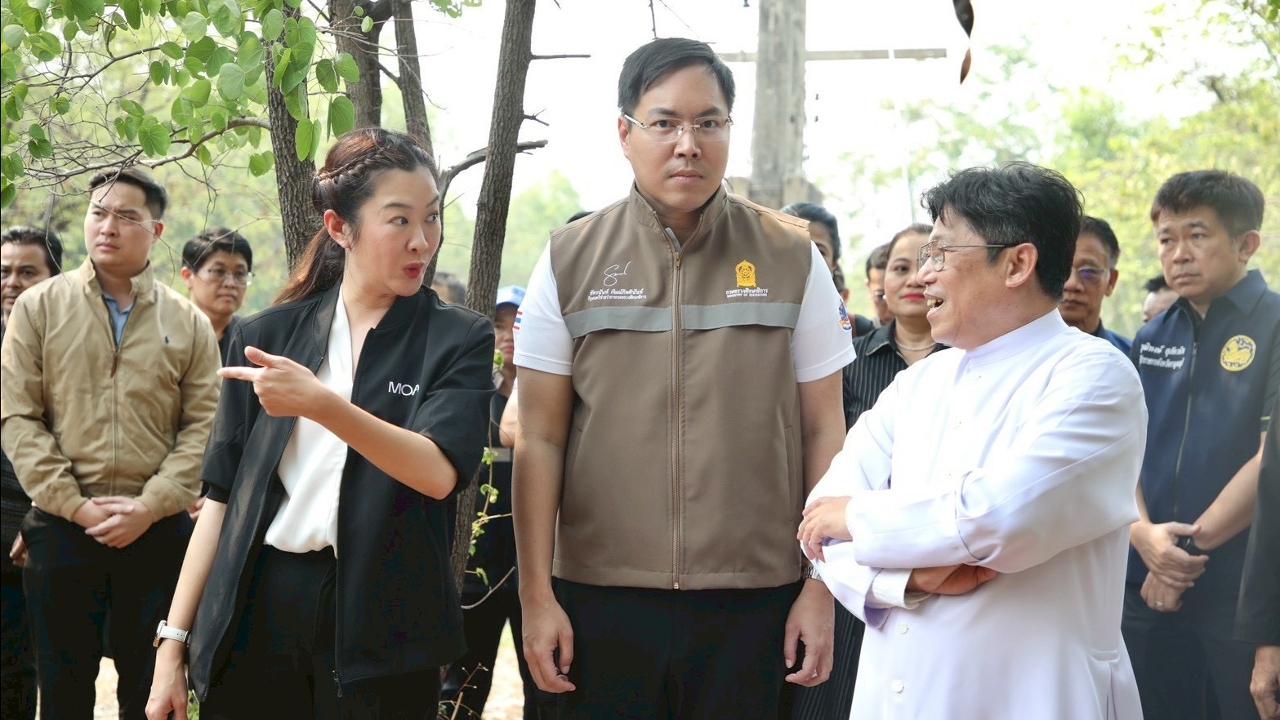
The Deputy Ministers of Agriculture and Education visited Kanchanaburi to monitor the situation and plan solutions for forest fires, haze, and PM 2.5 dust pollution after the province declared a controlled burning zone until 30 April.
At 14:30 on 21 April 2026, at Daruna Kanchanaburi School, Ms. Piyaratch Tiyapairat, Deputy Minister of Agriculture and Cooperatives, together with Mr. Akkharanat Kankittinan, Deputy Minister of Education, accompanied by Ms. Warittha Sanguansermsri, Governor of Kanchanaburi province, who assigned Mr. Wutthipong Supakwanit and Mr. Sitthiwit Wannapruk, Deputy Governors of Kanchanaburi, along with relevant government agencies, visited the province to inspect and monitor the forest fire, haze, and PM 2.5 dust situations affecting residents in many areas of the province.
Monitoring data on accumulated hotspots in Kanchanaburi province from 1 October 2025 to 20 April 2026 revealed a total of 11,211 hotspots. The areas with the most fires were protected forest zones, with the top three districts recording the highest accumulated hotspots being Si Sawat, Thong Pha Phum, and Sai Yok. To control the situation, Kanchanaburi declared a controlled burning and fuel management zone effective from 26 January to 30 April 2026.

For proactive operations, Kanchanaburi established a provincial command center to integrate efforts with relevant agencies and use satellite imagery technology to closely monitor high-risk areas. The focus is on prevention and pollution reduction at the source through strict law enforcement in forest areas, agricultural zones, and communities, alongside supporting farmers with knowledge to manage agricultural waste to reduce open burning.
Additionally, emphasis is placed on caring for the health of vulnerable populations, establishing safe zones, and fully supporting safety equipment and welfare for frontline workers and volunteers in the area.
Ms. Piyaratch Tiyapairat, Deputy Minister of Agriculture and Cooperatives, stated that the government prioritizes seriously addressing forest fires, haze, and PM 2.5 dust as they directly affect public health and the environment. This visit aims to understand the real issues and expedite relevant agencies’ targeted problem-solving efforts.
Mr. Akkharanat Kankittinan, Deputy Minister of Education, said that PM 2.5 dust affects the health of all groups, especially young children and the elderly. The Ministry of Education is ready to cooperate in campaigns and raise awareness about PM 2.5 issues among students, teachers, and the public.
