

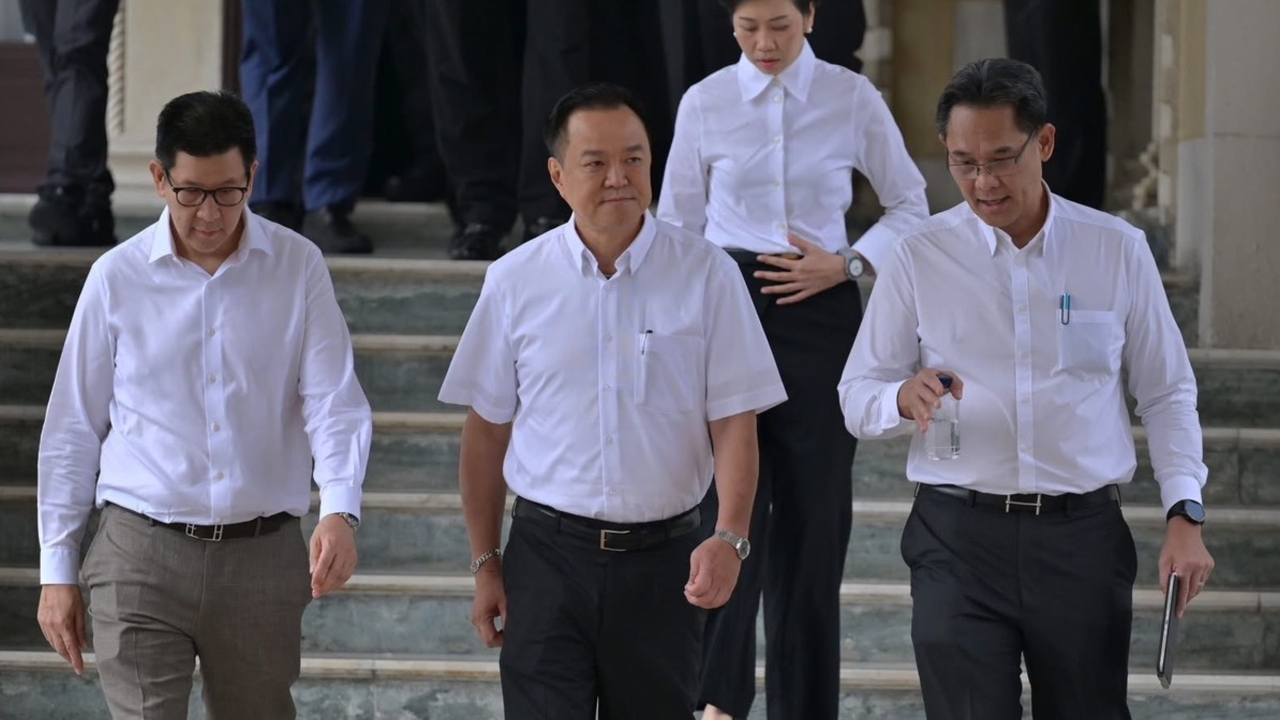
Ekkaniti revealed that Moody’s has changed Thailand’s credit outlook from "Negative" to "Stable," reflecting confidence in the economic policies of the Anutin government, which uses targeted fiscal measures.
21 Apr 2026 GMT+7 Mr. Ekkaniti Nitithanprapas, Deputy Prime Minister and Minister of Finance, disclosed that today the credit rating agency Moody's has upgraded Thailand's credit outlook from "Negative Outlook" to "Stable Outlook" while maintaining the sovereign credit rating at Baa1. This outlook revision reflects an improved balance of risks to Thailand's economy and confidence in the country's economic policy direction. Moody's explained the key reasons and factors in detail as follows.
1. The stability of the government under Prime Minister and Minister of Interior Anutin Charnvirakul has reduced political uncertainty, which was previously a negative factor for Thailand's economy, and supports policy continuity focused on economic reforms to clearly create new economic engines. Going forward, if the government can carry out structural reforms as planned, such as improving regulations to be more flexible and business-friendly, as well as liberalizing the energy market to increase competition and promote private sector roles, this will support Thailand's economic growth and gradually improve fiscal conditions.
2. The credit outlook adjustment is also due to reduced external risks, particularly decreased uncertainty from reciprocal tariff policies following negotiations, which lowered Thailand's tariff rates to levels comparable with regional countries. Moreover, although the global energy price crisis adds pressure to Thailand's economy and may affect government debt burden, these risks remain within a range comparable to peer countries with similar credit ratings.
3. Private sector investment has continuously recovered, supported by increased investment promotion applications alongside government support measures like Thailand Fast Pass, which helped accelerate private investment in the fourth quarter of last year. Investment is a key factor in building long-term economic growth potential, which has previously been seen as a weakness of Thailand's economy.
4. Government debt to GDP is expected to rise to 60% and 62% in fiscal years 2026 and 2028 respectively, due to deficit fiscal policies supporting economic recovery. However, Thailand still maintains strong debt servicing capacity, with deep domestic capital and bond markets capable of supporting government funding through all economic cycles. Most debt is in Thai baht and has a relatively long maturity, facilitating debt management.
The interest payment to government revenue ratio is expected to be around 6% in fiscal year 2026, which is lower than peer countries with similar credit ratings.
5. Thailand continues to have strong external financial positions and high international reserves. As of March 2026, reserves stood at over 23.8 billion US dollars, sufficient to cover imports of goods and services for up to seven months. At the same time, the ratio of short- and long-term debt maturing relative to international reserves is expected to be about 45% to 50% in 2026, which is adequate to withstand external volatility.
6. Moody's key factors to monitor in considering Thailand's credit rating include the country's economic growth potential compared with peers with similar credit ratings, progress in structural reforms, and fiscal and debt management.
This credit rating assessment reflects confidence in the direction of the government's economic policy using targeted fiscal support to alleviate short-term impacts, alongside accelerating investment, economic restructuring, and productivity enhancement to boost long-term growth potential. Rating agencies will focus on policy continuity and execution outcomes, which are crucial factors in assessing Thailand's future credit outlook.
Mr. Ekkaniti added that this credit outlook upgrade reflects Thailand’s strong economic fundamentals and stability, and that the government’s current policy direction is on the right track. He emphasized that the focus is on managing the economy and supporting the people in the short term with targeted measures, while accelerating the creation of new economic engines for the long term. The key now is to continue policies consistently and achieve real results to enhance Thailand’s growth potential and economic resilience over time.