

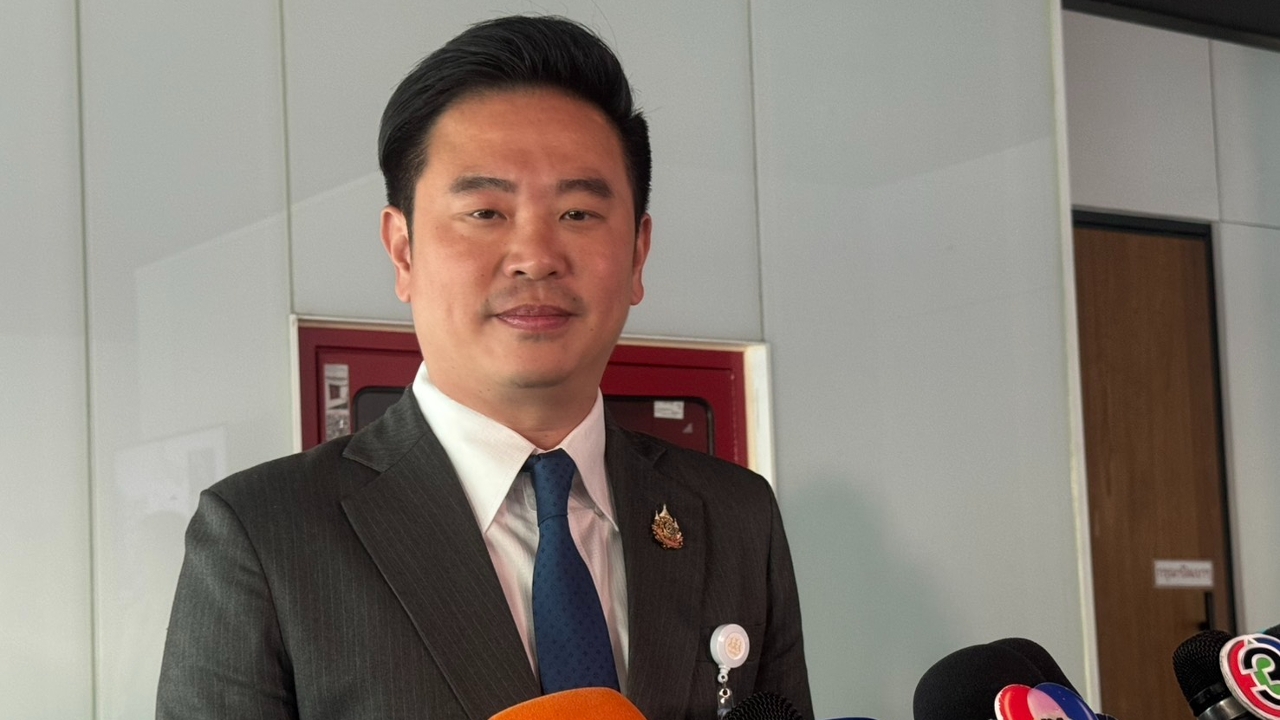
“Jakrapon” hopes the Cabinet will approve the “Clean Air Management Act” to address PM2.5 and push it to the Senate for progress, firmly stating it is not a “paper tiger.”
On 22 Apr 2026 GMT+7 at the Parliament, Mr. Jakrapon Tangsutthitham, former Chiang Mai MP from the Pheu Thai Party and former chair of the special committee reviewing the draft Clean Air Management Act, spoke as a commissioner on the special committee studying measures and management approaches to resolve forest fire problems and monitor the PM2.5 dust crisis in the House of Representatives. He said the purpose of this committee’s work aligns with the completed draft Clean Air Act that remains under consideration in the previous Senate session. The review may address overlapping concerns from the larger Act, which has a set three-month review period. After the Cabinet approves the draft Clean Air Act next week, it will be forwarded to the Senate members, enabling immediate consideration of pending articles.
After the Prime Minister visited Chiang Mai province, and Mr. Suchart Chomklin, Minister of Natural Resources and Environment, expressed mutual support for pushing forward the draft Clean Air Act, it is believed this legislation will proceed. Otherwise, the process would have to restart from scratch, causing delays and worsening the crisis in Chiang Mai, Northern Thailand, and other provinces severely affected by PM2.5 dust. There is hope the Cabinet will approve it under Article 147 within 60 days.
Firmly stating it is not a paper tiger.
Regarding some Senate members opposing the draft Clean Air Act, Mr. Jakrapon said that given the Prime Minister’s recent statements, he believes the legislation will move forward. He understands concerns from many sectors, including the Joint Private Sector Committee of Three Institutions and Senators, who see this as a major, fully developed law for the public. Concerns include legal details such as the establishment of committees during implementation—for example, whether high fines would impact trade and investment. The law allows a transition period for businesses to adapt, addressing root causes of burning and imposing fines only when non-compliance occurs. This aligns with global warming, climate change issues, and PM2.5 pollution.
The essential purpose of the law is to reclaim clean air for Thai people; this is the primary goal to emphasize. When asked about eight concerns raised by Mr. Supachai Jaisamut, party-list MP from Bhumjaithai Party, Mr. Jakrapon acknowledged these concerns but stated the law upholds the principle of pure air for Thai citizens. This committee will address all stakeholders’ worries to ensure the law is as comprehensive as possible and finds solutions acceptable to all parties. It is not merely a paper tiger—a law that exists but cannot be effectively enforced.