

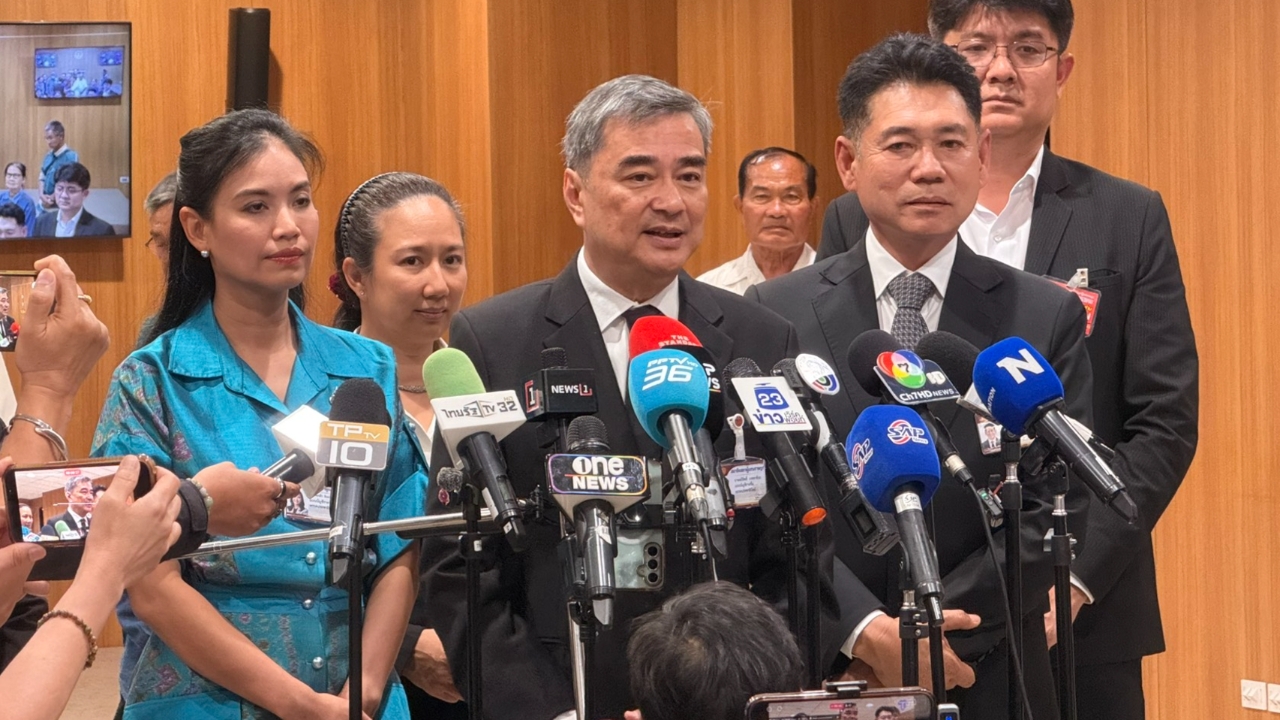
“Abhisit” points out that issuing an emergency decree to borrow money addresses the long-term problem, believes further reduction in refining costs can help ease the public's burden, suggests imposing a “windfall tax,” and hopes for good news from tomorrow's Energy Policy Committee meeting.,
On 22 April 2026 GMT+7, Mr. Abhisit Vejjajiva, leader of the Democrat Party, commented on the government's plan to issue an emergency decree to borrow money. He said he is awaiting the government's explanation on the intended spending. However, the party’s ongoing stance is that the government should first manage costs as much as possible. Currently, there is excise tax, including refining fees, which could be significantly reduced to help lower costs first. The more the government can help, the less necessity there will be to use borrowed funds for downstream relief. This approach is better for all parties because borrowing money to provide aid raises questions about which groups are helped and how. If refining fees are reduced by another 5 baht, it benefits everyone. He urged not to see this as help only for fuel users but as support for the public through reduced transportation costs. Not attempting this and instead focusing on downstream aid, even if excise tax is cut, would be a case of losing little but with difficulty. He understands that given the current fiscal situation, expanding the public debt ceiling may be necessary, but he hopes the government has a clear plan to prevent unchecked debt growth and ensures revenue streams to repay it.
Mr. Abhisit also said he met with Mr. Eknath Promphan, Minister of Energy, and emphasized that if the refining fee was reduced by 2 baht in March when the fee was 7-8 baht, but then rose to 15 baht in April, action should be expedited. Currently, the government waits to observe the average price before collecting fees. He expressed a desire for a system to collect a special fee called a “windfall tax” aligned with actual conditions. For example, April is already halfway through, and fees are around 14-15 baht. If the tax had been collected from the beginning of the month, it could have helped more.
Mr. Abhisit gave an example: diesel fuel is currently priced at 42 baht per liter. If the excise tax is reduced by 6 baht and the refining fee set at 5 baht, the price could nearly return to 30 baht. However, allowing fuel prices to rise has caused product prices to increase. When fuel prices drop, the government must ensure product prices also decrease accordingly. The Democrat Party wants the government to manage costs quickly to help reduce the burden on the government and assist affected citizens.
Regarding whether the Energy Policy Committee (EPC) meeting tomorrow will bring good news and if Minister Eknath Promphan will consider his proposals, Mr. Abhisit said he still believes the Ministry of Energy can reduce prices. The minister has stated in principle that the 2 baht collected relates to March’s figures, but with prices rising in April, adjustments are necessary. However, there are complications with calculating the premium wall or the increased costs, which might cause disputes between private sector figures and actual numbers. Still, he believes that collecting 5 baht refining fees is feasible.