

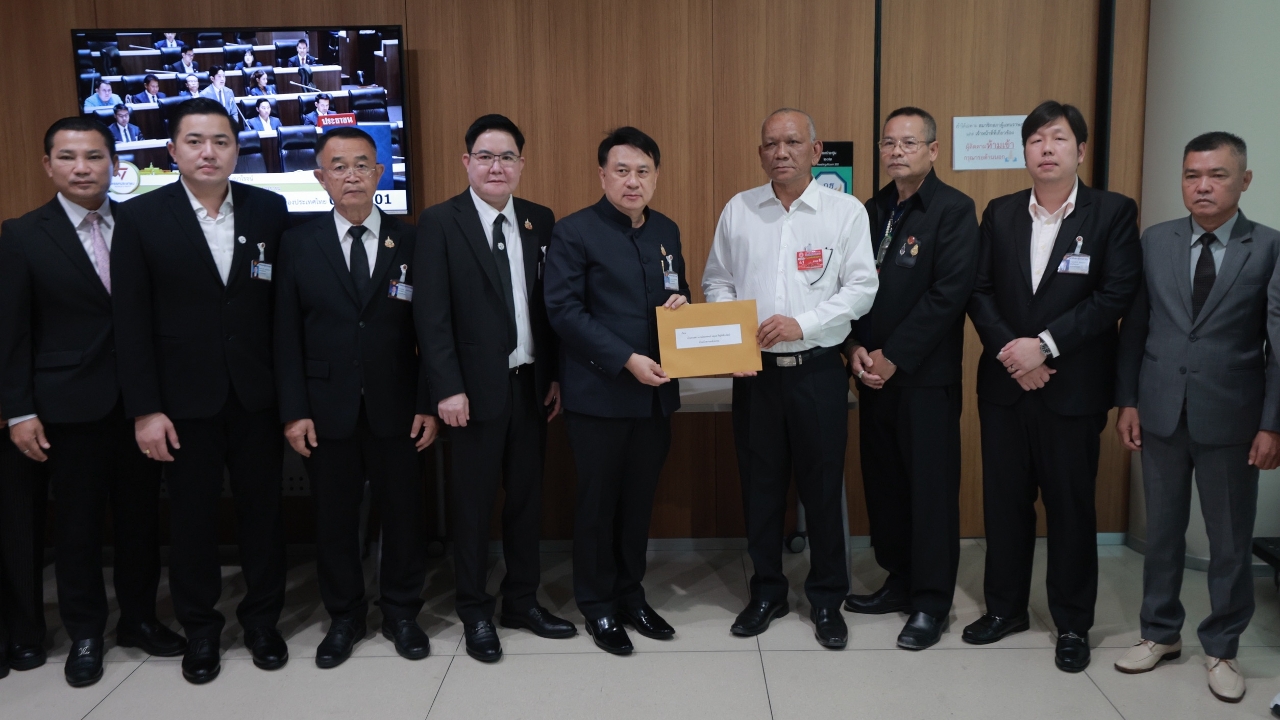
The Kla Tham Party received a letter from security service operators after the Ministry of Labor's new overtime pay regulation, warning it will affect businesses, increase costs, and lead to more unemployment. They urge the government to review and postpone enforcement or introduce relief measures before it takes effect on 24 April 2026.
At 2:30 p.m. on 22 April 2026, the Kla Tham Party, led by Mr. Nares Thamrongtipyakun, MP for Chiang Mai, and Mr. Akara Phrompao, MP for Phayao, received a letter from Mr. Patiwet Israeyothin, representative of security service operators, requesting consideration of the business impact from enforcing the Ministry of Labor regulation. This regulation sets new overtime and compensation rules for work exceeding eight hours per day in security guarding duties, which are part of the employee's normal responsibilities, effective 2025.
Mr. Patiwet stated that following the Cabinet's resolution, the Ministry of Labor issued a regulation setting overtime pay for work beyond eight hours per day in guarding premises or assets, which are the employee's normal duties. The regulation requires employers to pay overtime at no less than 1.25 times the hourly wage on working days, and at least 2.5 times on holidays, effective from 24 April 2026.
Complaints about economic downturn
Assessing the impact on the security business amid the current economic downturn, it is seen that enforcing this regulation will increase costs and harm business operations during the recession, influenced by war, global warming, and rising oil prices. These factors raise living costs and operating expenses. Clients cannot absorb the increased service fees, while government agencies cannot adjust budgets according to contracts, forcing operators to bear the costs themselves, risking business closure.
Work nature differs from other professions
Furthermore, security work requires 24-hour coverage, unlike other jobs where overtime occurs only in specific cases, resulting in higher and distinct costs. This also affects employment since the industry employs many workers. Business closures would increase unemployment and government welfare burdens. Additionally, if overtime is restricted to eight hours, employee income would decrease, insufficient for living costs, causing labor shortages and safety risks. Some employers might cancel contracts with companies and hire workers directly, potentially violating standards and laws, affecting overall safety.

"Operators believe that although the law aims to promote fairness, under current economic conditions it could have severe impacts. Therefore, they propose considering postponing enforcement for an appropriate period or, if postponement is not possible, implementing relief measures to support operators accordingly."
Mr. Nares said the Kla Tham Party will thoroughly consider the issue, recognizing the hardships for both operators and workers, and will coordinate with relevant agencies to find a fair solution for all parties.