

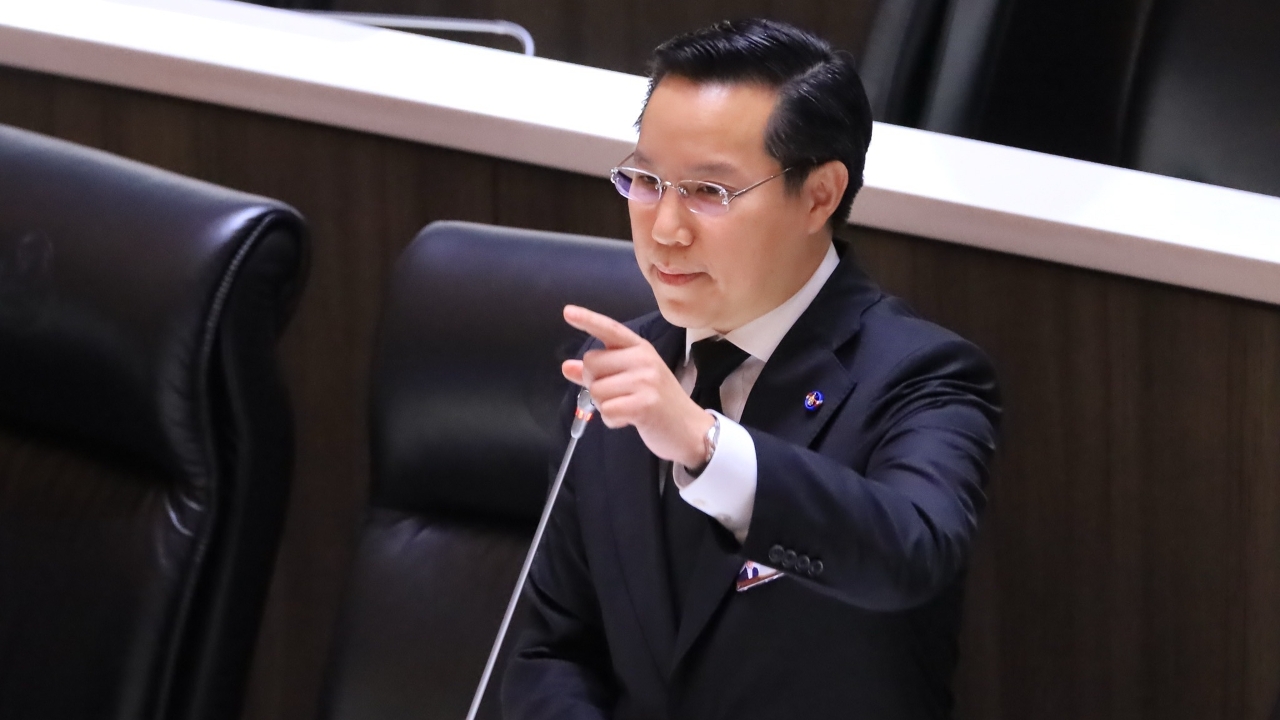
Attawit points out loopholes in the Climate Change Act, noting its complex management without centralized authority, and urges Parliament to reconsider establishing a special committee, fearing Thailand may be disadvantaged in global trade.
On 22 Apr 2026 GMT+7, during a parliamentary session, Attawit Suwanpakdee, a party-list MP and deputy leader of the Ruam Thai Sang Chart Party, spoke in a motion proposing the establishment of a special parliamentary committee to systematically study climate change management. He observed that the draft Climate Change Act is complex and contains gaps that might impact the country's competitive potential.
Attawit stated that the law's content is overly complex and lacks coverage of key issues, especially international economic matters that are becoming new forms of trade barriers. He cited the EU's Carbon Border Adjustment Mechanism (CBAM), which levies carbon taxes on imports, noting that identical products like aluminum cans produced in countries using clean energy face lower taxes than those from countries like Thailand that use mixed energy. This raises costs for Thai products in the global market. He also pointed out structural complexities, particularly in carbon tax management involving the Ministry of Finance, while new agencies like the Department of Climate and Environmental Change may lack sufficient authority or capacity to coordinate across ministries.
Regarding over-the-counter carbon credit trading, Dr. Attawit explained that Renewable Energy Certificates (RECs) are essential tools for exporting goods to European markets. However, Thailand still lacks a clear understanding of the international standard market structure for RECs.
Attawit added that large organizations, such as public companies, use greenhouse gas emission indicators as key criteria, divided into three Scopes that collectively form the environmental performance score of the organization. This score influences business decisions; for example, large hotels in Thailand without Green Hotel certification may lose foreign customers because it affects the scores of their foreign business partners.
He proposed that both the opposition and government whips seriously consider establishing a special parliamentary committee to study this issue, given the law's involvement of multiple ministries and its high complexity. Without careful action, Thailand risks losing competitiveness internationally. Alternatively, he suggested that the Natural Resources and Environment Committee should prioritize this matter to prevent Thailand from losing economic competitiveness on the global stage.