

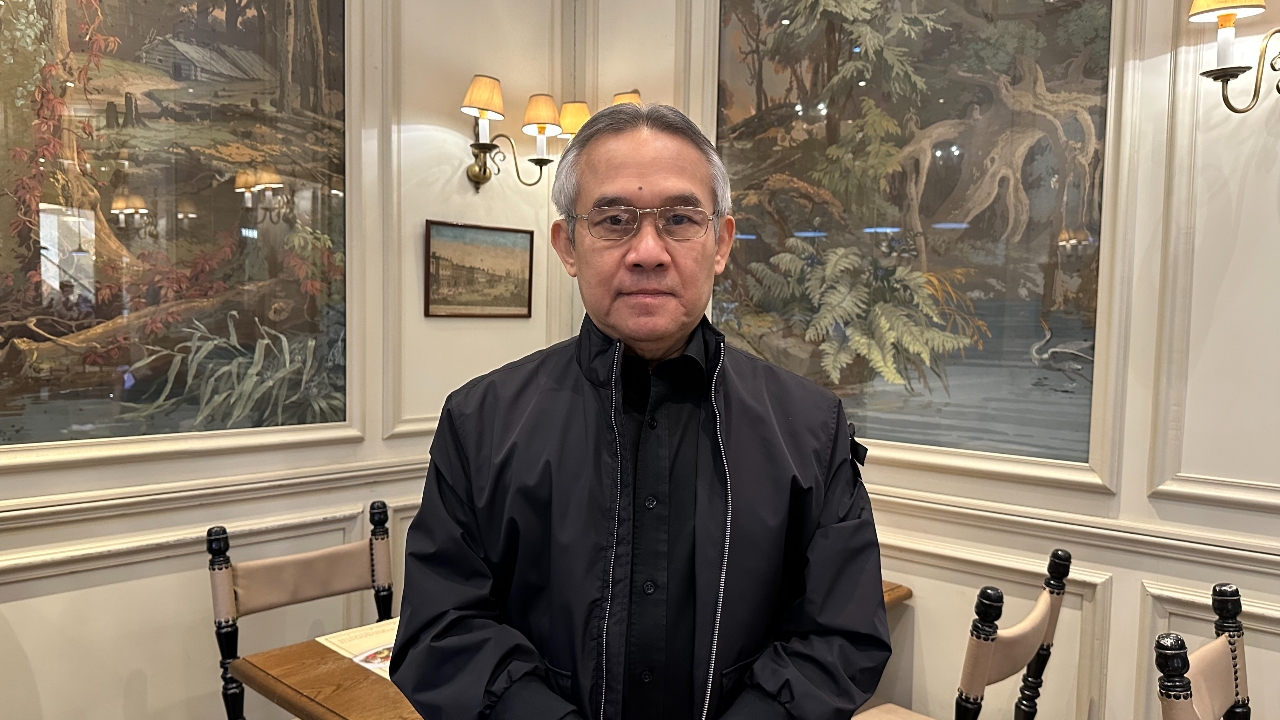
Suradet recommends the government build air purification towers to solve PM2.5 dust issues like those used abroad, alongside air purifiers from Thailand's Fah Sai project. He urges addressing the root causes seriously and decisively with strict law enforcement to solve the problem.
On 22 Apr 2026 GMT+7, Suradet Yasawat, former deputy leader of the Palang Pracharath Party, spoke about PM2.5 dust problems in various parts of Thailand, especially in the North. He said Thailand is a tourist country where convenience and safety of life and property are crucial. He acknowledged that PM2.5 dust directly affects public health, so the government must be sincere and serious in addressing it. He identified four main sources of dust pollution: 1. Burning, including waste and crop residue in open fields; 2. Industrial factories emitting pollution; 3. Construction by public or private sectors without dust control; and 4. Exhaust emissions from vehicles releasing toxic smoke. These are the main ongoing causes nationwide. He questioned how the government plans to handle these issues. He believes the solution must tackle causes, not just symptoms. Although various sizes of air purifiers are currently used, if PM2.5 dust persists, air purifiers alone will not suffice.
Suradet proposed the government seriously address the root causes. Regarding burning, the government must strictly enforce laws banning burning and publicize severe penalties for violations. At the same time, it must provide alternatives for people on how to handle waste, crop residue, or fields if burning is prohibited. Suggestions include designated landfill sites in each area or subdistrict, and establishing community waste incinerators that produce no pollution. While some exist, coverage is insufficient. Therefore, the government should allocate budgets to expand these facilities nationwide.
Suradet added that for industrial factories, the government must strictly enforce pollution control requirements. Many factories already have pollution filters, but the Ministry of Industry should send officers to inspect factories weekly. If any factory lacks pollution control devices, strict action must be taken, potentially including closure. This is law enforcement. Importantly, officials must also be held accountable if found neglecting duties, colluding, or benefiting from factories by turning a blind eye. Such officials should face prosecution under Section 157 for dereliction of duty.
Suradet said that pollution from vehicle exhaust on roads also needs attention. New vehicles come equipped with emission control systems, which must be strictly regulated. Older vehicles used for decades, or agricultural machines like farm tractors or rice harvesters, should also be required to install pollution control devices. The government should assist by subsidizing installation costs to make them affordable.
Suradet noted that construction activities are another pollution source. Contractors, whether public or private, often seek high profits and sometimes avoid installing pollution control equipment or systems to prevent dust spread. This causes PM2.5 dust that inevitably impacts the public.
Suradet questioned the government's sincerity and seriousness in addressing these causes. If truly committed, the government must prioritize tackling root causes and sincerely assist the public. Merely allocating budgets but allowing contractors or local politicians to collude will perpetuate problems. The government must not be negligent or favor allies, nor tolerate local officials who turn a blind eye. Otherwise, the country will face ongoing problems. Corruption remains a major issue plaguing the nation.
Currently, discussions suggest corruption is widespread, not isolated. Therefore, the government must address root causes. Suradet proposed adopting modern technology such as air purification towers, which are widely used abroad—in the Netherlands, Poland, Scandinavian countries, Germany, France, and the UK—to improve air quality effectively.
Suradet said Thailand has the Fah Sai project, an interesting private-sector initiative.
He urged the government to adopt this project, which uses technology developed by Thais. Support should be given to expand it to all areas with dust problems. Alternatively, the government could buy air purification towers from abroad—which may be costly—as models for Thai inventors to study and adapt into more affordable versions. He called for the government to show sincerity and seriousness, committing fully to solving the problem once it volunteers to act for the people. The public should not be disappointed by empty promises. A clear deadline should be set for when the PM2.5 dust problem will be resolved, to ensure a better quality of life for Thais and sustainable tourism.