

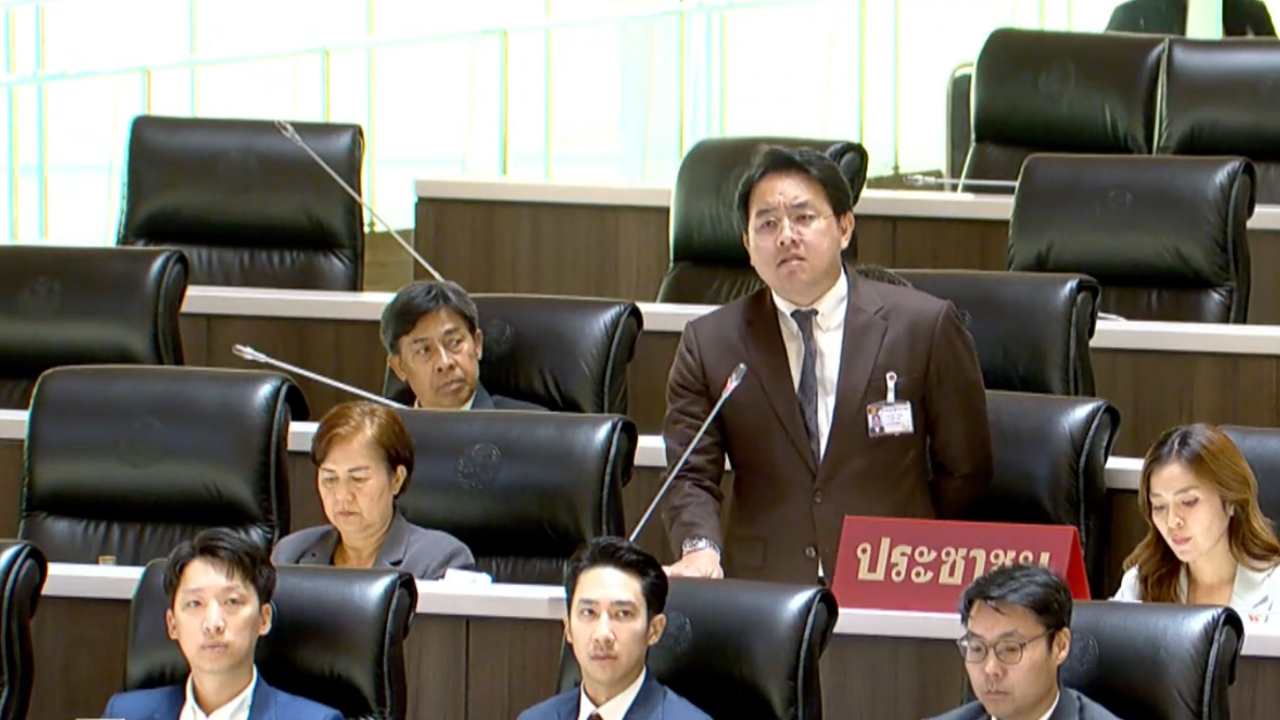
Supachot proposes the establishment of a Net Zero committee to push Thailand toward zero greenhouse gas emissions. He criticizes the government's contradictory plans moving in different directions and warns that if left as is, the 2050 goal will remain just a dream. He calls for a fully integrated new system plan before Thailand loses investment opportunities due to inaction.
On 22 Apr 2026 GMT+7, during a House of Representatives meeting, MP Supachot Chaisat, a party-list MP from the Prachachon Party, proposed a motion for the House to establish a special committee to study and monitor progress toward achieving net zero greenhouse gas emissions by 2050. Opening the motion, he noted that amid global volatility, especially conflicts in the Middle East affecting Thailand's energy costs, it is clear that Thailand's energy system overly depends on imported fossil fuels. When a global crisis arises, the burden inevitably falls on Thai citizens facing rising living costs. Therefore, continuing to rely on foreign energy in this way is no longer sustainable.
Supachot added that beyond the energy crisis, the world is facing "new rules" that will completely transform global trade, including the European Union's cross-border carbon tax measure (CBAM) and similar upcoming policies from other countries. Even global corporations are intensifying targets to reduce carbon in their production processes. These changes turn environmental concerns into new trade conditions that Thailand must face. If we continue producing and consuming energy as before, we will not only damage our image but also lose markets, investments, and competitiveness. The key question today is not whether we will achieve Net Zero, but how Thai businesses will compete globally if we fail to adapt quickly.
Meanwhile, the impacts of global warming and climate disruptions are no longer distant issues but are occurring across Thailand with increasing severity each year. Frequent floods in the North, South, and Northeast cause widespread damage, while prolonged droughts disrupt agricultural cycles, leading to volatile yields and directly affecting farmers' costs and incomes. According to a United Nations Development Programme (UNDP) report, climate change will impact over 12 million Thai farmers and could cause losses of up to 80 billion baht annually over the next 20 years. These figures clearly show that climate change is severely threatening people's livelihoods.
MP Supachot said that given issues like rising living costs, new global rules, and natural disasters, Thailand has no choice but to adapt. The decision to accelerate the Net Zero target by 15 years—from 2065 to 2050—is the right direction, as delays will only increase economic and social costs. However, speeding up the target requires comprehensive, clear plans across all sectors. Reviewing past government plans reveals a mismatch between declared goals and actual operational plans; it seems we have goals but lack plans to reach them.
The energy sector, which emits the most greenhouse gases, shows the clearest problems. The previous target aimed for 60% clean energy by 2040, but the Ministry of Energy’s plan sets only a 50% target, still heavily relying on fossil fuels. Similarly, the industrial sector faces immense pressure from abroad, yet the government lacks a clear roadmap to support businesses, leaving the private sector to bear risks and costs alone.
In agriculture, a vital foundation for the country, there are insufficient tools to help farmers adapt to disasters. In transportation, although electric vehicle (EV) policies are promoted, recent festival events demonstrated that charging infrastructure remains inadequate. Most importantly, the government has no clear investment plans or financial tools to incentivize this major transition.
"What I have outlined clearly shows that national goals and past agency operational plans have been moving in different directions. If this continues, no matter how good our targets are, we will never achieve them," Supachot said. Supachot stated.
MP Supachot concluded that under the new greenhouse gas reduction plan (NDC 3.0), an interconnected, systematic plan is necessary. The establishment of this special committee is crucial, not to audit anyone, but to serve as a mechanism linking and supporting government work, plugging gaps in previous plans. This will enable Thailand to have a detailed long-term strategic plan (LT-LEDS) with clear direction to declare globally that we are ready for new investments and opportunities in the green economy. Therefore, the House must have this committee to drive the national greenhouse gas management plan to fruition and sustainably achieve the target.