

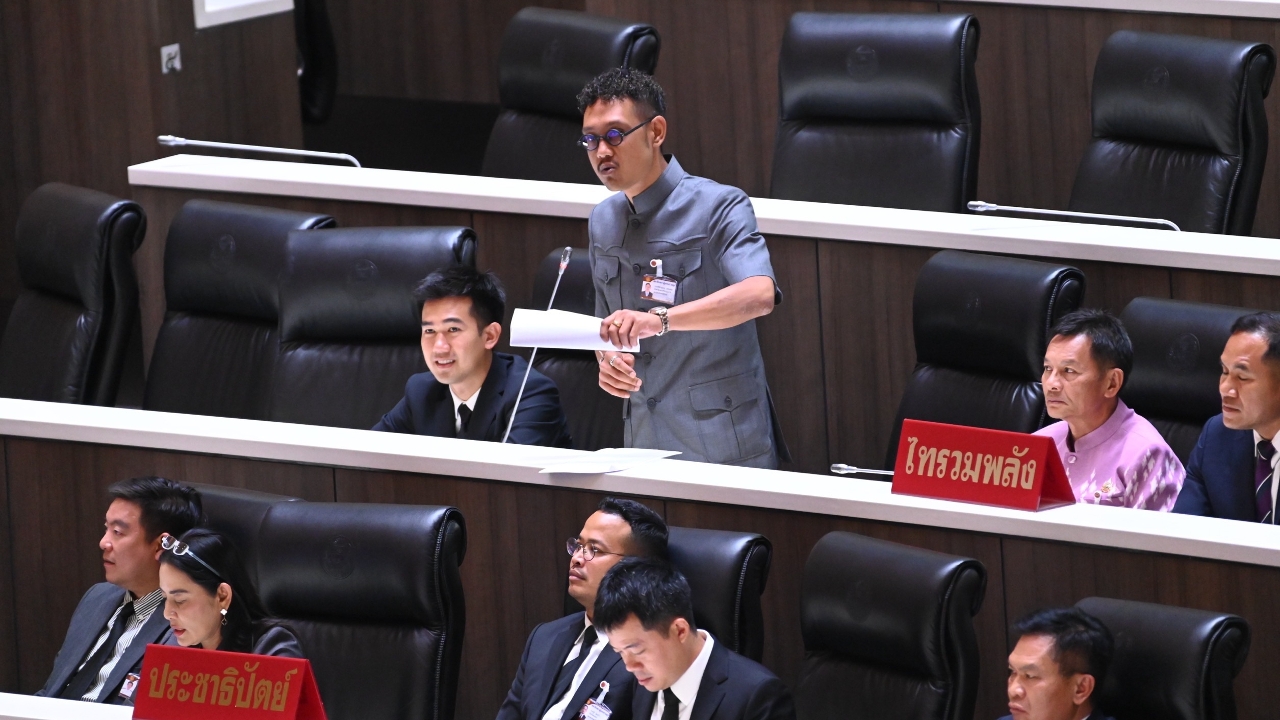
“Pithakdech” dissects the problem of falling crop prices, presenting six proposals to rescue farmers and urging the government to stop ignoring the issue as if “in one ear and out the other.”,
On 22 Apr 2026 GMT+7 at the parliament, Mr. Pithakdech Detdesho, Member of Parliament for Nakhon Si Thammarat from the Democrat Party, spoke in support of a motion to establish a special committee to study the problem of falling agricultural crop prices. He stated that Thai farmers are currently weak and powerless, burdened by rising production costs. He expressed concern that the government might overlook the livelihood issues facing farmers. He said if the special committee is not formed, the Cabinet should implement the recommendations seriously and not let the problem go ignored until it becomes too late to fix.
Mr. Pithakdech said the major problem Thai farmers face is the volatility of crop prices, which do not align with the rising production costs such as fertilizers, fuel, and transportation. Additionally, the natural disaster warning system remains inadequate, leaving farmers to bear risks alone and lacking bargaining power over prices.
He also illustrated the urgent need to address problems according to geographic conditions, saying,
1. Fruit orchards lack a system to warn of plant diseases and harvest timing, causing crop output to cluster and prices to collapse.
2. Rubber and palm oil farmers lack comparative cost data and integrated soil and water management.
3. For sorting systems, the government should support collection and packaging centers through cooperatives, rather than shifting this burden onto farmers themselves.
4. Flood-prone areas lack recovery funds and clear alternative crop plans after floods recede.
5. Coastal fisheries face income loss during monsoon seasons when fishing is halted; the government should establish support funds or provide alternative livelihoods.
Proposing six recommendations,
he called on the government to urgently implement six key measures to strengthen the agricultural sector's structure, including:
1. Establish district-level precision agriculture centers to provide easily understandable information on rainfall, water, prices, and plant diseases.
2. Have cooperatives manage traceability systems, using farmer groups to oversee traceability instead of individuals.
3. Create standard contracts to build neutral agreements among the state, private sector, and farmers to reduce disputes.
4. Implement debt relief packages alongside new loans, not just issuing new credit but also resolving longstanding debts.
5. Define provincial KPIs to measure reductions in costs, increases in net income, and decreases in field burning.
6. Ensure land security by promptly resolving overlapping land claims and linking land reform databases across agencies.
At the end, Mr. Pithakdech added, “I did not graduate in agriculture; I graduated in commerce and marketing. But my education comes from the mouths and hands of my fellow farmers who suffer, lack bargaining power, and grow poorer each day.” He called on the government to sincerely support farmers while they still have productive capacity, rather than waiting until devastation occurs before taking action. He said the voices heard in parliament reflect the true pain of people across the country.