

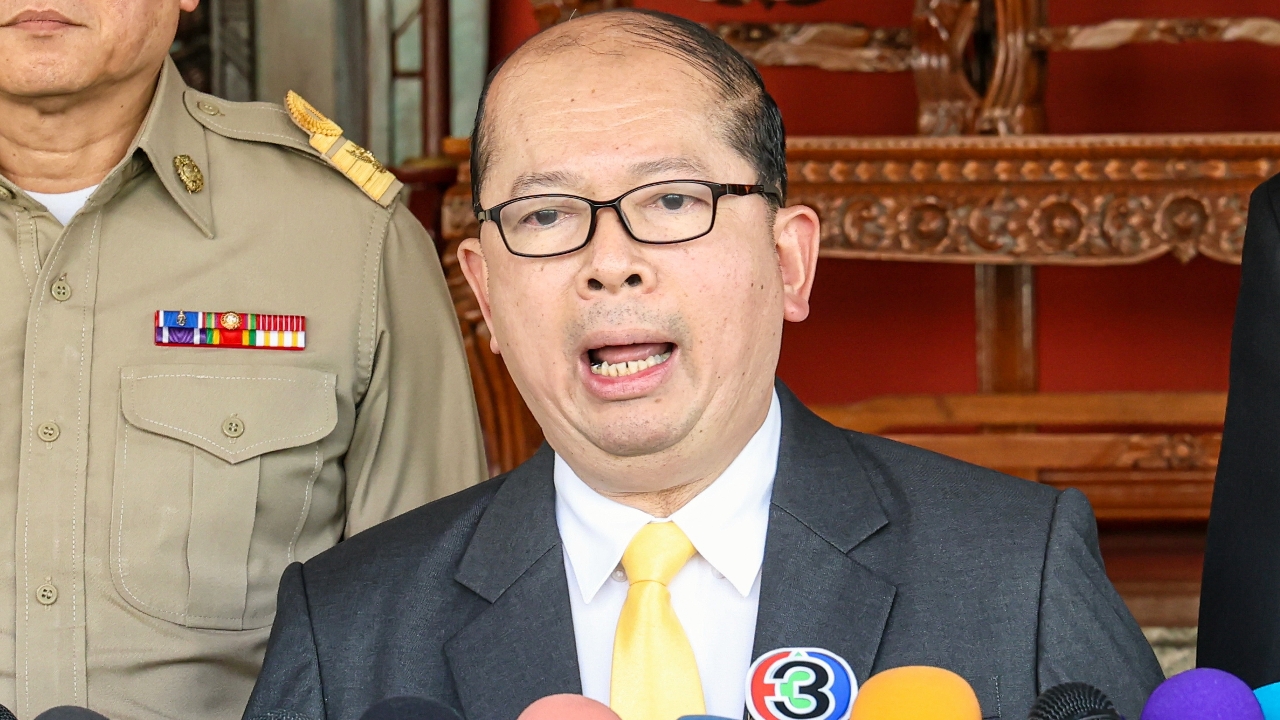
The National Security Council (NSC) plans to involve Malaysia in resolving unrest in the southern border provinces and appoints the Director of the Intelligence Agency as the head of the Southern Border Peace Talks team to lead the process.
At 11:15 a.m. on 23 April 2026, at the Government House, Mr. Chatchai Bangchuad, Secretary-General of the National Security Council (NSC), announced the outcomes of the NSC meeting chaired by Prime Minister and Minister of Interior, Mr. Anutin Charnvirakul. Regarding the southern border provinces' issues, the meeting approved five key matters: 1. Management of education – the Ministry of Education was assigned to oversee details and reorganize management systems at structural, cultural, and individual levels to appropriately manage Islamic religious schools. 2. Approval to enhance efficiency of volunteers under the Ministry of Interior, preparing them for integration into the normal system in the future, as proposed by the Ministry of Interior, to facilitate training and readiness for when the situation stabilizes.
3. Approval of cooperation with Malaysia to address issues in the southern border provinces, including encouraging Malaysia's participation in area development and sharing economic benefits, fostering constructive joint efforts. This also covers coordination on law enforcement concerning offenders, with closer collaborative measures. Regarding the southern border peace talks, besides dialogues with Malaysia, domestic talks are prioritized simultaneously to ensure linkage between both parts, aiming for comprehensive problem-solving, and closer coordination with Malaysia will be established.
Appointment of the Intelligence Director as head of the peace talks team.
Mr. Chatchai stated that 4. the meeting approved the appointment of Mr. Thanat Suwannanon, Director of the National Intelligence Agency, as the new head of the Southern Border Peace Talks team, with the NSC serving as the secretariat supporting the dialogue process. Additionally, the meeting approved appointing a special government delegation to continue the previous administration’s efforts, selecting individuals with knowledge and experience to represent the government, coordinate, advise, set goals, and support operations of various agencies in an efficient format. 5. The meeting also approved appointing General Supoj Malaniyom, former NSC Secretary-General, as chief advisor to the NSC. The NSC meeting did not address the case related to the shooting involving MP Kamonsak Leewamo of Narathiwat from the Prachachart Party.
When asked about when the NSC’s resolution to cancel the 2001 Memorandum of Understanding (MOU) would be submitted to the Cabinet, Mr. Chatchai said no specific date was set. The approval was only for the cancellation process, which the Ministry of Foreign Affairs will handle by coordinating with relevant parties, including Cambodia, as there is already some level of ongoing work. The process will proceed step by step, including coordination, notification to involved agencies and partner countries, and ultimately reverting to using the 1982 United Nations Convention on the Law of the Sea (UNCLOS) instead.