

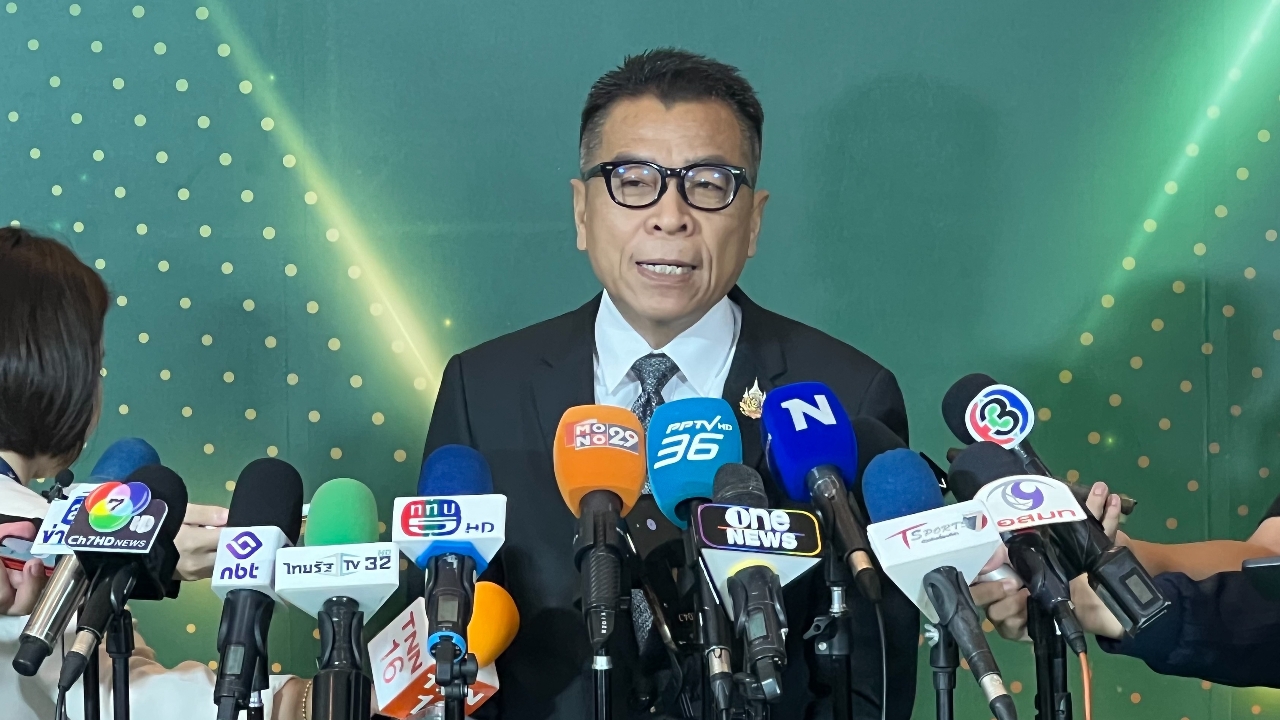
The Election Commission is preparing to submit a list of 11 witnesses to contest the QR code case to the Constitutional Court next week. It stressed that the subcommittee's ruling on the Senate vote-rigging case remains confidential; no one knows whether it was dismissed or not. The case is expected to be submitted to the Election Commission for review by the end of April.
At 11:00 a.m. on 24 April 2026 at the Election Commission office, Mr. Saweang Bunmee, Secretary-General of the Election Commission, provided an update on the Constitutional Court proceedings regarding the barcode and QR code on the MP election ballots. He stated that the Election Commission had already submitted a response to the allegations last Friday. Although the Constitutional Court granted a 15-day extension, the Commission managed to submit the documents ahead of schedule. Regarding the list of witnesses, it is expected that an official submission of names—approximately 11 individuals as reported—will be made to the Court next week.
Regarding reports about a witness whose personal background has been criticized, Mr. Saweang confirmed that the office did approach this individual to serve as a witness due to their expertise in public law. He emphasized that this witness is an expert providing legal opinions only, not testimony about behavior. According to the Constitutional Court’s procedures, the focus is primarily on legal issues, so the credibility of the witness depends on the accuracy of their legal opinions.
“We do not consider personal behavior but focus on legal opinions, which are separate issues. Although this witness previously acted as a lawyer for the opposing side in a case filed against the Election Commission at the Criminal Court for Corruption and Misconduct, we still chose them as a witness in this case because of their expertise. As for rumors that the witness might withdraw, this is currently under fact-checking. However, witnesses can submit written opinions to the Court without needing to appear in person, depending on the Constitutional Court’s discretion whether to accept the testimony or require a personal appearance.” Mr. Saweang said.
The Election Commission Secretary-General affirmed that the Commission has no concerns about contesting the case, as it will focus on explaining the election’s structure and procedures, emphasizing their confidentiality during voting and ballot storage. This process prevents tracing back to individual voters, confirming that all procedures comply with legal standards.
Senate Vote-Rigging Case Expected to Be Submitted to Election Commission for Final Decision by End of April
Regarding the progress of the Senate vote-rigging case, the subcommittee completed its review around late March and forwarded the documents to the Election Commission office to organize and categorize the extensive material by allegations, making it easier for the Commission to review. The volume exceeds 80,000 pages. It is expected that the documentation will be fully prepared by the end of this month, although some documents were already sent to the Election Commission before the Songkran festival.
Concerning rumors that the subcommittee resolving disputes in Committee 36 decided that allegations against 229 individuals in the Senate vote-rigging case were unfounded and forwarded their opinion to the full Election Commission, Mr. Saweang affirmed that no one, including himself, knows the actual facts or any subcommittee resolutions. Only unverified information has been leaked with unknown sources and motives. The truth will only be clear after the Election Commission reviews the case and makes a decision. At present, there is only speculation, even though the matter is confidential. Those who believe they know do not know the source of the information, as even he learned about it through newspapers. Currently, the office is preparing to submit all documents to the Election Commission by the end of this month. Afterward, it will be at the Commission’s discretion to decide how to proceed.