

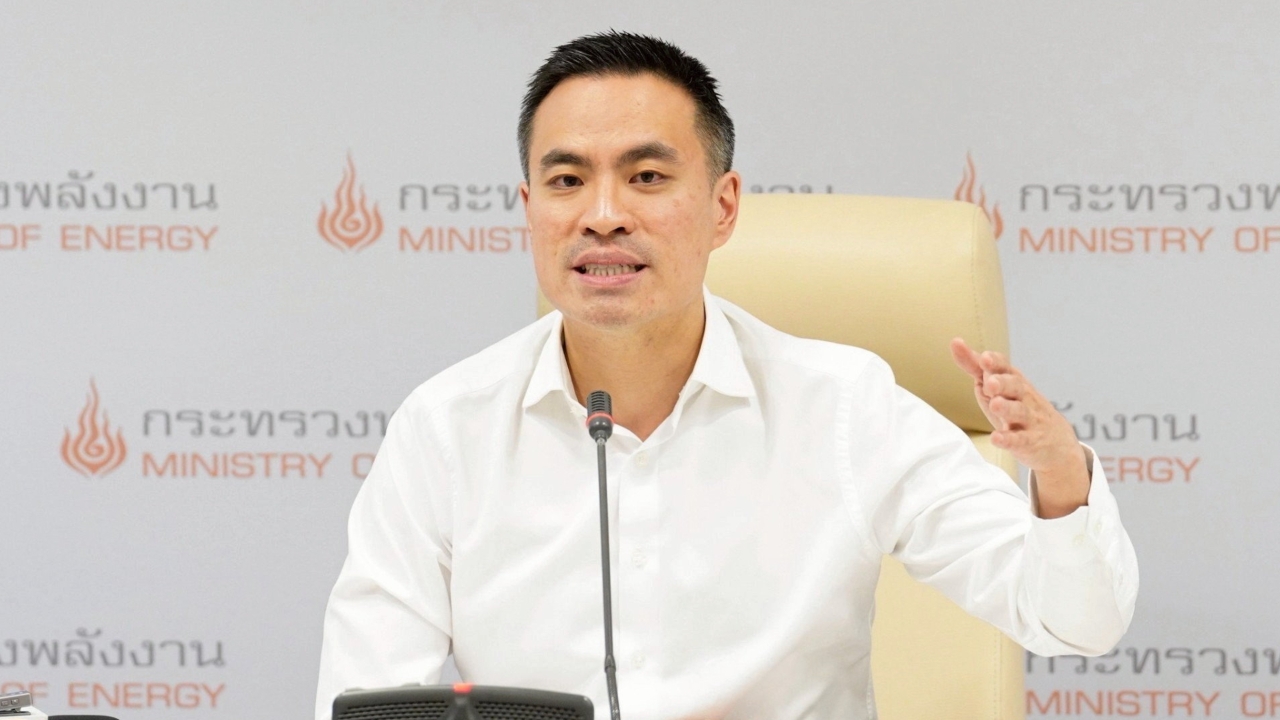
"Akanat" revealed that after 9 May, the diesel price at refineries is expected to drop by another 3 baht per liter. The electricity tariff structure will be adjusted so that usage up to 200 units costs only 3 baht per unit. The government promotes installing solar panels on residential rooftops, allowing surplus electricity to be sold back to the state.
On 24 April 2026, Mr. Akanat Promphan, Minister of Energy, said on the "Open Mouth" program on Thairath TV about oil and energy prices that the pump price has already dropped by a total of 10 baht 34 satang. Diesel has fallen due to two factors: market mechanisms as market prices declined, and partial support from the fund, which lowered pump prices. Additionally, prices at refineries were reduced. This explains why, since he took office as Energy Minister, oil prices have been cut five times.
Mr. Akanat stated that on 9 April, refinery prices were cut by 2 baht per liter, and on 23 April by 5 baht per liter. After 9 May, prices will be reduced by another 3 baht per liter. The delay is to avoid excessive market volatility. Altogether, about 10 billion baht has been taken from all six refineries proportionally, using special authority under the 1973 Emergency Decree. This involves capturing excess profits from all refineries equally to support the fund and reduce pump prices.
Mr. Akanat affirmed that he manages this appropriately, not pushing refineries into losses, since they are currently foregoing profits to maintain sustainable operations. He emphasized that when upstream prices fall, downstream prices will naturally follow.
Regarding future solutions, he said that currently, only temporary measures are in place, using special mechanisms to have refineries help offset pump prices temporarily. Ultimately, oil pricing structures must be adjusted appropriately, including fund operation mechanisms. The broader goal is to reduce reliance on imported fuels such as crude oil and LNG. Instead, biofuels produced by farmers will be used to replace imports.
Mr. Akanat also discussed promoting rooftop solar panel installations, enabling citizens’ roofs to function as power plants. Once producing electricity for their own use, any surplus can be sold to the Electricity Authority at rates higher than those paid to solar farms. While acknowledging current installation costs are high, he said the savings on electricity bills for heavy users justify this expense. Low-interest loan packages will be introduced to encourage citizens to install solar panels.
Regarding electricity tariff restructuring, Mr. Akanat said the price will be adjusted so that the first 200 units cost 3 baht per unit. Nationwide, about 14 million households consume less than 200 units. Going forward, low electricity users will pay less, while heavy users will pay more. This complements incentives encouraging heavy users to install solar panels, enabling surplus electricity to be sold back to the government. He asked for public cooperation in preparing their rooftops for solar panel installation, aiming to transform every rooftop into a power plant.