

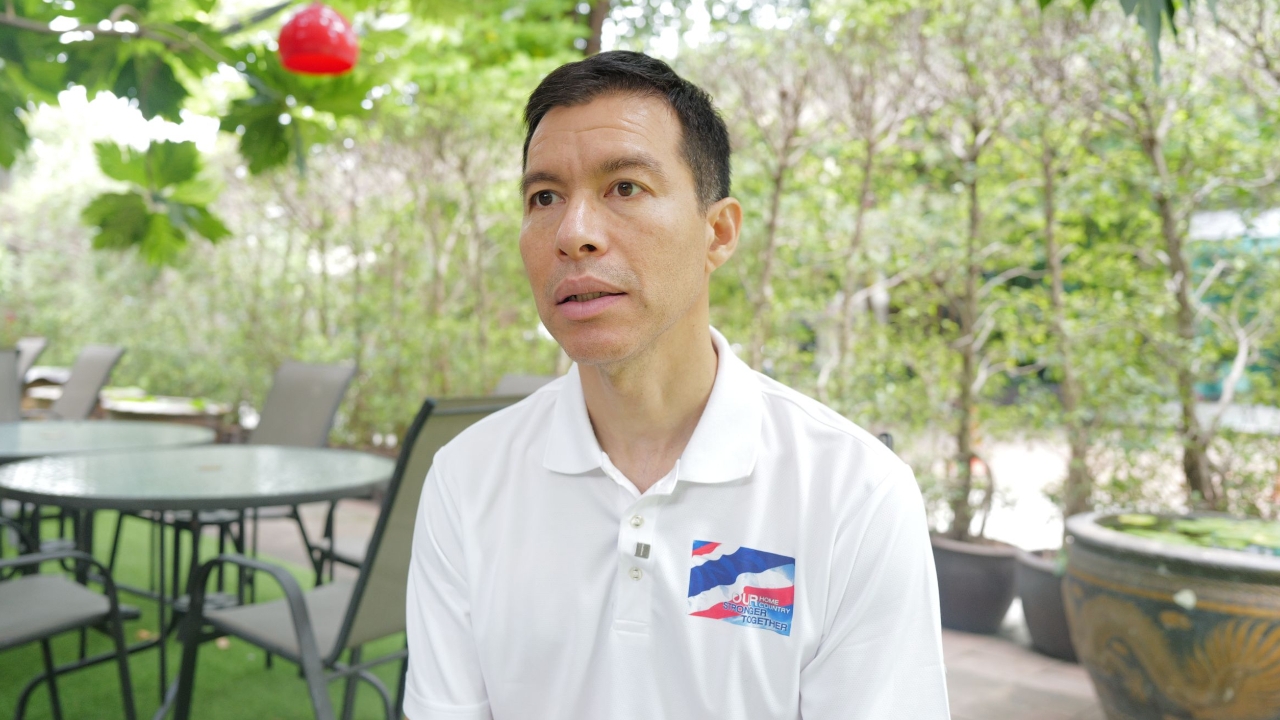
Jedsadakorn agrees with the government's cancellation of the 2001 MOU, explaining there is no need to submit it to parliament because it was never initially reviewed and holds no legal effect domestically. He also suggests canceling the 2000 MOU.
26 Apr 2026 GMT+7 Mr. Jedsadakorn Thonawanik, prime ministerial candidate for the Rakchat Party (RCP) gave an interview regarding the case of the government's cancellation of the 2001 MOU. He said that over many years, Cambodia and successive Thai governments have repeatedly violated the agreements, especially Cambodia repeatedly breaching the 2000 MOU. Originally, the 2001 MOU was merely a drafted agreement seeking joint benefits for a group focused on their own interests rather than national interests. He dismissed the claim that having both MOUs is better than none as untrue.
Jedsadakorn added that the Rakchat Party has consistently proposed canceling both the 2000 and 2001 MOUs from the start. He expressed appreciation that the government is now beginning to consider canceling the 2001 MOU and emphasized that the 2000 MOU should also be canceled next. Regarding legal concerns raised by some that cancellation must be submitted to parliament, Jedsadakorn confirmed that parliamentary approval is unnecessary. The government can proceed with cancellation immediately because neither MOU was ever reviewed by parliament and neither has legal binding force domestically. According to international law principles, the government has the authority to cancel at any time. We are able to cancel them immediately under international law.
Addressing worries that canceling the MOUs might affect bilateral negotiations between Thailand and Cambodia, Jedsadakorn cited examples of talks between Thailand and other neighboring countries, like Malaysia and Laos, which have proceeded without MOUs or memoranda of understanding. He emphasized that the key is the genuine intent to negotiate, not the formality of documents. "Don’t worry about not being able to hold bilateral talks. When we talk with Malaysia or Laos, we have no MOUs or memoranda, yet discussions continue. What matters is sufficient willingness to communicate—that is the crucial element."
Furthermore, in situations where conflict or hostility persists, both parties should exercise sovereignty over their own territories. Thailand should firmly maintain its sovereign positions, and Cambodia should manage its own areas first. When both sides are ready, they can resume talks. Thus, canceling the 2000 and 2001 MOUs is necessary to allow each party to return to their rightful bases.