

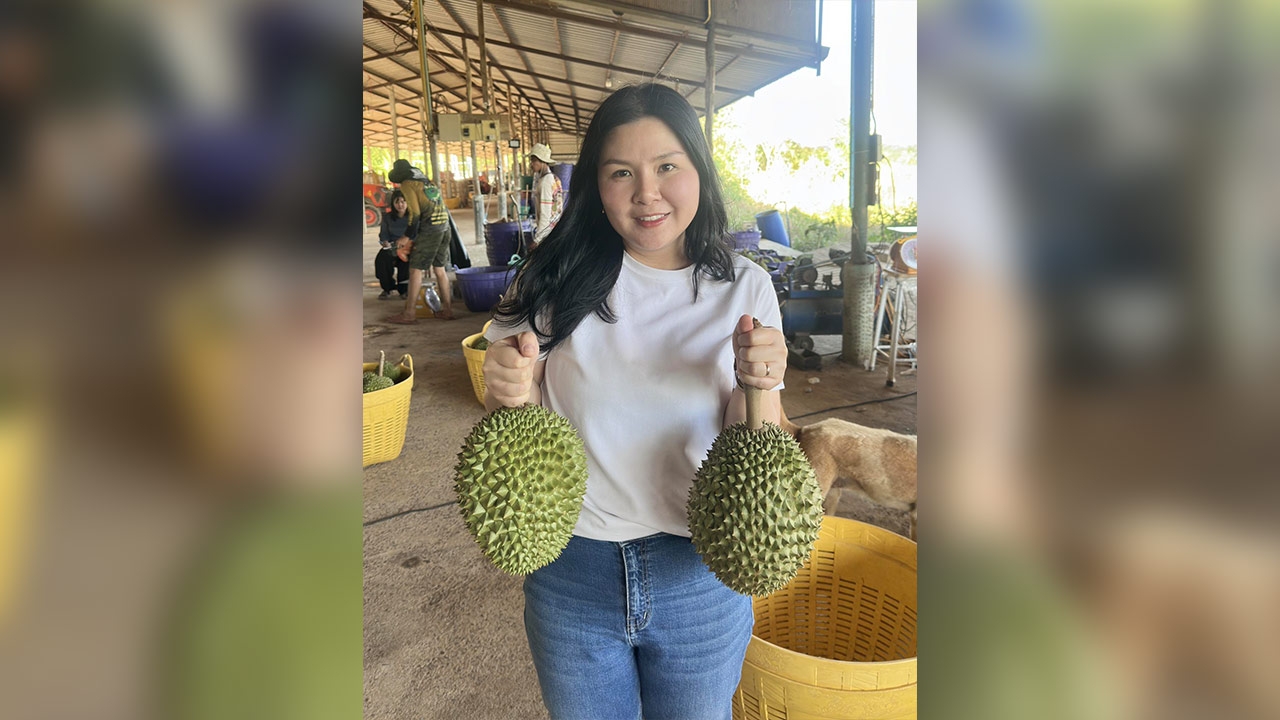
Warisa, a youth member of the People’s Party, criticized Supachai’s plan to team up with a famous influencer to livestream durian sales at 100 baht per fruit, saying it disrupts market pricing. She questioned whether this was intended to help farmers or to create political content, stressing that true help means enabling farmers to sell at fair prices.
27 Apr 2026 GMT+7 Ms. Warisa Meecharoen, a party-list candidate for the People’s Party, posted a photo with a message onFacebookregarding the case where Ms. Supachai Sutthumphun, Deputy Prime Minister and Minister of Commerce, plans to involve the famous influencer Pimrypie in a livestream selling durians at the farm gate for 100 baht each, targeting one million fruits. She said, "When durians sell for 120 baht per kilogram at the farm gate, suddenly someone wants to help by selling at 100 baht per fruit. The farmers collectively shouted, ‘We can’t get rich anymore, that’s enough, enough.’"
"This became the most shocking news for durian farmers this morning: selling one million durians at 100 baht each by Supachai and Pimrypie in a livestream on 28 April. To reiterate, 100 baht per fruit. Currently, Eastern durians still export well, and there is no market glut pulling prices down. The average farm gate and durian packing house price for ABC-grade durians is 120 baht per kilogram."
Ms. Warisa further stated that according to reports, Ms. Supachai said they would "sell products directly at the farm gate, select quality durians, freshly cut and delivered straight to consumers." This implies the quality durians are ABC grade, weighing 2–6 kilograms each, with attractive shape, at least two full edible segments and one seed, and blemish-free skin, each fruit costing over 240 baht. If so, this completely disrupts the durian pricing mechanism.
However, if ABC-grade durians are not sold, possible alternatives include selling durians with skin blemishes, misshapen, undersized, split or damaged spines, black spots, or jumbo types focusing on flesh quality rather than appearance, priced about 60 baht per kilogram. But since fruits weigh over 2 kilograms, costs still exceed 120 baht. Alternatively, selling D-grade, smaller durians called “Pok Paek” weighing under 2 kilograms may be possible; these cost about 70 baht per kilogram and typically weigh 1.7 kilograms, meaning costs exceed 100 baht per fruit. Unless Supachai finds one-kilogram Pok Paek durians—which are rare and far from good quality durians—this is unlikely.
Another option is selling durians affected by worms or rot, with skin and possibly flesh damage; these grades cost 20–35 baht but are not quality durians. Lastly, it might involve farms cooperating by selling their durians at 100 baht each to support the Ministry of Commerce, which shows sacrifice for consumers but disregards the destruction of durian pricing mechanisms and the concerns of fellow farmers.
"I really don’t know whether Minister Supachai received durian market reports from Bhumjaithai MPs in the area or from commerce and agriculture provincial offices, and why this method is used to solve a problem that isn’t yet serious. As a farmer, I support all channels for product distribution, livestreaming, online sales, or opening new markets for farmers to sell directly to consumers because these truly increase opportunities and reduce middlemen. But a project claiming to help farmers should first ask them whether it truly helps or depresses prices across the system. Because if you get attention today but farm gate prices fall tomorrow, the burden isn’t on ministers or influencers but on farmers. I emphasize that the Ministry of Commerce is misguided. True help means not making products cheapest to attract buyers, but enabling products to sell at fair prices. So I ask, is this truly helping farmers or merely political content?"