

Senator Maneerat urges the government to urgently address the water basin pollution crisis as chemicals spread into public water sources affecting over 70,000 households and causing health problems. Levels of arsenic, lead, and cadmium exceed safety standards by more than nine times.
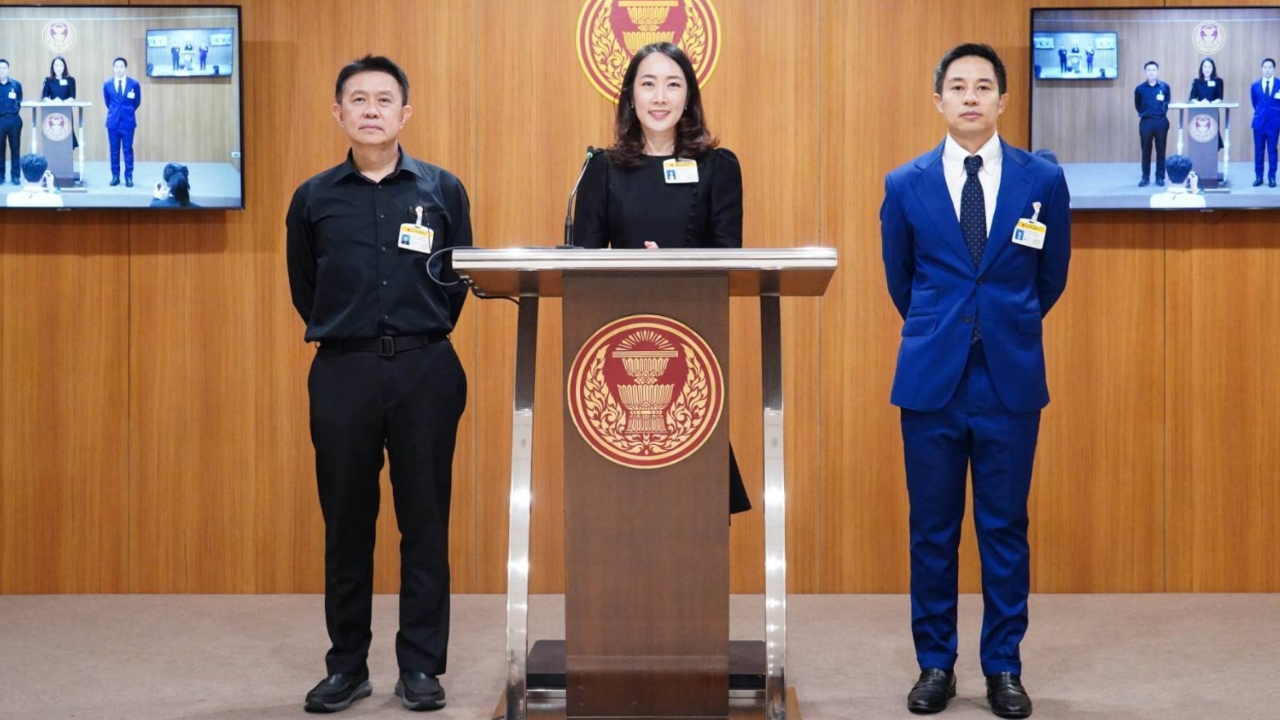
On 27 Apr 2026 GMT+7 at the parliament, Ms. Maneerat Khemawong, Mr. Noraset Prachayakorn, and Mr. Sunthorn Pruksapipat, members of the Senate, held a press conference on the “Transboundary Water Basin Pollution Crisis in Kok, Sai, Ruak, and Mekong Rivers.” Ms. Maneerat stated that the main rivers—Kok, Sai, Ruak, and Mekong—are facing an escalating transboundary water pollution crisis. Nearly 1,000 gold and rare earth mines in Shan State, Myanmar, lack proper control and wastewater treatment systems, releasing over nine types of hazardous heavy metals such as arsenic, lead, and cadmium directly into water sources flowing into Thailand. Recent tests found sediment heavy metal levels exceeding standards in all rivers, notably the Mekong River showing arsenic at 296 milligrams per kilogram—nine times above the limit—at potentially life-threatening levels. This crisis extends beyond upstream areas in Chiang Rai and Chiang Mai to the lower Mekong basin, including Loei, Nong Khai provinces, and the Lao People's Democratic Republic.

"This poses a threat to the health security and livelihoods of millions over the past year. Field visits with the Senate’s Committee on Political Development, Public Participation, Human Rights, Freedom, Consumer Protection, and the Northern Senate Members’ Project, along with local activities, have revealed impacts across sectors: 1) agriculture facing risks from contaminated water used as input; 2) tourism, especially river-based businesses, suffering significant revenue declines; 3) local fisheries losing consumer confidence following detection of abnormalities in aquatic animals, prompting warnings against consuming fish organs and bottom-dwelling species, showing toxins have entered the local food chain. Regarding drinking water, over 70,000 households face risks. Although the Provincial Waterworks Authority treats water to standard, costs have risen sharply, while over 100 village water supply systems along the rivers lack adequate modern treatment facilities."
Ms. Maneerat added that Prime Minister’s visit to Chiang Mai on 20 Apr 2026 GMT+7 was a positive sign, addressing the Kok, Sai, Ruak, and Mekong river pollution alongside PM2.5 issues, with directives for health screenings, clear communication, and public relief, plus enhancing international cooperation. However, progress remains limited to committee formation and initial relief measures, lacking clear solutions addressing root causes via international collaboration. Therefore, she proposed the government adopt proactive diplomatic measures with clear timelines and engage ASEAN and international mechanisms to tackle the problem. The Australian Embassy has offered assistance. Crucially, the “Polluter Pays Principle” must be enforced in practice to prevent the health, environmental, and restoration costs from falling solely on Thai citizens and government due to cross-border activities.

She called on the government and relevant agencies to implement six urgent short-term measures immediately:
1) Support budgets for continuous monitoring—provincial plans to track water quality, sediment, food chains, and health impacts for at least five years.
2) Upgrade testing capabilities by establishing provincial heavy metal analysis centers (in Chiang Rai) for rapid, accurate monitoring and reporting.
3) Secure alternative raw water sources by accelerating budgets to provide clean water for supply systems to replace highly contaminated water from the Kok and Sai rivers.
4) Install community water treatment systems—provide efficient treatment to village and community water supplies along affected river basins.
5) Support agriculture by supplying clean water sources or water treatment technology for farming to ensure product safety and farmers' income.
6) Provide relief for affected groups by urgently assisting farmers, fishers, and local businesses such as river raft operators and elephant camps economically impacted by this crisis.
To systematically address the issue, a working group has been formed under the Senate Committee on Political Development to study transboundary pollution management based on good governance and human rights principles, focusing on overseeing government agencies’ compliance and protecting basic human rights. This is because everyone has the right to access clean water and a healthy environment as guaranteed by the Constitution of the Kingdom of Thailand.
Mr. Noraset added that the severity of toxic contamination in the Kok River has increased compared to before, with many new rare earth mines causing pollution in the Kok, Sai, and Ruak rivers. Particularly, the Mekong River shows pollutant levels exceeding standards by nine times, with toxins measured at 296 milligrams per kilogram, which deserves greater government attention. He urged the government to visit and support residents living along all affected rivers impacted by these toxins.