

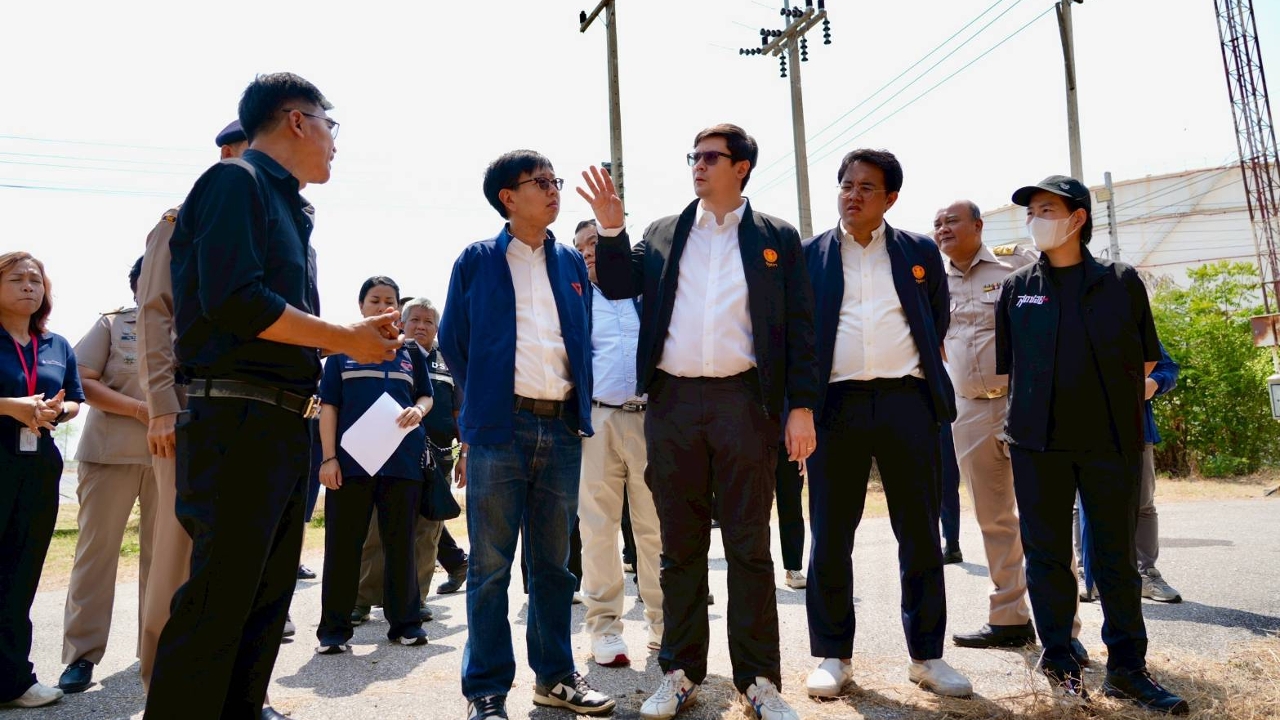
Rom and Supachot joined a team inspecting 'Sia Tue's oil depot in Phetchaburi, discovering suspicious stockpiling of oil since 2021, with tanks that should have been permanently sealed found with their seals removed.
On 27 April 2026 at an oil depot in Phetchaburi province, Mr. Rangsiman Rome, a party-list MP from the Prachachon Party, along with Mr. Supachot Chaisatj, also a party-list MP from the Prachachon Party, inspected one of the depots and refineries connected to ‘Sia Tue’. He is suspected to be a major figure involved in the oil stockpiling case. The inspection was conducted at the invitation of Mr. Akinat Promphan, Minister of Energy, following Rangsiman’s oral question in parliament last Thursday. He was then invited to join the inspection process of the oil depot along with the Ministry of Energy and other relevant agencies today.
Mr. Supachot explained that the site inspected today includes both a refinery and an oil depot located adjacent to each other. They are owned by two different legal entities but were once under the same legal entity—Sia Tue—who sold the oil depot to Bangchak Corporation for 9 billion baht. Meanwhile, Sia Tue retained ownership of the refinery side, selling only the oil depot portion, consisting of 20 tanks, the largest with a capacity of about 64 million liters. Sia Tue still owns 17 of those tanks.

What is surprising is that this project was completed back in 2019 but ceased operations in 2021, leaving 5 million liters of oil remaining in the refinery. The officials explained that no oil has been removed since 2021, remaining stored until 2026. This raises questions as to why there was no effort to sell this oil, especially since the world experienced two major oil price crises since 2021—from the Russia-Ukraine war and current events in the Middle East. It cannot be said that selling the oil would not cover costs, as retail prices rose significantly during that time, indicating the oil should have been sold.
Mr. Supachot also raised concerns about the tanks claimed to be unused and permanently sealed. The inspection revealed that the agency responsible for oversight is the Customs Department, since this oil depot is registered as a duty-free zone, not the Energy Business Department which normally oversees such operations. Customs officials claimed they regularly inspect the site and seal it properly; if any tanks are used, Customs staff must personally break the seals. However, today’s inspection found that the tanks were sealed with a new type of seal that even Customs officials present could not verify as genuine Customs seals.
Mr. Supachot further stated that today’s inspection revealed weaknesses in the government’s oversight system that may have contributed to the oil disappearance over the past period. Regulatory agencies are fragmented: oil depots in duty-free zones fall under Customs, while domestic oil depots are overseen by the Excise Department. Additionally, reporting systems from depots and refineries to agencies are one-way only. Government inspections are merely random checks, leaving gaps vulnerable to wrongdoing. Therefore, the government must swiftly identify and punish those responsible for stockpiling oil during the crisis and invest in designing and implementing a new comprehensive system for monitoring and transparency of information from all oil depots nationwide.


