

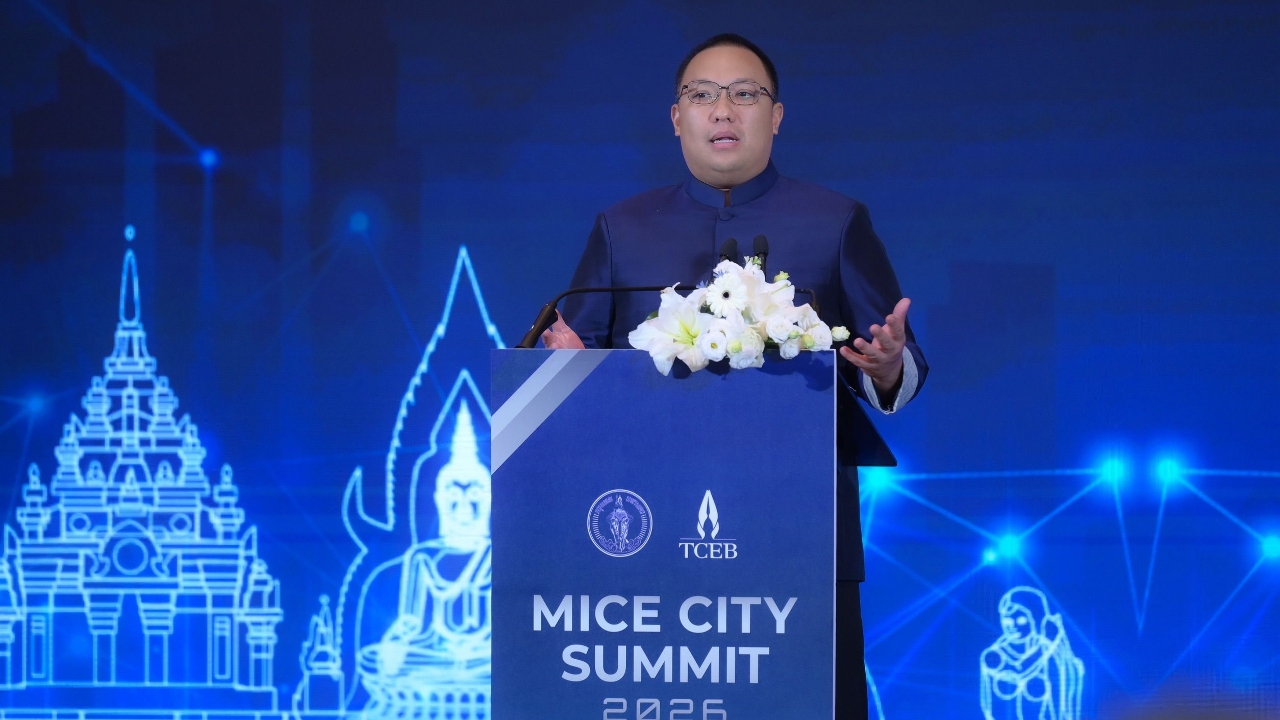
Pholpeer opened the Thailand MICE City Leaders Summit, highlighting a strategy to integrate 10 economic cities into a central hub with the goal of elevating them to become a “Creative & Business Hub.”Tags: [MICE, Economic Strategy, Thailand, Urban Development, Creative Hub]
At 13:30 on 28 April 2026, Mr. Pholpeer Suwannachawi, Deputy Minister of the Interior, chaired the Thailand MICE City Leaders Summit (MICE City Summit 2026). Attendees included Mr. Chaiwat Chuenkosum, Deputy Permanent Secretary of the Ministry of Interior and Head of the Disaster and Urban Development Task Force; Mr. Narong Ruangsri, Bangkok Governor; as well as governors from the nine MICE provinces. These provinces are Chonburi, Chiang Mai, Khon Kaen, Phuket, Nakhon Ratchasima, Songkhla, Udon Thani, Phitsanulok, and Prachuap Khiri Khan, along with partner networks who joined the event.
On this occasion, the Deputy Minister of the Interior witnessed the signing of a cooperation agreement to build a strategic alliance for developing a highly skilled workforce and enhancing the capabilities of the MICE industry. The agreement was between the Ministry of Interior, the Thailand Convention and Exhibition Bureau (TCEB), and Prince of Songkla University. He then delivered a policy speech on “The Importance of Advancing MICE Cities in Thailand” and presented awards to the 10 MICE cities of Thailand.
Mr. Pholpeer said today marks a significant national occasion where provincial governors, as “city leaders” from across the country have come together to show unified strength to set a new milestone for Thailand’s future. On behalf of the Ministry of Interior, he commended the dedication of all sectors that have made “MICE” more than just cities with high potential to host Meetings, Incentives, Conventions, and Exhibitions. Through key national strategies for grassroots development and income distribution—from tourism to employment—this will stimulate the economy from local to national levels.
“The government’s key policy focuses on generating new income streams, enhancing competitiveness through innovation and creativity, and integrating efforts across all sectors. ‘MICE cities’ are the most fitting answer because we must elevate these cities to destinations with charm, unique identity, and ecosystems that foster intellectual exchange and business opportunities. If every city has good logistics and prosperity, we can create final destinations that effectively attract tourists to the provinces,” Mr. Pholpeer said. Mr. Pholpeer added,
that the important direction moving forward together is to elevate Thai cities onto the global stage. We must not stop at being tourist cities but elevate them to become “Creative & Business Hubs.” For example, several provinces are advancing toward joining the UNESCO Creative Cities Network, which is a major step proving that cities throughout Thailand have what it takes to stand proudly on the world map. Achieving balanced growth, the MICE industry must act as a bridge connecting opportunities from global investors down to local enterprises and farmers. Benefits from each event must create continuous and sustainable positive impacts on the local economy.

“Today's signing of the joint declaration of the “Thailand MICE Cities Manifesto” is more than just signing a document; it is a pledge among city leaders nationwide to collaborate by integrating budgets, resources, and knowledge to build international confidence that Thailand is ready to be a professional global MICE destination.”
“I am confident that under the equation of good hospitality, good food, and good living, supported by a positive atmosphere driven by the cooperation of provincial governors, local administrators, and the private sector, we can create smiles and encourage citizens to travel within their provinces. This aligns with regional economic development goals and can push the country forward as a crucial engine enabling Thailand to overcome challenges and achieve truly sustainable development,” Mr. Pholpeer said.
.Tags: [MICE Summit, Thailand, Economic Development, Government Policy, Urban Integration, Creative Economy]