

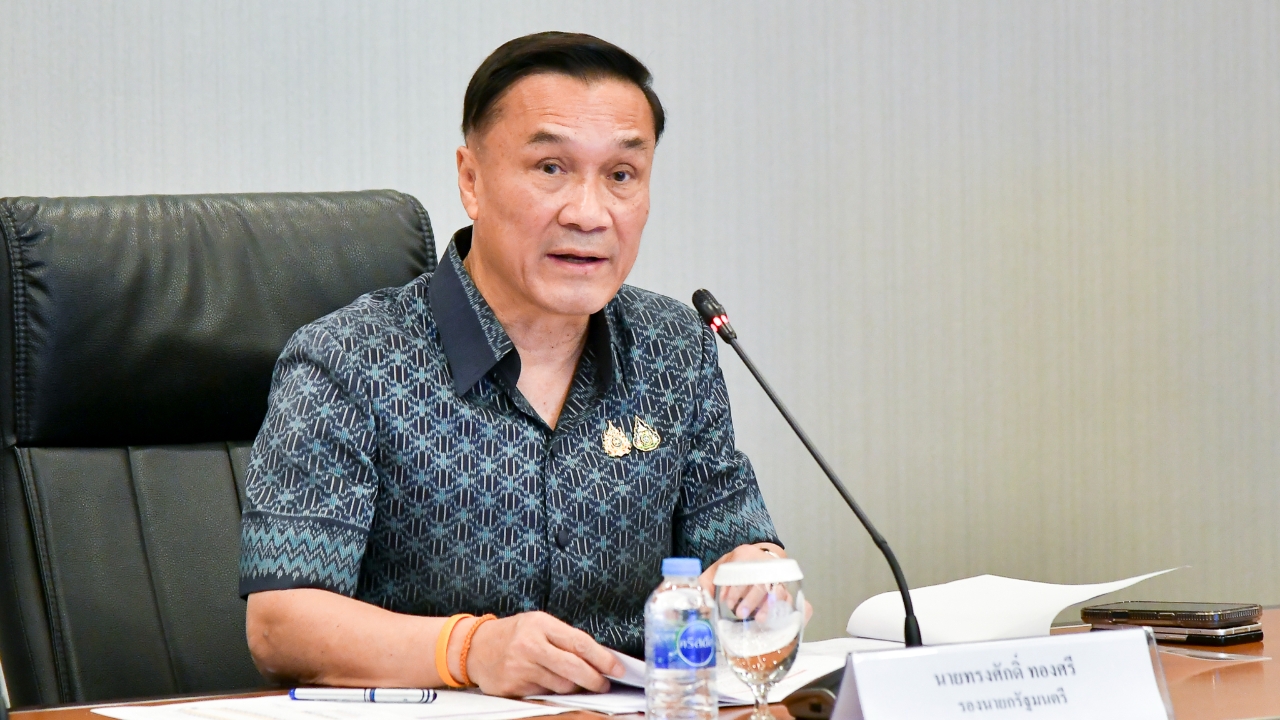
Deputy Prime Minister Somsak revealed that the National Water Resources Office (NWRO) is preparing nine measures to tackle flooding and drought, taking over from Bowornsak, and drawing lessons from the Hat Yai flood response. He noted there is no clear support yet for establishing a separate Ministry of Water, saying the NWRO currently oversees water management.
At 09:40 on 30 April 2026 at the Government House, Deputy Prime Minister Somsak Thongsri, overseeing the National Water Resources Office (NWRO), spoke before the first meeting of the 2027 fiscal year integrated water resource management budget committee. He said that on 29 April, he met with the NWRO, which is preparing nine measures to manage water resources and get ready for floods and droughts. He has already given policy guidance, explaining that water issues involve both excess (floods) and shortage (drought). In principle, the problem is straightforward: floods occur when water exceeds storage capacity, while drought is when water is insufficient. Both issues can be addressed together through integrated solutions.
When asked whether the upcoming cabinet meeting in Hat Yai, Songkhla in June would include plans to address flooding, Somsak said that a subcommittee reviewing lessons learned from previous floods, initiated under former Deputy Prime Minister Bowornsak Uwanno, is nearly complete. He is now continuing that work.
Somsak explained that the main consensus is that flooding results from insufficient water catchment areas to hold accumulated water. The NWRO already has water basin maps for all 22 basins, identifying low-lying areas. Therefore, studies and construction of retention ponds (monkey cheeks) and water diversion at key points in each basin are needed. He has urged accelerating these efforts to achieve sustainable solutions, rather than seeing floods and droughts as isolated or repetitive problems. Sometimes both problems occur in the same area, but with integrated management, sustainable solutions are achievable.
When asked about progress on establishing a separate Ministry of Water to specifically oversee water issues, Somsak said he is not aware of any such plan. He emphasized that the NWRO is a key agency and that water problems require integrated cooperation. He reiterated that he does not know of any move to separate the water ministry.
Asked again whether creating a separate Ministry of Water is government policy, Somsak said that setting up a specialized organization requires careful consideration to ensure systematic and effective operations. He pointed out that the NWRO is already well-prepared.
When asked if he personally supports the establishment of a separate Ministry of Water, given the importance of water issues, Somsak said that currently the NWRO faces no obstacles. It has the necessary structure, personnel, and coordination with multiple agencies. The NWRO supervises and controls budgets to avoid duplication and ensure alignment with government policies. It assesses which areas should receive funding and acts as a central coordinator to allocate funds to agencies for project implementation without overlap.