

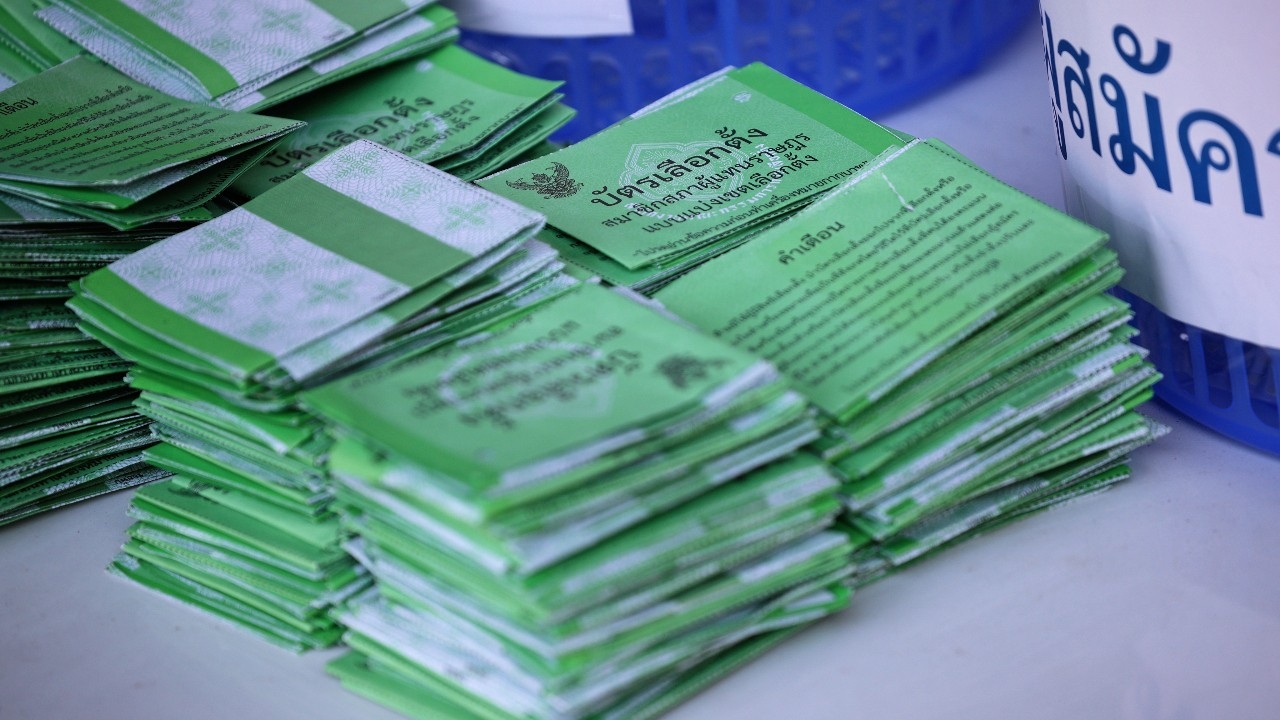
The Constitutional Court has instructed relevant agencies and individuals to submit copies of evidence within 15 days regarding the Election Commission's organization of the 8 February election, which used ballots with barcodes and QR codes, raising concerns that the voting was not conducted in secrecy.
On 29 April 2026, the Constitutional Court convened to consider a significant and closely watched case. The Ombudsman (the petitioner) requested the court to rule under Section 213 of the Constitution (case no. Tor. 30/2569). The petitioner claimed to have received 22 complaints and requested to submit a joint petition for consideration.
The petitioner submitted opinions to the Constitutional Court under Section 233 of the Constitution, alleging that the Election Commission and related parties (the respondents) organized the general election for members of the House of Representatives on 8 February 2026, using ballots printed with barcodes and QR codes. It is believed these codes could potentially reveal and verify the identity of voters as well as their votes, meaning the voting was not secret. This action allegedly violated Articles 4, 25, 32, and 34 of the Constitution.
Also cited were Articles 50 (7), 83, paragraph two, 85, 95, and 224 of the Constitution.
The respondents submitted an additional list of witnesses dated 24 April 2026, amending their earlier witness list dated 17 April 2026.
After deliberation, the Constitutional Court decided that for the sake of the proceedings, witnesses named should submit written statements. Relevant agencies or individuals must also provide written opinions on the points specified by the court and submit copies of all related evidence to the Constitutional Court within 15 days from the date of receipt of the court's letter, to support the court's forthcoming ruling.