

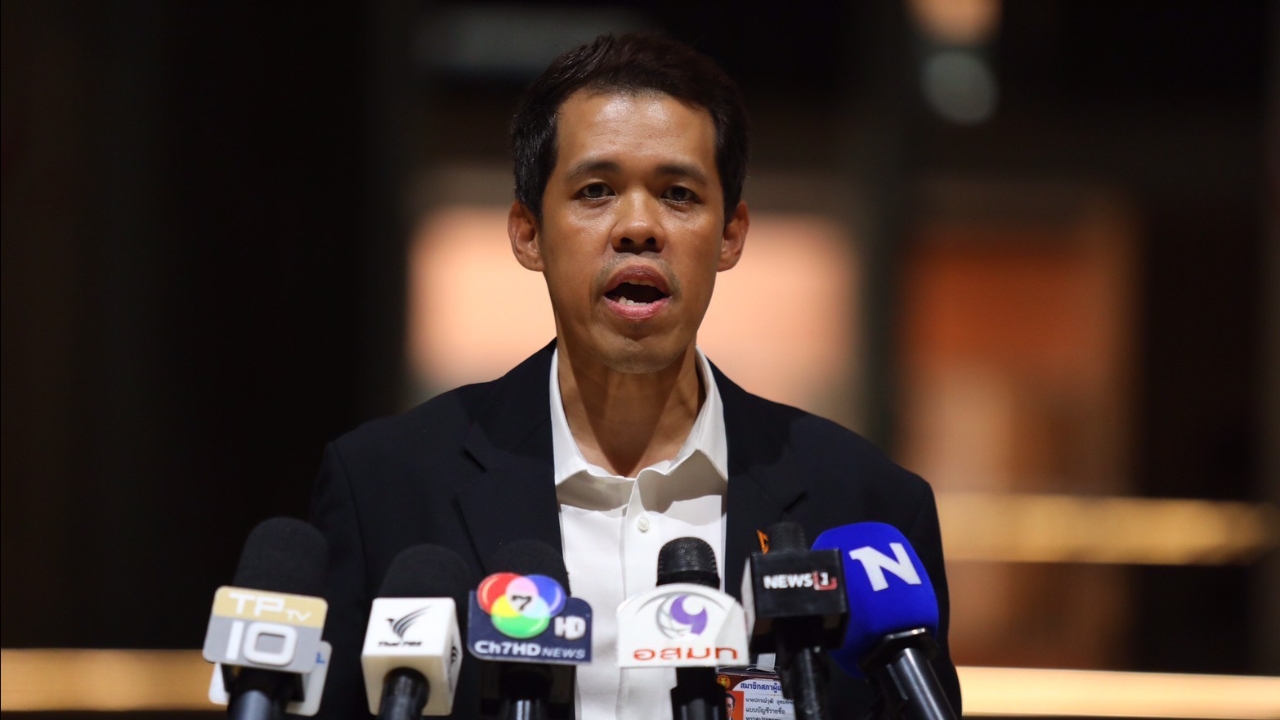
Pakornwut criticized the National Anti-Corruption Commission (NACC) after it dismissed the complaint against Saksayam over hiding assets, accusing the commission of interpreting the case in favor of the accused and using excuses to absolve the intent to conceal stocks in 2019 rather than addressing the issue.
On 30 April 2026, Mr. Pakornwut Udompipatsakul, a party-list MP of the Prachachon Party and the complainant in the case of asset concealment by Mr. Saksayam Chidchob, former Minister of Transport, held a press conference expressing strong disappointment over the NACC’s resolution to dismiss the complaint. The NACC cited that Saksayam "lacked intent" because he had legally transferred the shares before assuming office.
Pakornwut stated that the NACC’s rationale, which relies on the completeness of the legal act to prove a lack of intent to conceal, is logically contradictory to the actual behavior. Using a “nominee” is a legal act that is formally correct but does not reflect the real, practical situation.
"The NACC’s duty is to prove whether shares were concealed or not, and a key element of concealing shares is completing legal acts to create the appearance of a proper transfer. In reality, there is no such thing as 'unintentional share concealment,'" Pakornwut said.
He also questioned the financial trail, which the Constitutional Court had previously established: the money that Mr. S. (the nominee) used to buy shares in Buricharoen Limited Partnership came from Saksayam himself, with the transfer happening within just 10 minutes. He asked why the NACC did not consider such clear evidence as a valid basis to proceed with prosecution.
Pakornwut further criticized the NACC’s role in the justice process, saying they misunderstand their function. In criminal cases, it is the court that must prove guilt beyond doubt, not the NACC. The NACC should act like police or prosecutors—if there is reasonable suspicion, they should indict and let the court decide. They should not make definitive judgments at this stage. He called it absurd to claim that Saksayam’s subsequent asset declaration corrections and lawsuits to recover shares mean he had no intent to conceal, since actions taken after 2024 cannot erase the intent to hide assets in 2019.
Pakornwut demanded that the NACC publicly disclose four key documents: Saksayam’s explanations, opinions of NACC officials at all levels, and the NACC committee meeting reports on this case. He emphasized that administrative court precedent holds these documents are not confidential once the case concludes. If the NACC does not disclose the information within the next week, he will personally visit the NACC office to submit a letter demanding full transparency, as he has never received official updates or results from the NACC despite being the complainant.