

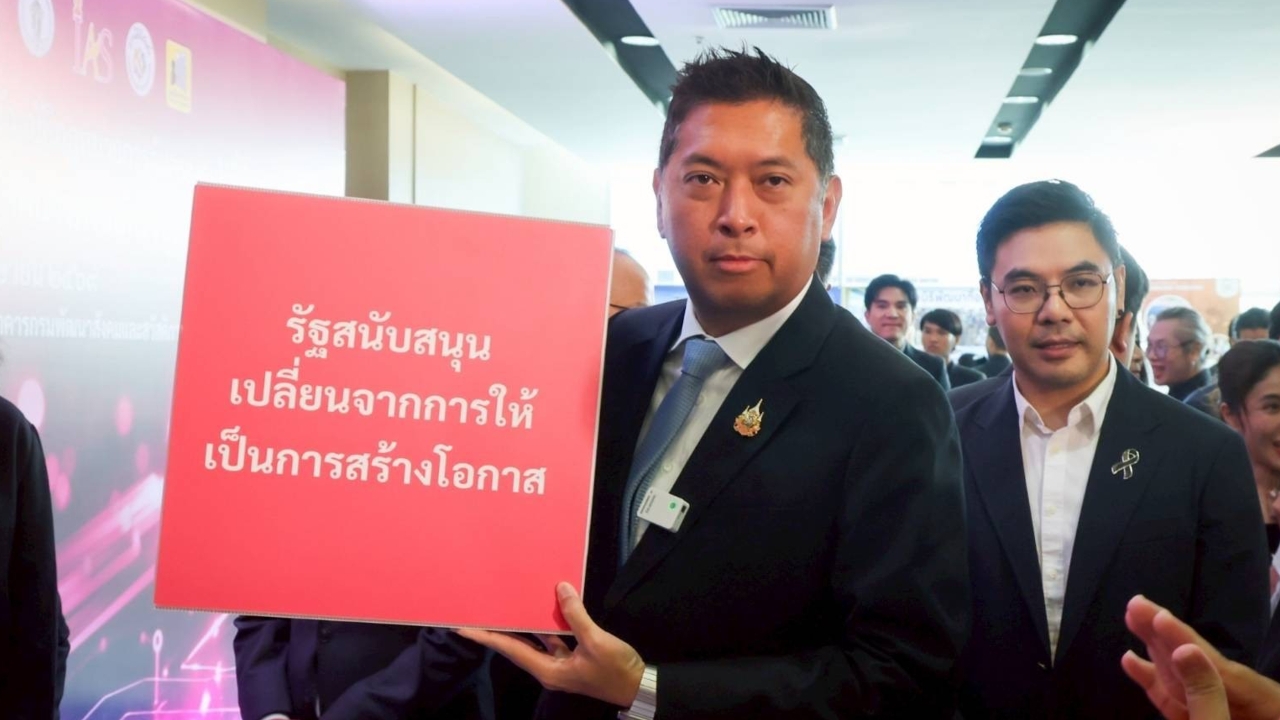
The Minister of Social Development and Human Security unveiled a new model to assist vulnerable individuals by co-paying housing rent and supporting foster families, aiming to restore homeless people to stable lives. He noted that homelessness and vulnerability are not only about lacking shelter but also reflect economic fragility, family issues, health, and opportunities to rebuild life.
On 1 May 2026, reporters reported that on 29 April 2026, the Ministry of Social Development and Human Security (MSDHS), through the Department of Social Development and Welfare, launched a key mechanism to support vulnerable people via the project promoting understanding of sub-legislation for protecting the vulnerable titled “Housing Welfare and Foster Family Welfare.” Minister Nikorn Somklang presided over the opening, joined by Permanent Secretary Kantapong Rangsisawang, Director-General Ramrung Worawat of the Department of Social Development and Welfare, and network representatives at the Pakorn Angsusingh Meeting Room, 2nd floor, Department of Social Development and Welfare building, MSDHS, Saphan Khao, Bangkok.
This event united many partners from various sectors, including MSDHS, Bangkok Metropolitan Administration, Thai Health Promotion Foundation (ThaiHealth), the Institute of Asian Studies at Chulalongkorn University, the Housing Development Foundation, the Thai Homeless Network, Mirror Foundation, and Isarachon Foundation, to jointly advance a welfare system that goes beyond "immediate aid" and designs pathways for vulnerable individuals to rejoin society with dignity.
Minister Nikorn revealed that MSDHS, through the Department of Social Development and Welfare, has continuously worked to improve the quality of life for vulnerable people. Data from a survey by ThaiHealth in cooperation with MSDHS shows the homeless population rose from 1,307 people in 2016 to 2,720 in 2018 and 3,534 in 2020, before decreasing to 2,499 in 2023.
Although total numbers declined, detailed data highlight notable points: most homeless people are aged 40–59, accounting for 56.8%, and 74.1% live alone. The provinces with the highest homeless populations include Bangkok, Chonburi, Chiang Mai, Khon Kaen, Kanchanaburi, Nakhon Ratchasima, and Songkhla.
Importantly, new homeless individuals or those homeless for less than two years make up 39%. This group, if reached quickly and supported precisely and comprehensively by the government and partners, can return to stable lives more rapidly.
In response, MSDHS is shifting its role from “welfare provider” to “supporter” to build a stronger social protection system by using technology and data from the electronic family logbook system (MSO-Logbook) to accurately screen and link welfare rights to individual needs.
The core of this initiative involves two important announcements designed to fill gaps in caring for vulnerable people.
The first focuses on housing security by supporting housing costs through a “co-payment” scheme where homeless individuals contribute and the government subsidizes actual rent up to 1,500 baht per month, plus expenses for water, electricity, clothing, bedding, and support costs for private sector partners involved.
This measure views housing not just as shelter from weather but as a “safe space” providing vulnerable people a new start, a place to stay, a foundation, and the ability to plan their next steps in life.
The second announcement involves protecting vulnerable people through foster families by providing compensation of 5,000 baht per person per month to families hosting vulnerable individuals, promoting their chance to live in family-like environments, reducing loneliness, and creating social warmth.
This approach is a vital social tool because restoring the lives of vulnerable people requires more than financial aid; it needs relationships, understanding, and spaces that make them feel they “still have a place in society.”
Minister Nikorn also invited housing organizations, businesses, families, communities, and network partners to participate in driving this work. The year 2026 marks the first systematic push of these measures, with MSDHS preparing budgets and establishing a “Happiness Team” as a rapid-response unit working with partners on the ground.
This advancement in housing and foster family welfare is not merely a support measure for homeless people but lays a new foundation for a flexible Thai welfare system that truly reaches vulnerable populations and opens opportunities for vulnerable people to return to family, community, and society with dignity.
Ultimately, solving vulnerability issues is not about providing a single night’s shelter but about giving a person the chance to start a new life, have a safe space, be understood, and have a society ready to support them to stand again.
Under MSDHS policy, care for vulnerable people is shifting from case-by-case aid to building a system that allows everyone the opportunity for a stable life, aligning with the goal of creating “a good society with opportunities for all Thai people.”