

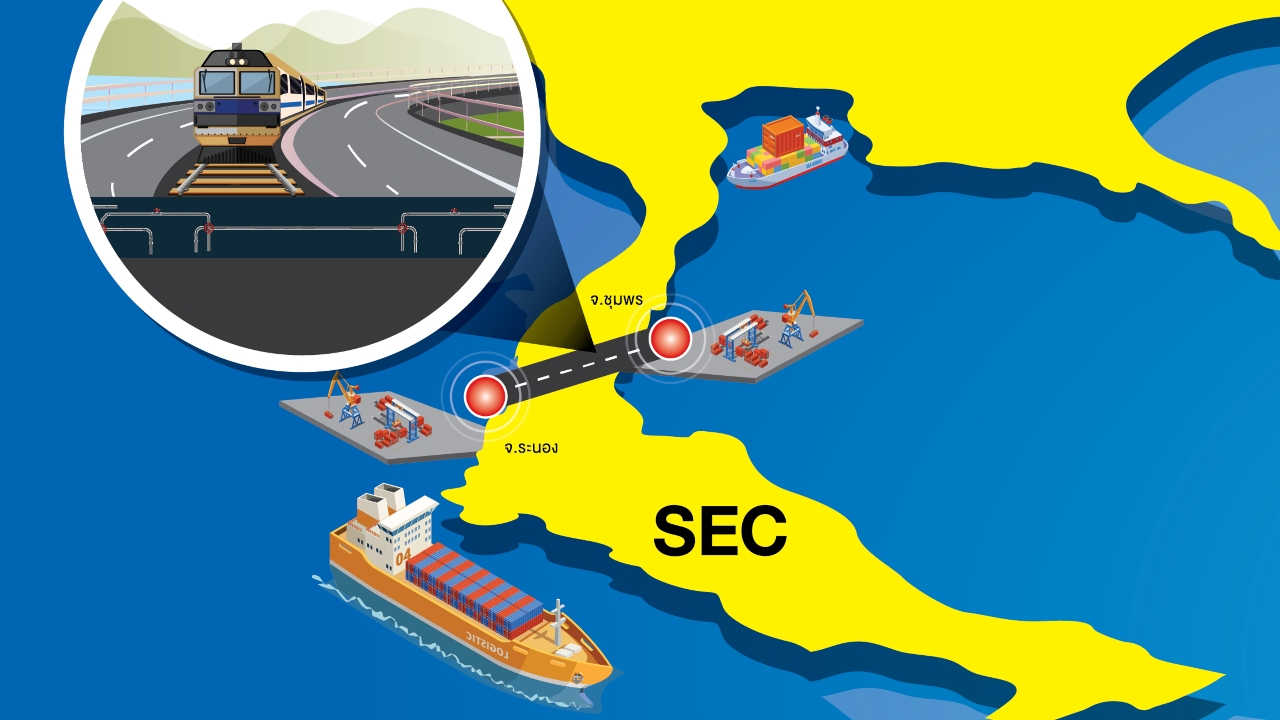
Nida Poll surveyed 1,455 samples from 14 southern provinces. The majority support the “Land Bridge Project.” Fifty-four point forty-three percent had heard of it but only understood it slightly. There are concerns about environmental impacts on natural ecosystems both on land and at sea.
On 3 May 2026, the Opinion Survey Center Nida Poll at the National Institute of Development Administration (NIDA) released survey results titled “What Do People in the South Think? The Land Bridge Project Is Coming Soon.” The survey was conducted from 28-30 April 2026 among citizens aged 18 and over with voting rights in the southern region (covering 14 provinces: Chumphon, Nakhon Si Thammarat, Phatthalung, Surat Thani, Songkhla, Krabi, Trang, Phang Nga, Phuket, Ranong, Satun, Narathiwat, Pattani, and Yala, as defined by the Policy Committee on Provincial and Integrated Cluster Management in the announcement on establishing provincial clusters and designating operational centers (No. 3) (2017, 17 Nov) in the Royal Gazette, Vol. 134 [Special Part 281 Ng], page 14). Respondents represented all educational levels, occupations, and income groups, totaling 1,455 samples.
When asked about their awareness and understanding of the Land Bridge Project among southern residents, the findings were as follows:
Fifty-four point forty-three percent said they had heard of it but only understood it slightly.
Twenty-six point sixty-seven percent said they had heard of it and had some understanding.
Ten point fifty-two percent said they had heard of it and understood it very well.
Seven point zero eight percent said they had never heard of the project at all.
One point thirty percent said they had heard of it but did not understand it at all.
Among respondents who had heard and understood very well, some understanding, or slight understanding of the project (a total of 1,333 samples), concerns about the Land Bridge Project included:
Thirty-eight point zero three percent cited environmental impacts on natural ecosystems both on land and at sea.
Thirty-three point sixteen percent said they were not worried at all.
Twenty-nine point seventy-one percent mentioned impacts on local community living conditions, such as land expropriation and changes to traditional lifestyles.
Twenty-five point eighty-one percent raised concerns about corruption and lack of transparency in the project.
Fifteen point thirty percent questioned the long-term cost-effectiveness.
Twelve point zero eight percent mentioned opposition from local communities and residents.
Eleven point seventy-eight percent wondered what benefits the southern people would gain.
Eleven point forty percent questioned what benefits people across Thailand would receive.
Ten point fifty percent worried about construction delays or failure to meet planned targets.
Seven point fifty-eight percent raised concerns about state budget issues if the government must invest alone.
Six point thirty percent cited difficulties in finding investors.
Six point fifteen percent noted that Thailand might become a strategic area of competition among global powers in the future.
Four point thirty-five percent doubted the project might not actually materialize.
Three point ninety-eight percent mentioned opposition from NGOs, academics, and politicians.
Zero point ninety-eight percent cited opposition from foreign countries.
Regarding opinions of respondents who had heard and understood well, somewhat, or slightly about the project (1,333 samples), their views on the Land Bridge Project were:
Thirty-four point twenty-one percent strongly agreed with the project.
Thirty-three point zero one percent somewhat agreed.
Nineteen point forty-three percent somewhat disagreed.
Thirteen point thirty-five percent completely disagreed.

(Illustration from the websitewww.landbridgethai.comand Nida Poll)