

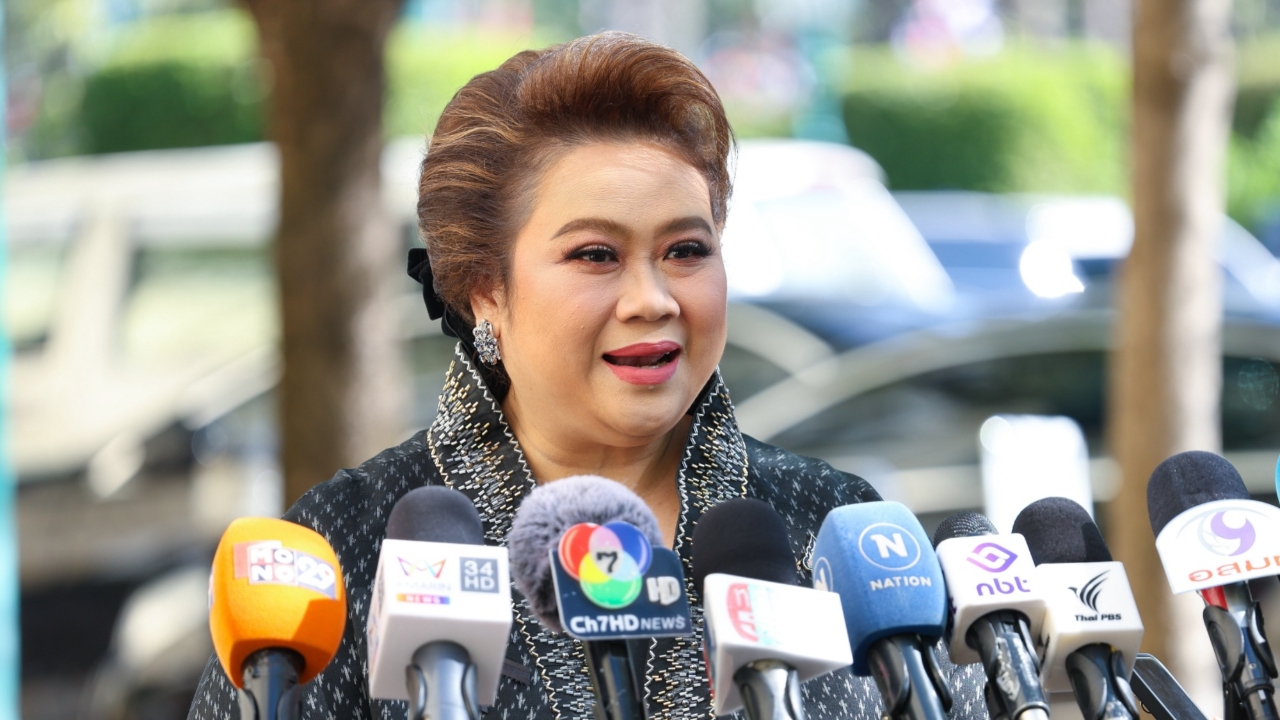
Supamas ordered the Korat Consumer Protection Office to urgently investigate drinking water contamination, discovering that a rubber processing factory had registered itself as a drinking water production site. The Prime Minister stressed the importance of public safety.
4 May 2026 GMT+7 Ms. Supamas Isarapakdi, Minister attached to the Prime Minister’s Office, revealed that the Nakhon Ratchasima Provincial Public Health Office issued a warning to the public after random testing detected contamination, specifically Salmonella spp. bacteria in drinking water, sold in the area, which could affect consumer health. She ordered the Consumer Protection Board (CPB) to promptly investigate the facts, responding to Prime Minister and Interior Minister Anutin Charnvirakul’s concern for public health safety and consumer rights protection, while urging public awareness to carefully check product labels, origin, and manufacturing standards when purchasing drinking water.
Ms. Supamas added that she assigned Mr. Ronarak Poolpipat, Secretary-General of the Consumer Protection Board, to delegate officers from CPB Region 9 in Nakhon Ratchasima to inspect the water production site, finding that it was a rubber processing factory that had been registered as a drinking water production site, which may compromise water quality and cause contamination. The CPB will coordinate with the Department of Business Development, Nakhon Ratchasima Provincial Public Health Office, and other relevant agencies to verify if the business complies with registered objectives and legal requirements. Any violations will be strictly prosecuted.
The CPB Secretary-General further explained that contaminated drinking water constitutes “substandard food” under the 1979 Food Act, Section 25 (3), punishable by a fine up to 50,000 baht under Section 60. The CPB has authority to take legal action on behalf of affected consumers under Section 39 of the Consumer Protection Act 1979. Therefore, consumers harmed or suffering health damage from contaminated water can file complaints with the CPB for mediation or legal proceedings on their behalf.
In closing, Ms. Supamas stated, “Consuming substandard drinking water can pose health risks. The government is committed to protecting the public seriously. If there are any leads or injustices, people can report or seek advice via the CPB hotline 1166, the OCPB Connect app, or the website www.ocpb.go.th as well as regional consumer protection centers and local government organizations near their homes.”