

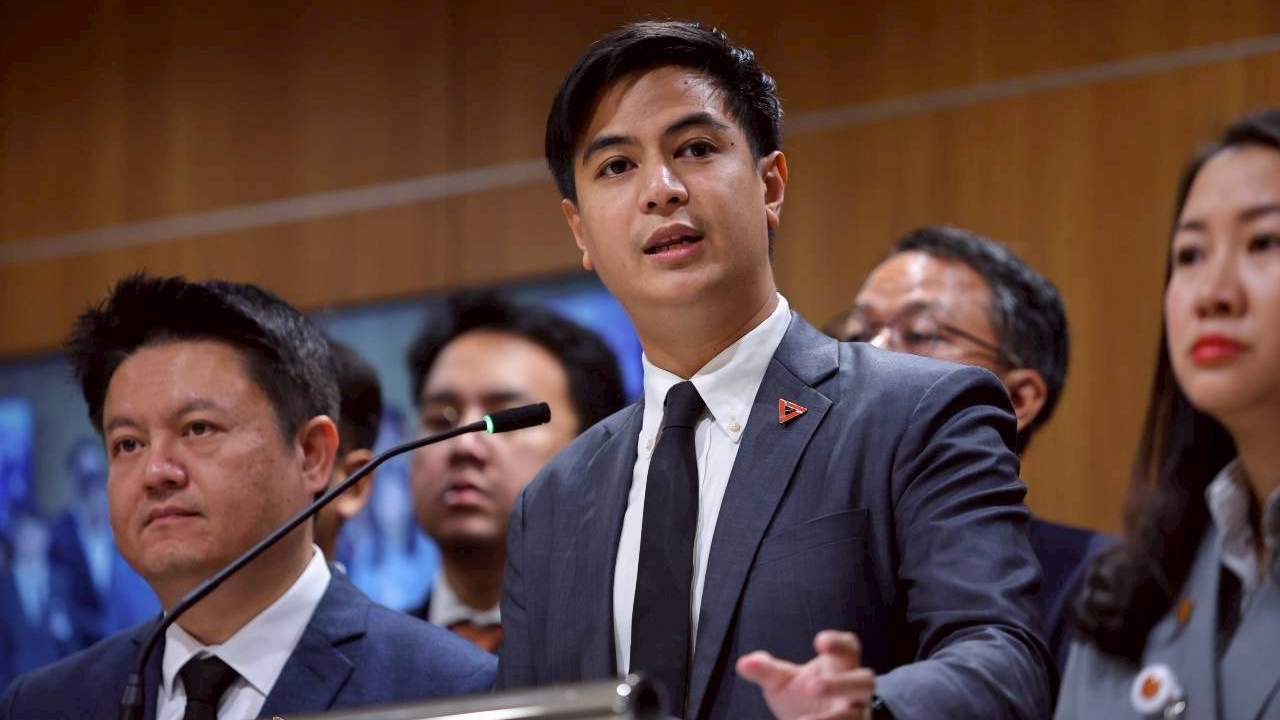
“Parit” invites attention to tomorrow’s cabinet meeting to see which bills will “go forward” or be “dismissed,” citing eight examples of issues that will become harder to resolve if the related laws do not proceed.
On 4 May 2026, Mr. Parit Vacharasindhu, party-list MP and deputy leader of the People’s Party, posted on Facebook urging the public to watch closely tomorrow (5 May) when the cabinet meeting will decide which pending bills from the previous parliament will be approved to move forward. Many of these bills, which he and the People’s Party jointly proposed, are important for addressing problems faced by the public, such as:
1. The Trade Competition Act This bill aims to address issues like rising mobile phone costs, slower internet speeds, and higher GP charges caused by monopolistic or suppressed competition.
2. The Clean Air Act / PRTR Act These laws target problems with impure air, PM2.5 dust, and pollution emissions from the industrial sector.
3. The Facilitation Act This bill seeks to solve issues of slow and redundant licensing processes and the opportunities these create for bribery in exchange for convenience.
4. The Bankruptcy Act It addresses the lost opportunities for restructuring debt with all creditors simultaneously without requiring a bankruptcy filing first.
5. The Labor Protection Act This law focuses on key issues such as insufficient leave days, rest periods, and overtime pay, due to employment contracts that protect workers below international standards.
6. The Act to Repeal NCPO Decrees on Education It aims to fix the personnel management structure in education, which has reduced the participation of teachers and related staff.
7. The Fairness in Land Issues Act This bill addresses prosecutions against ordinary citizens lacking official land titles for land they have farmed and lived on for generations.
8. The Military Court Charter Act It seeks to resolve justice system issues risking inequality between military and civilian cases in corruption and torture allegations.
Plan to Propose Cabinet Review
Mr. Parit said that if there are any bills the People’s Party believes should proceed but the cabinet does not confirm approval at tomorrow’s (5 May) meeting, he and the party will use the opposition whip meeting mechanism to question a representative from the Secretariat of the Cabinet about the reasons. They will consider proposing the cabinet review its decision because the cabinet can still make a resolution at the next meeting (12 May 2026), which remains within the constitutional deadline requiring the cabinet to decide within 60 days after the first parliamentary session, expiring on 14 May 2026.