

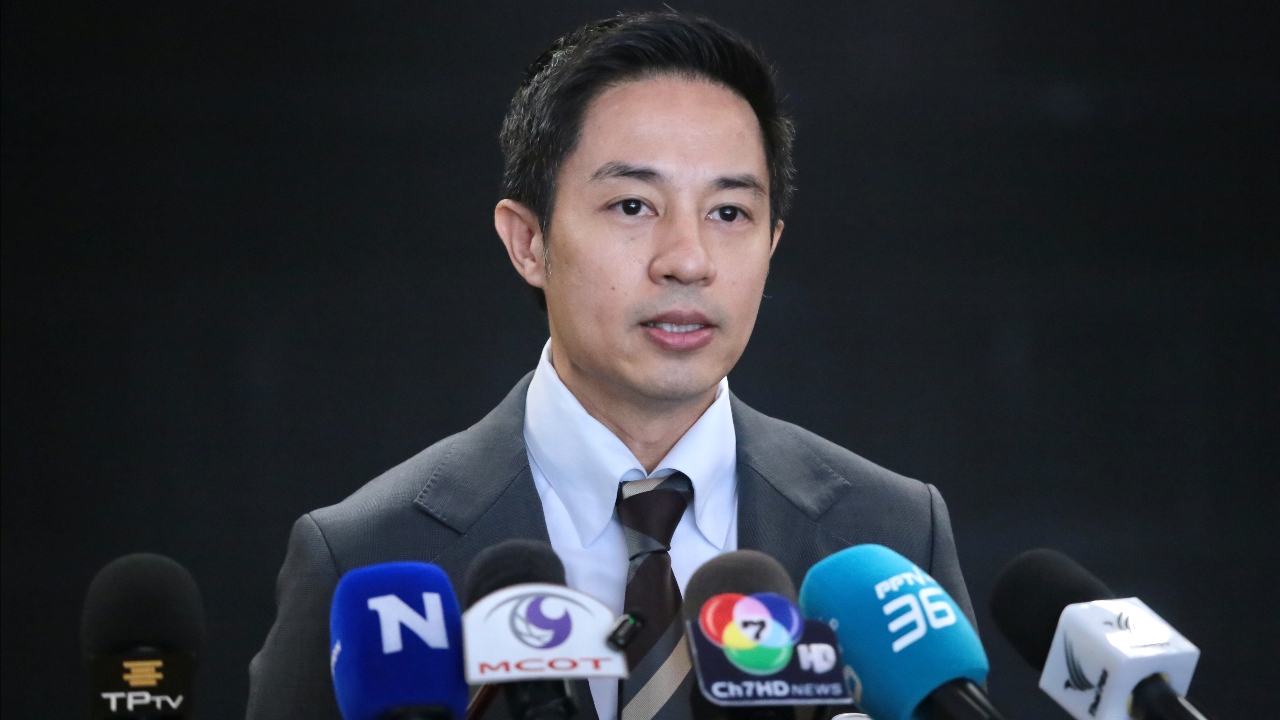
The senator postponed the motion opposing the "Land Bridge" project, explaining that more time was needed for colleagues to thoroughly study the information. He pointed out that appointing Deputy Prime Minister and Finance Minister Aekniti to assess the project's feasibility did not alleviate concerns. He recommended holding referendums asking both the entire country and local residents to decide on moving the project forward.
At 09:30 on 5 May 2026 at the Parliament, Senator Noraset Prachayakorn, chairman of the Senate Committee on Political Development, Public Participation, Human Rights, Freedoms, and Consumer Protection, spoke about submitting a motion to the Senate requesting the government to reconsider advancing the Land Bridge project. The motion had been scheduled on the agenda, with many senators interested in debating it and several committees studying the issue. He requested postponing the motion to the following week to allow sufficient time for comprehensive study before debating, to avoid discussing it without a solid information base. He also submitted a question to Deputy Prime Minister and Minister of Transport Pipat Ratchakitprakarn regarding the Land Bridge project, which was on the agenda, though it was uncertain when it would be asked. He urged Pipat, confident in the project's benefits, to respond to the question in Parliament to provide assured answers. Regarding Prime Minister appointing Deputy Prime Minister and Finance Minister Aekniti Nitithanprapas as chairman of the committee studying the Land Bridge project, Noraset said this was unlikely to ease concerns, as the project would have many impacts but was not included in election campaign promises or the government's policy statement. It was strange that such a major policy was missing from the government's statement yet was the first agenda item the government was determined to push forward fully. He questioned why there was such urgency—whether it was to hasten economic recovery or to close a deal.
Noraset said the government's plan to expedite legislation for the Southern Economic Corridor (SEC) should be closely monitored. Lessons from the Eastern Economic Corridor (EEC) legislation show that setting up committees with powers to fast-track environmental laws led to the East becoming nearly a "zero-dollar tourist" destination due to extensive environmental impacts. The SEC law appears almost entirely copied from the EEC law. To prevent the resource-rich South from suffering similar damage, people must raise their voices loudly to urge the government to slow the project.
He added that citing war impacts as a reason for the project was insufficient. There was no explanation of how the Land Bridge would benefit the country or whom it would serve. It was unclear which locations would be strategic points for distributing goods and how these could become problematic during war. If the Land Bridge was intended as a strategic hub, there was no clarity on geopolitical power balance mechanisms. The government had not provided clear answers. Regarding Deputy Prime Minister Pipat's planned field visits, Noraset hoped he would genuinely listen to public opinion, not just explain the project's benefits. Instead of hearing from those affected, the visits appeared to justify the project. Advancing the project should be led by the people. If it proceeds, there should be two levels of referendums: a national referendum and one among local residents for approval.