

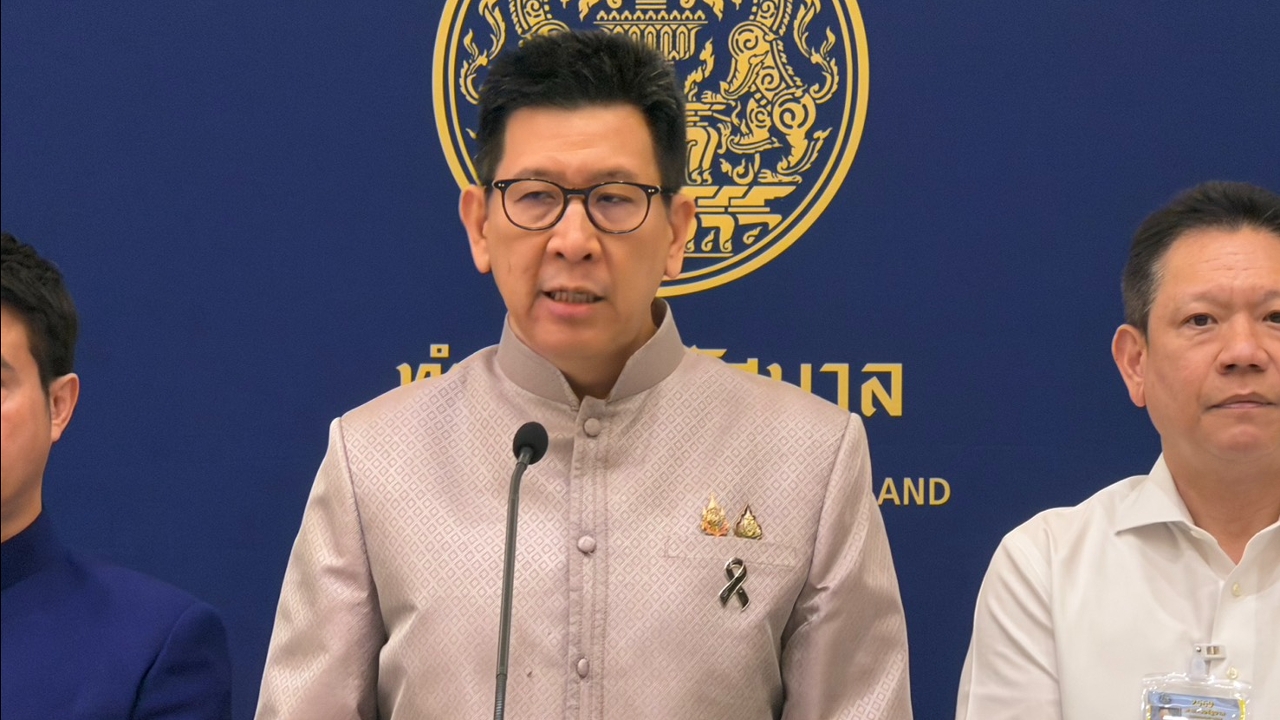
"Akniti" reveals a plan for a 400 billion baht loan decree to address the global crisis, emphasizing relief measures alongside the clean energy transition. He confirms it will not impact the public debt ceiling and aims to submit the decree to Parliament on 14 May.
At 12:00 noon on 5 May 2026, Mr. Akniti Nitithanprapas, Deputy Prime Minister and Minister of Finance, stated after the Cabinet meeting that the Cabinet approved issuing a royal decree authorizing the Ministry of Finance to borrow 400 billion baht to tackle the livelihood crisis faced by people affected by global situations. This crisis is severe, rapid, and occurs in five successive waves: war crisis, energy price crisis, production cost crisis, cost of living crisis, and declining purchasing power crisis.
Mr. Akniti also said the government reduced the loan amount from the initially rumored 500 billion baht to 400 billion baht to maintain fiscal discipline and consider concerns from all sectors. He emphasized that the borrowing is not only for relief but also to create opportunities for the country’s sustainable adaptation in the future.
The loan will be divided into two main parts, each 200 billion baht. The first part is for relief and mitigating impacts on vulnerable citizens and businesses. The second part will support the transition to renewable and clean energy to reduce vulnerability from dependence on imported oil and natural gas, which will lower long-term expenses for citizens and prevent recurrence of similar crises.
Regarding the urgent need to issue a royal decree instead of using the regular budget, Mr. Akniti explained that the 2026 budget has insufficient remaining funds—only about 50 billion baht realistically available, with just over 20 billion baht in the contingency fund reserved for other emergencies. The 2027 budget is still over five months away, which is too late given the risk of a stagflation crisis or overlapping inflation and purchasing power crises. Therefore, the government had to make this decision.
Mr. Akniti confirmed that the borrowing will be entirely domestic to demonstrate fiscal discipline. The liquidity in the banking system exceeds one trillion baht, and interest rates remain low, so there is no foreign exchange risk and borrowing costs are affordable. The Ministry of Finance estimates public debt will stay below 70% of GDP, within the prescribed debt ceiling. When the full 400 billion baht is borrowed, public debt will be at 69%.
Regarding implementation, the royal decree will be submitted to Parliament on 14 May. A committee will be appointed to oversee the loan spending, chaired by the Permanent Secretary of the Ministry of Finance. When asked if programs like “Khon La Khrueng” or welfare cards can use this budget, Mr. Akniti said the government will also consider other budget sources. The government aims to start assistance programs from 1 June onward.
Additionally, when asked about comments from Ms. Sirikanya Tansakul, Deputy Leader of the People’s Party, who questioned why the energy transition funds are considered urgent relief necessitating a decree, Mr. Akniti expressed gratitude to academics and the opposition for their feedback. He reiterated the loan amount was reduced to 400 billion baht and emphasized the ongoing uncertainty of when this crisis will end. Accelerating the shift to clean energy helps immediately alleviate burdens on people and reduces reliance on imported oil. Delaying adaptation would prevent overcoming this crisis.
At 13:35, Mr. Akniti added that after the loan decree is published in the Royal Gazette, it will be presented to Parliament on 14 May. The decree’s broad objectives have been defined, focusing on transparency and data disclosure. He stressed every project must be approved by the Cabinet and that borrowing will be phased over time, not taken all at once, to avoid accumulating unused costs.
When asked if the loan decree will fund the “Thai Chuay Thai Plus” program, Mr. Akniti said that program aligns with the decree’s objectives to assist citizens and businesses. Funds will come partly from this decree and partly from budget transfer laws, with preliminary data available, as well as the regular budget. He will review details before specifying how much will come from the loan, but confirmed the program will proceed and the Ministry of Finance will decide funding sources.
"Clarity on the number of rights under the Thai Chuay Thai Plus program depends on preliminary budgets, estimated at around 30 million rights," Mr. Akniti said. "I believe 30 million is sufficient since past programs reached a maximum of 28 million. Details on eligibility, such as whether recipients must be over 18 years old, will be reviewed again. Registration for Khon La Khrueng and new welfare card recipients will open simultaneously in late May." . Mr. Akniti concluded.