

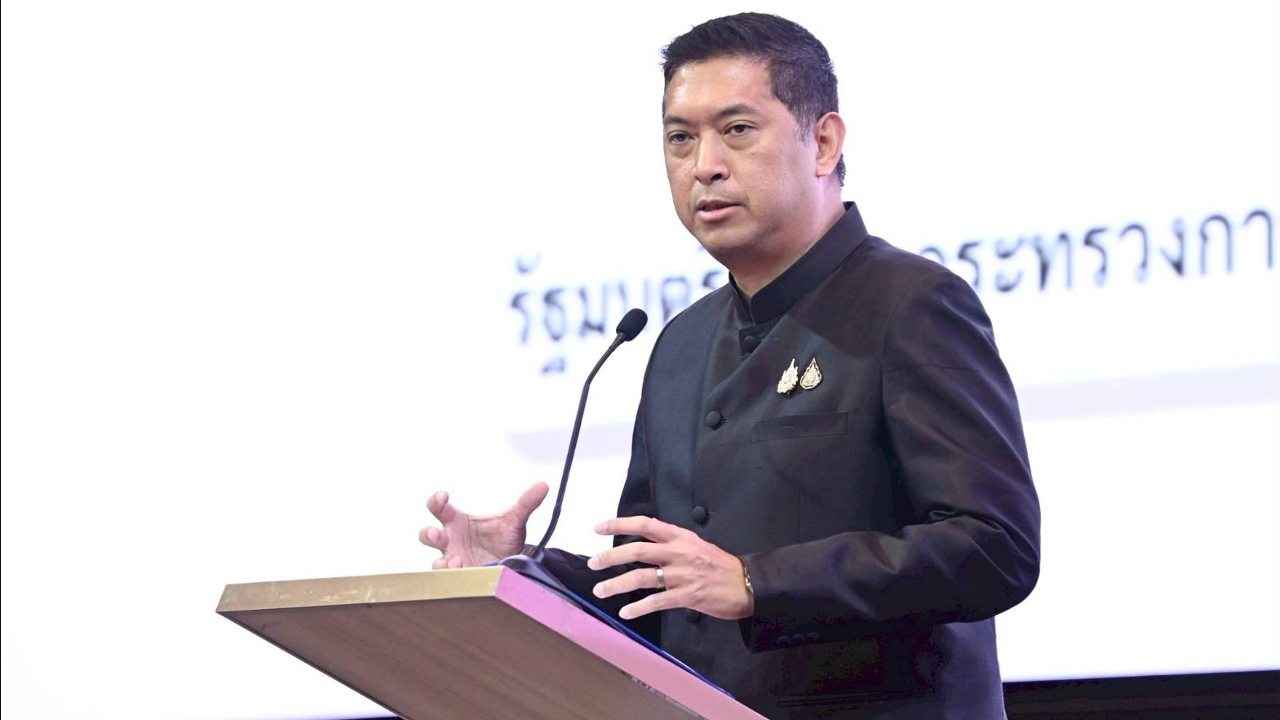
The Minister of Social Development is advancing the expansion of "comprehensive dust-free rooms" nationwide, stressing that caring for the health of vulnerable groups is about preserving life opportunities.
On 5 May 2026 GMT+7, Mr. Nikorn Somklang, Minister of Social Development and Human Security, spoke about the progress of inter-ministerial collaboration to protect vulnerable groups from the effects of PM2.5 dust. Following a visit to Chiang Mai province with Deputy Prime Minister and Minister of Higher Education, Science, Research and Innovation, Mr. Yotsanan Wongsawat, continuous cooperation has been established to prepare the installation of 83 "comprehensive dust-free rooms" within care facilities under the Ministry of Social Development in eight upper northern provinces. He expressed gratitude to the Ministry of Higher Education for financial support. Surveys of facility sizes and equipment needs have been completed, with plans to collaborate with the Ministry of Education to involve vocational institutions in installing the rooms across all provinces.
These comprehensive dust-free rooms are typically large halls accommodating many vulnerable individuals simultaneously, requiring multiple sets of equipment working together in one space. They feature IoT sensor systems that monitor conditions in real time and allow centralized tracking from a control center. This setup is expected to significantly enhance protection and care for vulnerable groups within care facilities.
Mr. Nikorn added that beyond the initial eight pilot provinces, he has instructed all departments under the Ministry of Social Development to assess the need for comprehensive dust-free rooms in care facilities nationwide. This is to expedite budget allocation and implementation processes, ensuring all care facilities are prepared to handle future PM2.5 dust problems. He noted that fully resolving PM2.5 pollution will take time, so it remains the government's responsibility to increase safety measures for all vulnerable groups in the meantime.
"Poor health is a barrier that obstructs life opportunities. I therefore prioritize care for vulnerable groups, as we do not want physical weakness to become an obstacle that diminishes dreams or quality of life," he stated. . Nikorn said
