

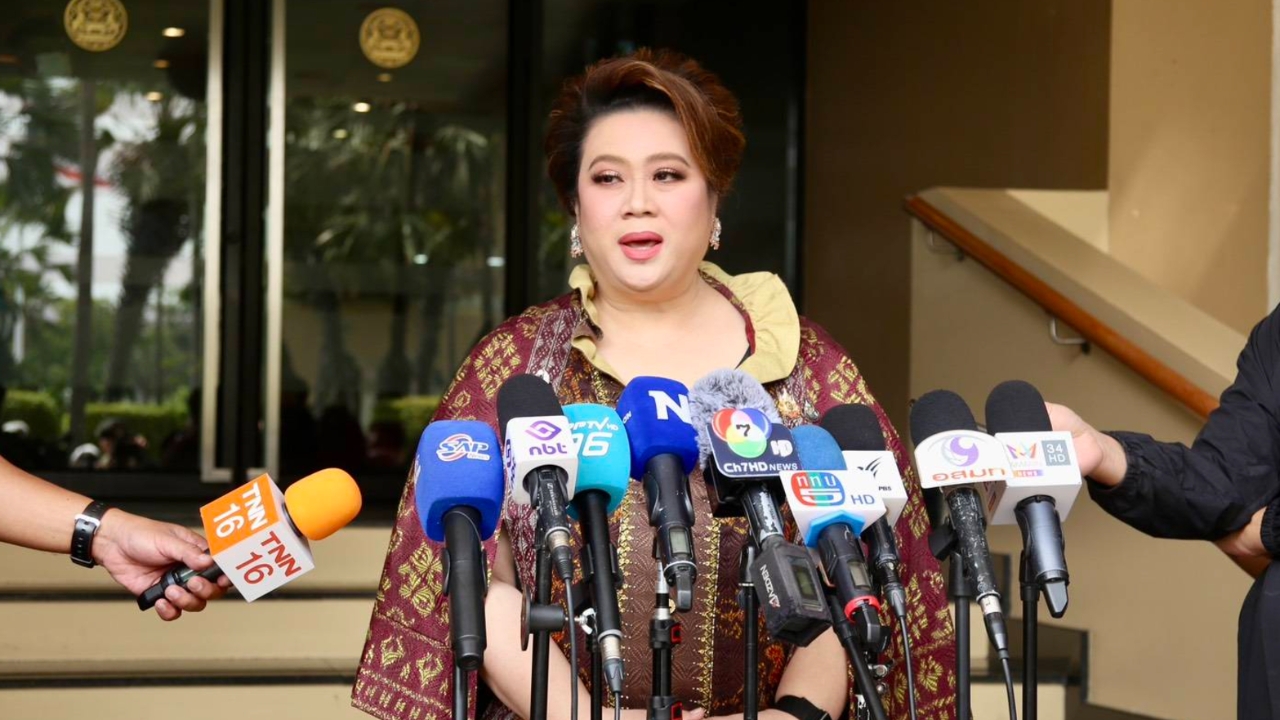
Awaiting the Department of Fisheries' verification of canned fish species suspected to be black-chinned tilapia and Nile tilapia, Supamas revealed the Prime Minister's concern for consumers. This afternoon, the OCPB will inspect the factory in question, confident that products in the Thai Help Thai Plus project meet standards.
6 May 2026 GMT+7 Ms. Supamas Isarapakdi, Minister attached to the Prime Minister's Office, stated before visiting a canned fish factory in Samut Sakhon Province that the Secretary-General of the Food and Drug Administration reported by phone yesterday evening (5 May). The FDA has existing laws to oversee and ensure production meets standards. Regarding earlier news reports, the factory owner confirmed the fish as 60% mackerel, but consumers suspected otherwise, suggesting two possibilities: black-chinned tilapia or Nile tilapia. The Department of Fisheries must verify the exact species.
Ms. Supamas added that the Office of the Consumer Protection Board (OCPB) was instructed by the Prime Minister, who is concerned about the public, to promptly intervene and protect affected consumers. The factory has already negotiated and compensated damages, but other affected consumers from the same batch have not yet filed complaints. It is the OCPB's duty to assist them.
. Today, the government will conduct an on-site visit to reassure consumers that the government oversees businesses to ensure safety and confidence when choosing goods or services. Whether other factories will undergo similar friendly inspections remains possible, but these will not be enforcement raids by authorities with legal powers.
Meanwhile, Ms. Supamas emphasized consumer protection against deception, exploitation, and fraud. This case falls under OCPB law concerning consumers' rights to sufficient and accurate information and correct labeling. Here, consumers believed the fish was mackerel, which was misleading advertising. Additionally, consumers have the right to freely choose products; if they knew the fish species was different, they might not have purchased it. Therefore, consumers deserve compensation, and the OCPB will pursue legal action on their behalf. Such incidents should not recur. There must be vigilance and product monitoring; otherwise, other brands might suffer collateral damage, causing panic and reluctance to consume canned goods. The affected products are few compared to those meeting standards.
This afternoon, the OCPB will visit the site along with the provincial industry office, the provincial public health office (PPHO), the Secretary-General of the FDA, and all relevant agencies in Samut Sakhon to help ensure consumers receive justice and confidence in canned fish and canned food consumption.

When asked what message she has for operators exploiting consumers, Ms. Supamas said that amid unrest in the Middle East affecting Thailand directly and indirectly, people are more sensitive due to livelihood issues. She urged operators not to worsen the situation for fellow Thais and asked for empathy during these times. She reiterated that if they cannot help, they should not harm each other.
Asked about quality control for products in the government's 'Thai Help Thai Plus' affordable goods project, Ms. Supamas assured there is no cause for concern because the products come from large factories with leading distributors, so the goods already meet standards. Moreover, this project involves operators sympathetic to the current hardships faced by Thais. They agree to reduce profits or run corporate social responsibility (CSR) initiatives, effectively selling goods without profit to help fellow Thais through fair and affordable pricing.