

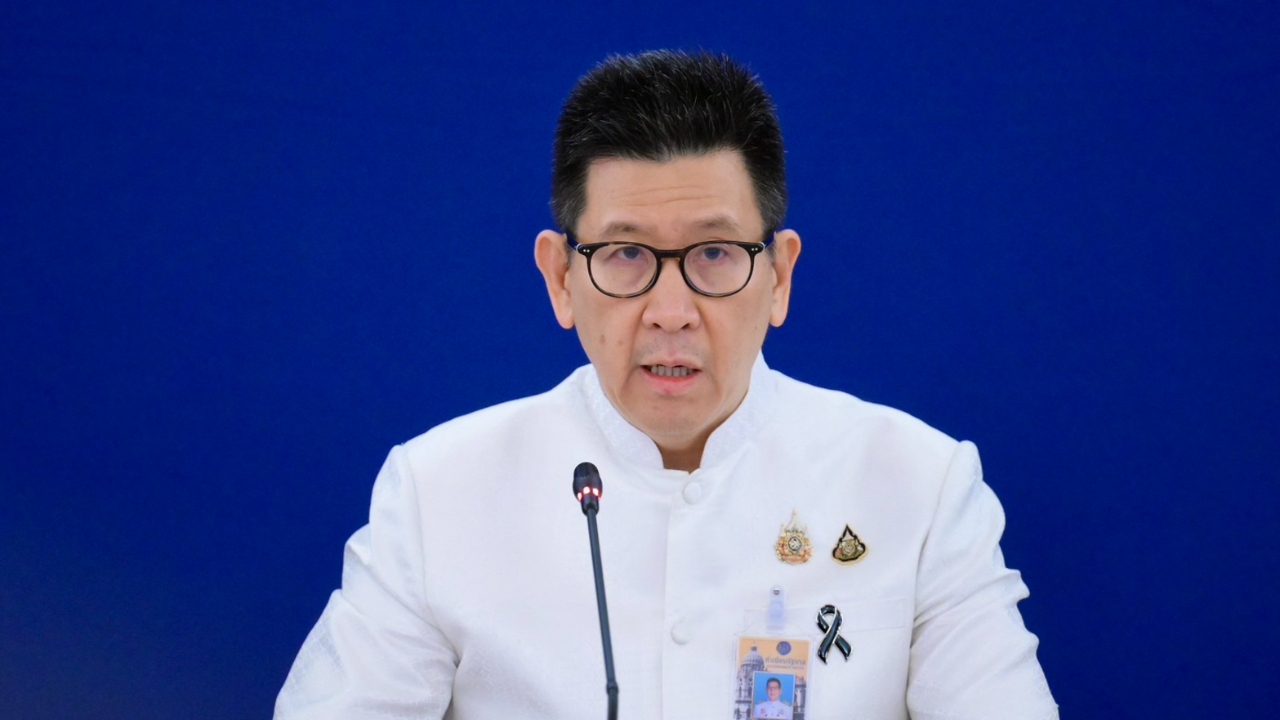
Responding to opposition criticism, Ekniti affirmed that the government’s issuance of a 400-billion-baht emergency loan decree was due to urgent necessity. He dismissed the Democrat Party’s plan to ask the Constitutional Court for an interpretation, recalling that he had previously assisted in explaining similar borrowing during Abhisit’s administration.
6 May 2026 GMT+7 Ekniti Nitithanprapas, Deputy Prime Minister and Minister of Finance, commented on the Democrat Party’s resolution to petition the Constitutional Court to interpret the legality of the 400-billion-baht loan decree. He said all options had been reviewed, including budget reallocation for 2026 which was delayed or inefficient, yielding no more than 50 billion baht. Meanwhile, the 2027 budget would begin on 1 October 2026, leaving only five months. However, the current crisis requires immediate assistance to citizens and businesses. Overall, the existing budget was insufficient, so he insisted the decree was necessary and urgent.
Regarding the Democrat Party’s plan to refer the matter to the Constitutional Court, Ekniti said he was not concerned because during the issuance of the "Strong Thailand" loan decree (400 billion baht), there was also a lawsuit, and he personally helped explain the case at the Constitutional Court. He understands the role of Korn Chatikavanij, Democrat Party deputy leader, and added that according to Section 172 of the Constitution of the Kingdom of Thailand, after considering the urgency and other options, no alternatives were found.
Ekniti also addressed the case of Sirikanya Tansakul, deputy leader of the Prachachon Party, who criticized the loan decree as a blank check. He explained that this decree authorizes the Ministry of Finance to borrow money, with details to follow. Given the current global and energy crises expected to come in waves, many countries see this as a prolonged crisis.
Therefore, it is necessary to find ways to prevent long-term problems and prepare ammunition by issuing this decree as a tool to mitigate impacts on citizens and businesses. The objective is clear, addressing a livelihood crisis alongside energy structure adjustments, since Thailand has historically imported large amounts of energy and natural gas, making a shift to renewable energy essential.
. Ekniti further emphasized that issuing the 400-billion-baht loan decree is not a one-time budget spend; projects will be screened by committees. It is not a matter of doing whatever one wishes or issuing blank checks. .