

The government warned about fake news, confirming it is untrue that Cambodian media claimed the Grand Palace was ranked as a popular tourist destination in Cambodia.
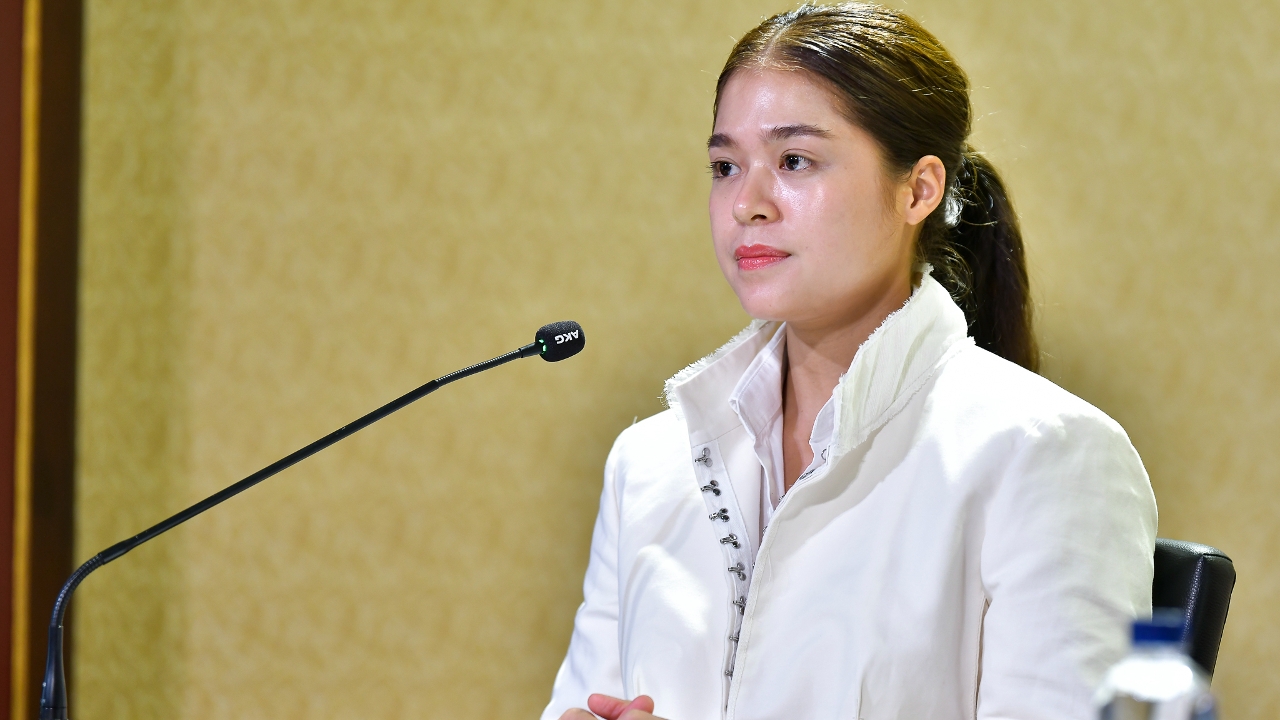
On 6 May 2026 GMT+7, Ms. Ploythele Laksamee Sangchan, Deputy Spokesperson of the Prime Minister's Office, revealed that the Anti-Fake News Center of Thailand (AFNC) monitors and receives reports of fake news as part of policies to prevent and resolve security and social threats, aiming to raise awareness of technology crime, fake news, and misinformation.
On 3 May 2026 GMT+7, AFNC examined a total of 161,352 messages, verifying 1,017 of them. The majority of leads came from social listening with 1,016 messages and one from Facebook. There were 20 cases to verify, with 9 results confirmed by relevant agencies. Among these, 7 cases drew the most public attention: 1 true story, 4 fake news, and 2 distorted news items, including:
Rank 1: Fake news claiming the Grand Palace was ranked as a top tourist attraction in Cambodia.
Rank 2: Distorted news about the Land Bridge project requiring foreign investors to lease land for 50-99 years.
Rank 3: True news on basic methods to identify genuine monosodium glutamate.
Rank 4: Fake news about the Ministry of Finance launching a new website for tax payments.
Rank 5: Distorted news claiming all drinking water plants nationwide must pay increased annual water testing fees, from the usual 6,900 baht to up to 50,000 baht per year.
Rank 6: Fake news stating over 600 Thais could not return home because Cambodia did not open border checkpoints as agreed.
Rank 7: Fake news claiming the Phi Phi Islands International Airport began operations on 1 May.
Regarding the fake news that the Grand Palace was ranked as a top tourist spot in Cambodia, the Ministry of Digital Economy and Society verified with the Department of Fine Arts, Ministry of Culture, confirming it as "fake news." This case arose from online media claiming the Grand Palace was ranked as a tourist destination in Cambodia. Upon investigation, this was found to be untrue and a distortion using unrelated images and sources. No reliable data confirmed such a ranking. The published content mixed partial information with images causing misunderstanding.
Moreover, the use of a collage combining images of Angkor Wat and a palace resembling the Grand Palace, which is widely used internationally to represent a country’s tourism, was misleading. In this context, references to “palace” in Cambodia pertain to sites within Cambodia itself, not the Thai Grand Palace. Ms. Ploythele emphasized,
The government urges the public to be aware of fake news spreading on online and social media. Without vigilance, sharing false information can mislead people, cause misunderstandings, damage property or personal data, and broadly affect society. People should trust and share only useful information from official sources and verify facts or website links carefully. If suspicious or distorted news is found, the public can report tips and verify fake news via hotline 1111, extension 87, available 24/7.