

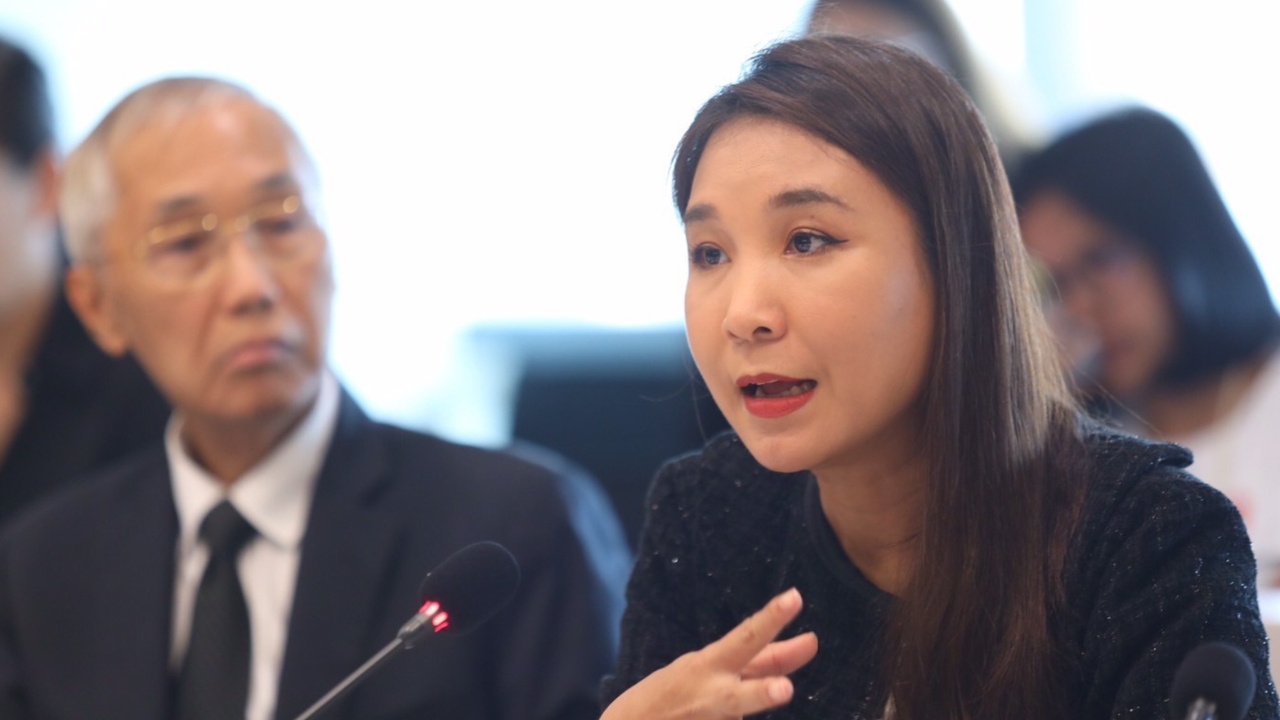
Sirikanya sees the government's use of loan funds for the 'Half-Half' scheme as not genuinely intended to relieve the people but rather to regain popularity. She stresses that the 400-billion-baht loan decree must avoid a scattergun approach and must not sneak in long-term projects.
6 May 2026 GMT+7 Ms. Sirikanya Tansakul, Deputy Leader of the Prachachon Party, and Head of the Shadow Cabinet's Government Reform Team, commented on the Cabinet’s approval of the draft Royal Decree authorizing the Ministry of Finance to borrow funds to address the impacts of the energy crisis and support the country’s energy transition, titled the Borrowing Royal Decree 2026. (Borrowing Royal Decree) She stated that past relief measures have remained incomplete, insufficient, and not comprehensive, failing to focus on the right groups—for example, the highly affected transport sector has been under-compensated, and the fishing community, especially small-scale fishers, has yet to receive aid.
She pointed out that the government plans to use the 200 billion baht relief loan in a single tranche over four months, mostly channeled into the 'Half-Half' scheme, which is a scattergun relief that risks leaving truly needy people unsupported, while some recipients may not be in genuine need.
If the war and energy crisis prolong, the question arises: if the conflict continues and energy prices stay high, will the government need to borrow again? Given the current fiscal situation, this may be the last borrowing round, with no allowance for new loans. Thus, it appears the loan is being used for the 'Half-Half' scheme not to aid the people but to regain the government's declining popularity.

Sirikanya added that she does not oppose issuing a borrowing royal decree for the first 200 billion baht relief plan to aid those affected, as it is necessary to alleviate public hardship. However, the second 200 billion baht loan for long-term economic restructuring—such as supporting efficient energy use and transitioning from fossil fuels to renewable and alternative energy technologies—while important, is not urgent enough to warrant a royal decree. She proposed the government prepare a detailed budget plan and enact a law instead, submitting it to the House of Representatives for scrutiny. The legislative process might take about three months, after which the law could be passed.
Therefore, the Shadow Cabinet proposes that the government redesign relief measures to be more targeted and not scattergun, exclude long-term projects from this budget, and publicly disclose a clear debt repayment plan.