

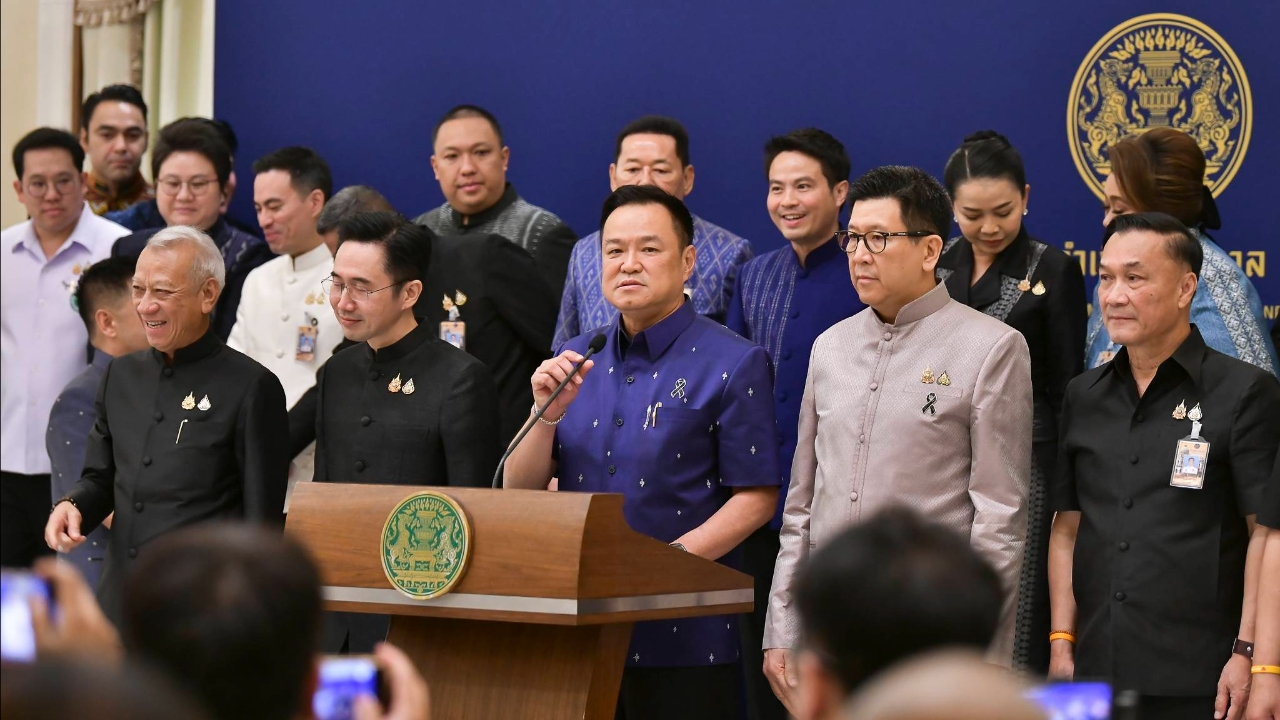
The Prime Minister ordered governors across the country to stop making innocent people scapegoats, declaring that anyone allowing injustice must face harsher punishment than the perpetrators themselves.
On 6 May 2026 at the IMPACT Forum building in Muang Thong Thani, Anutin Charnvirakul, Prime Minister and Minister of Interior, presided over the opening of the event “24 Years of Swift, Inclusive, and Fair Assistance to Innocent Victims.” The Minister of Justice, ambassadors, and governors from across the country attended to hear the firm policy. Anutin sternly remarked on the compensation figures for victims and defendants in criminal cases since 2001, with the state having paid over 8 billion baht to more than 140,000 victims, saying this should not be touted as an achievement by the government.
“The more than 8 billion baht paid is not an achievement but a disgrace that we could not imprison the real wrongdoers, yet ended up blaming innocent people who lost their freedom. This money could have been used to benefit 70 million people rather than compensate for the state's mistakes,” stated the Prime Minister.
The Prime Minister also firmly declared in front of senior officials and provincial governors that the government stands with the "scapegoats" and the innocent. He warned that any civil servant who neglects or fails to perform their duties, causing injustice, will face severe punishment. Those who obstruct justice for those entitled to it will be punished more harshly than the offenders. From now on, governors nationwide must work proactively and must not let citizens wait long for help, because delayed justice is injustice.
The Prime Minister linked justice system reform to elevating Thailand internationally, noting that Thailand is advancing toward OECD (Organization for Economic Cooperation and Development) membership, where the Rule of Law is a key indicator. Civility is measured by how the state treats the vulnerable and marginalized in society, adhering to the principle of “Justice for All,” not Justice for some or Justice for friends. The world today no longer looks only at economic figures but at how well the state cares for its people. We must overcome these pits of injustice to become a truly civilized and trusted country globally.